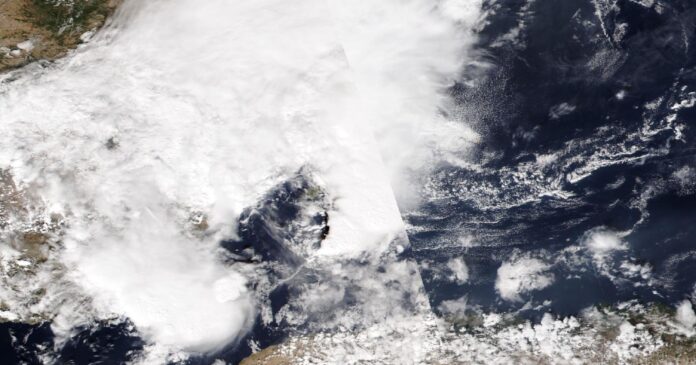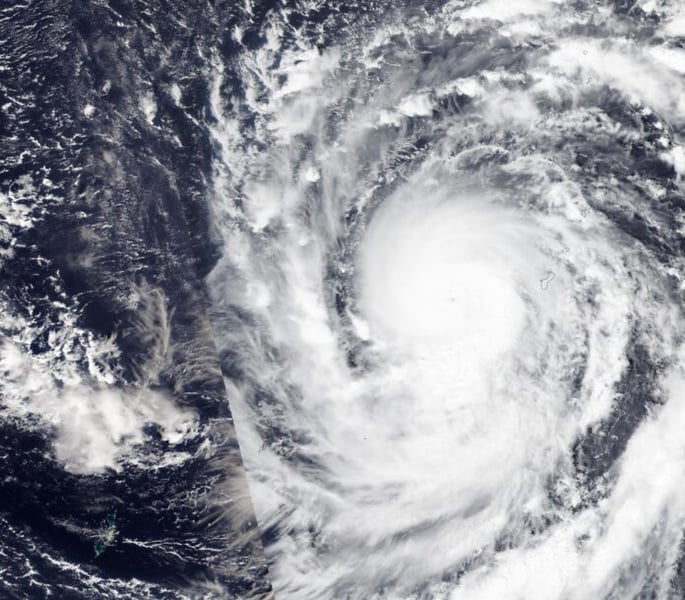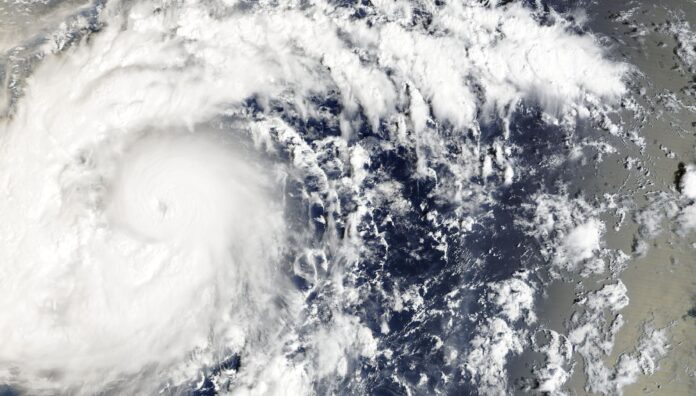

BEIJING – The evacuation orders came before dawn, but the water moved faster than the trucks. By the time Typhoon Noul slammed into southern China’s coast over the weekend, more than 715,000 people had been pulled from their homes, and at least ten had died – most of them in Guangdong province, where the storm made landfall at full force before carving northwest through a landscape still raw from weeks of monsoon flooding.
By Monday, Noul had weakened from typhoon to tropical storm, but forecasters warned that its departure from the coast meant little. The greater danger now lay inland, where the storm’s moisture was converging with a stationary weather front sitting above Hunan and Guizhou provinces. China’s National Meteorological Centre placed both regions under red-level rainstorm alerts – the country’s most severe weather warning – as rivers in the Pearl River and Yangtze basin networks began rising toward alarm thresholds.
Officials in central China’s provincial capitals said they were watching water levels with particular concern. Emergency management agencies in Hunan requested early activation of flood defence machinery along key tributaries, while in Guizhou, water safety authorities ordered reservoir operators to begin pre-releasing water to create capacity ahead of anticipated rainfall – a standard practice in typhoon season that sometimes fails to keep pace with what the storms actually deliver.
The season had already been brutal. Typhoon Bavi flooding in northeast China drove hundreds of thousands of residents from their homes in Liaoning and Jilin earlier in July, and the same storm brought Zhejiang coastal typhoon landfall and 1.72 million evacuations when it struck the province’s coast in early July. In each case, the headline disaster gave way within days to a quieter but more prolonged crisis of flooded farmland, silted irrigation channels and damaged road embankments.
The pattern held this time. In Guangdong, where Noul hit hardest, state media broadcast footage of rescue teams working through waist-deep water in rural townships that had not expected such severe flooding from a storm initially forecast to weaken before landfall. Satellite communications went down in several mountain communities, complicating coordination. Search operations for several people reported missing were ongoing as of late Monday.
China’s Ministry of Emergency Management deployed military engineering units and professional rescue teams to Guangdong and Guangxi as the main locus of immediate need, while signalling that it was pre-positioning assets in Hunan and Guizhou for a second, inland phase of the disaster. Emergency food and supply convoys were staged near Guilin, waiting for road conditions to allow passage into flood-affected communities.
The strain on the emergency response system was visible. Just three weeks after the Guangxi dam collapse public investigation opened an accountability process into the Liulan Reservoir disaster that killed 26, those same local emergency management bureaus were now dealing with a new disaster from a different storm. Typhoon Maysak had triggered the dam collapse in early July; Noul was now dumping rain on a watershed that had barely dried.
Guangxi’s governor requested priority allocation of emergency relief supplies from the central government, according to a statement cited by state broadcaster CGTN. The province’s total economic losses from both Maysak and Noul combined had not yet been calculated, but preliminary estimates from agricultural ministries suggested hundreds of millions of yuan in crop damage from Noul alone.
Agricultural officials warned of a second-order impact on food prices. Guangdong is a major producer of rice, fruit and aquaculture products – and sustained flooding during the summer harvest window is especially damaging because crops cannot be replanted quickly enough to recover within the current growing season. Procurement agencies said they were accelerating transfers from northern stockpiles to southeastern cities where distribution logistics had been disrupted.
The 715,000 displaced represented only those formally counted in official evacuation records. Hundreds of thousands more in flood-prone areas had moved voluntarily to higher ground without being registered in the system, according to county-level officials quoted in Chinese media reports. The actual number of displaced was likely considerably higher.
Shipping along the Pearl River Delta had been partially disrupted, with port operators diverting vessels away from shallow channels where currents had become unpredictable. Industry groups said the disruption was manageable but warned that further rain could delay container movements through Guangzhou and its satellite ports.
Previous typhoon seasons had demonstrated the cascading nature of flood events in China’s complex river systems. The Philippines typhoon casualties and Bavi’s Pacific track preceding this season offered a preview of the pattern – storms that kill in the islands often accelerate and intensify before reaching China’s coast in a different but equally destructive form.
In Chongqing, where Pengshui landslide rescue operations had only recently concluded after a July rainfall event killed eight and left 34 missing, local officials put landslide monitoring teams on 24-hour standby as Noul’s moisture approached from the south.
Meteorologists said Noul was tracking northeast at roughly twenty kilometres per hour. Its remnants were expected to merge with a frontal system sitting over Hunan by Wednesday, an interaction that could dramatically amplify rainfall totals in areas already saturated from weeks of summer monsoon moisture – what forecasters describe as a “training” effect, where convective bands repeatedly strike the same geography.
China’s leadership had been briefed on the disaster, according to state media, and Premier Li Qiang had issued instructions calling on all local officials to treat flood prevention and rescue as the immediate priority, with particular attention to the risk of secondary disasters including mudslides and dam failures. The National Disaster Reduction Commission rated the response at Grade III – one level below the highest emergency classification – with officials acknowledging that rating could be raised depending on how flooding developed in the interior.
For millions of people across the provinces still in Noul’s path, the central question was how much rain would still fall – and how fast the rivers would rise. The storm’s name would not matter to them. The water would be the same regardless.