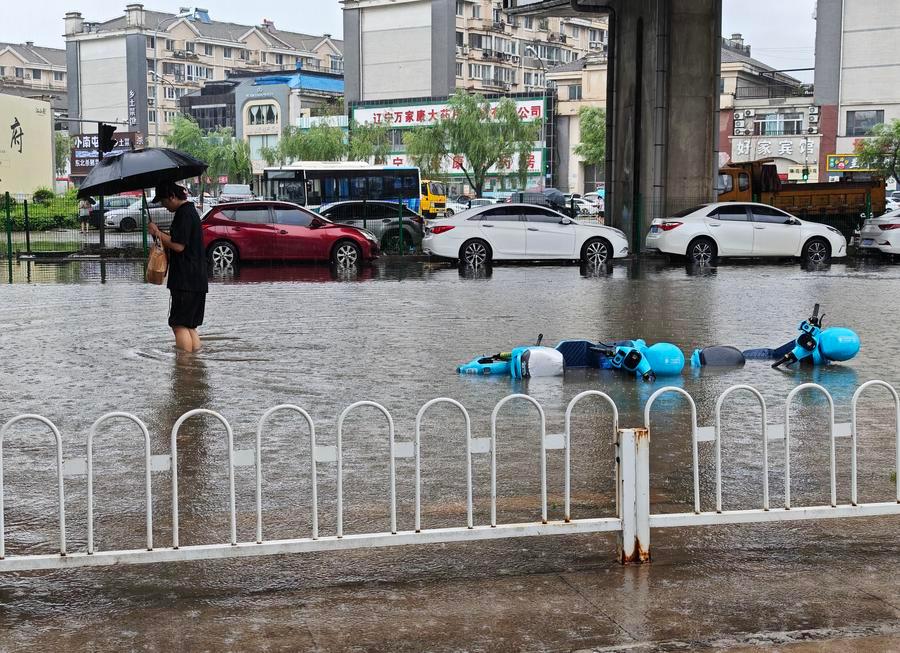

SHENYANG – Zhao Jidong spent Sunday night knocking on doors in Hailong Township, routing families in Jilin province out of low-lying homes before floodwaters from Typhoon Bavi reached the ground floors. By early Tuesday, nearly 365,000 people had been evacuated across neighboring Liaoning province alone, with 14 rivers breaching warning levels and emergency flood responses activated in all 14 of the province’s cities simultaneously.
“The flood peak has yet to pass, so we can’t let our guard down,” said Zhao, the Communist Party secretary for Hailong Township, as river gauges in Shenyang and Fushun continued to climb through Tuesday morning.
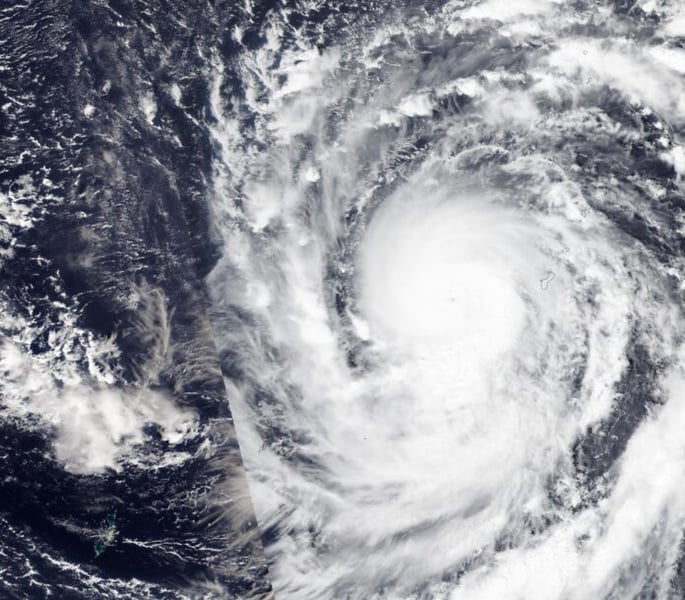
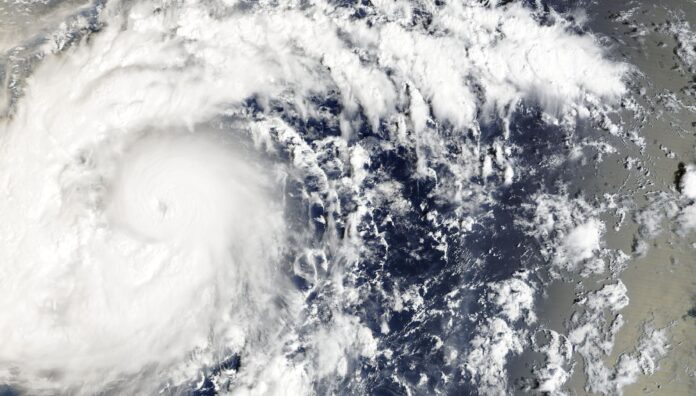
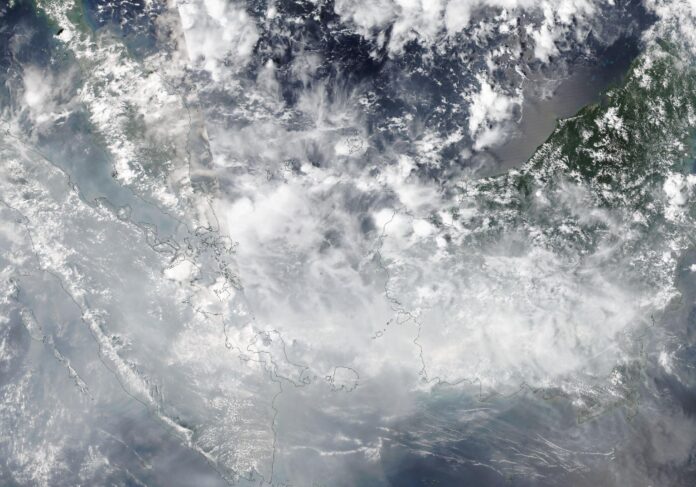
The scale of Tuesday’s emergency reflects how far Typhoon Bavi has traveled since making double landfall on China’s Zhejiang coast on Saturday, displacing 1.72 million coastal residents before turning north. What began as a coastal evacuation, with schools shuttered and cargo shipping halted across the East China Sea, has since pushed hundreds of kilometers into the northeast, where Bavi’s remnants stalled and released, in places, more than two months of normal summer rainfall in a single day.
Among the rivers that rose above warning levels were the Hunhe, the Qinghe, and the Puhe, all of them flowing through or past the industrial cities of Shenyang, Fushun, and Tieling. By Tuesday morning, Shenyang and Fushun had both raised their flood emergency responses to the highest level. The two cities lie on either side of a dense stretch of manufacturing and residential land that floods severely when the Hunhe can no longer absorb inflow from upstream catchments. Tieling, smaller and situated between them, joined the highest-alert cluster before dawn.
Roughly 460 kilometers to the northeast, Jilin province activated a parallel emergency. Huinan County escalated to its own highest flood level, ordering classes suspended, public transport halted and non-essential government offices closed. In Meihekou City, 39 separate weather stations recorded more than 100 millimeters of rain in a single 24-hour period. One village measured 292.8 millimeters, a total that exceeds two months of typical summer rainfall for that area. The city-wide average was 174.9 millimeters, enough on its own to overwhelm drainage infrastructure engineered for a different baseline.
Liu Xuefang was among the residents pulled from her home before the water arrived. “The township and village officials got us out in time,” she said.

China’s National Meteorological Center had issued an orange alert for rainstorms before the worst of the flooding began, the second-highest tier in the country’s four-level warning system, covering Liaoning, Jilin, and parts of Heilongjiang province to the north. Forecasters tracking Bavi’s gradual northward turn gave local governments in most areas time to pre-position rescue teams and open emergency shelters. Whether that advance warning held casualties to a minimum was uncertain as of Tuesday morning: Chinese authorities had confirmed no deaths from the northeast flooding, though the flood peak had not yet passed through Shenyang’s most exposed districts.
The logistics of evacuating more than 365,000 people across 14 cities in Liaoning tested the province’s emergency apparatus more comprehensively than any storm in recent memory. Civil defense units, military reserve personnel, and village-level officials all participated, working through overnight darkness and intermittent power disruptions to move households to higher ground or designated shelters. In at least one area, officials said, residents who initially declined to leave had to be persuaded a second time as river levels rose faster than expected.
Bavi is the ninth typhoon of China’s 2026 season, and its journey across the western Pacific, through the Philippines where landslides killed 15 in Mindanao, then through Taiwan and Japan before striking Zhejiang twice, made it one of the season’s most far-ranging storms. Typhoon Maysak had already tested China’s emergency systems earlier this month, when a dam failure near Nanning killed 39 people, Xinhua reported. Two major typhoons arriving in rapid succession is not unprecedented for China’s summer, but Bavi’s extended trajectory complicated the preparation window for officials in the northeast, who were managing a situation that had already evolved over six days by the time the rain reached them.
The orange alert remained in effect Tuesday afternoon, with the heaviest rainfall expected to drift gradually into Heilongjiang province over the following 48 hours. For Liaoning and Jilin, that trajectory offered only partial relief: rivers already swollen do not fall quickly, and the Hunhe’s lower reaches, which absorb drainage from agricultural catchments across several counties, were expected to remain above warning levels into Wednesday at minimum.
What Hailong Township’s evacuees return to remains an open question. Zhao said the flood barriers along most of the township’s perimeter had held. What had happened in smaller upstream villages, places with thinner embankments and fewer officials working through the night to check on residents, had not yet been confirmed. Zhao was still on duty when the morning shift began, and was not ready to call it a success.