
ALMERÍA – Four charred vehicles on the road out of Bedar told the first story of the fire before anyone counted the bodies. Their right-hand drive configuration marked them as belonging to British nationals who had come, as tens of thousands do each summer, to the baked scrubland of southern Spain’s Almería province – and who, like at least eight other victims, could not outrun what emergency services described as a wall of flame moving faster than any wildfire in Andalusia’s recorded history.
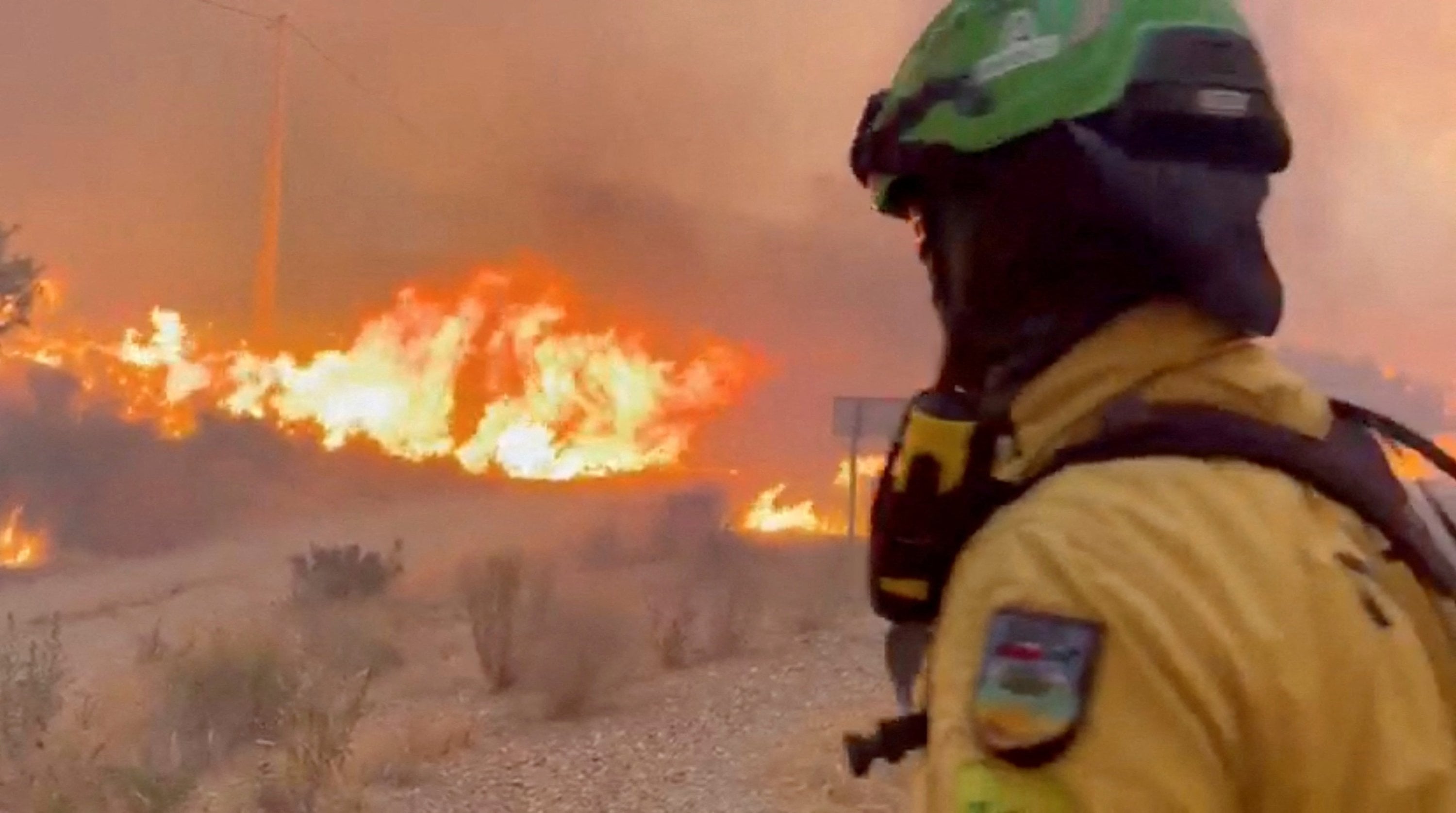
At least twelve people are confirmed dead after the fire swept through the Los Gallardos municipality of Almería province on Thursday, making it the deadliest blaze ever recorded in the autonomous region. Nineteen people remained missing as of Friday morning. The fire ignited near the hamlet of Bedar in the foothills of the Sierra de los Filabres mountains, burned through thousands of hectares by dawn, and was still not fully contained when rescue teams resumed their search at first light.
Officials said temperatures approaching 40 degrees Celsius, combined with dry vegetation, low humidity, and strong winds, created conditions in which the fire’s spread overwhelmed all projections. “It spread with extraordinary speed, overwhelming evacuation efforts,” a regional emergency spokesperson said. The ignition source remained under investigation on Friday.
Spain’s Military Emergencies Unit, the UME, was deployed alongside approximately 150 firefighters, multiple helicopter crews, and ground vehicles. Some 1,000 residents were evacuated from villages in the fire’s path. Aerial water drops were suspended at several points overnight as shifting winds made the approach too dangerous for pilots, and flame fronts moved in multiple directions simultaneously.
Several of the dead were found in their cars, apparently having tried to drive out of the fire’s path after official escape routes had already been consumed. Spanish authorities had not confirmed the identities of any victims by Friday morning, but four of the fatalities appeared to have been foreign nationals – their vehicles’ right-hand steering configurations strongly suggesting British residency. The surrounding region of Almería is one of southern Spain’s largest expatriate communities, home to tens of thousands of Northern European retirees.
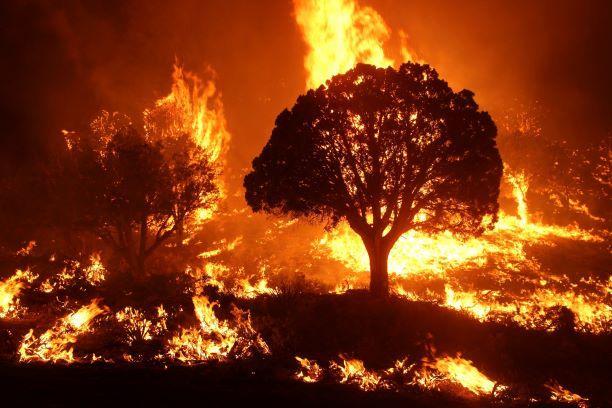
At least six people were also injured, with four hospitalised with serious burns and smoke inhalation. Search teams with dogs and drones were still combing the charred terrain around Bedar on Friday morning; several of the nineteen missing had not made contact with family since Thursday evening.
The toll has fuelled renewed scrutiny of evacuation protocols in a region that climate scientists have warned for years is among Europe’s most exposed to the combination of extreme heat and desiccated vegetation. Earlier this summer, a rapid attribution study linked Europe’s June 2026 heatwave – during which Spain recorded more than 200 heat-related deaths in four days – to human-induced climate change so directly that researchers called the event “virtually impossible” without it.
The Spanish government declared an emergency in the affected zone. The regional government of Andalusia, governed by the centre-right Partido Popular, announced an extraordinary session to review emergency preparedness in the wake of the fire. National weather services had issued orange-level heat and wildfire risk warnings for Almería province in the preceding 48 hours, though it was not immediately clear how those warnings reached residents in remote hamlets like Bedar.
The wildfire struck during a secondary heat event across Iberia, with temperatures across Andalusia forecast to remain near or above 38 degrees Celsius through the weekend. It followed a pattern that a World Health Organization advisory in June noted was becoming a regular summer emergency for which European health and emergency systems remained inadequately prepared.
According to reporting by Daily Sabah, the fire’s first hours were exceptionally violent, with winds preventing early containment and vehicles catching fire faster than their occupants could exit. The UME, which handles Spain’s most severe natural disaster responses, described the fire as one of the most challenging operations it had conducted in the region.
For the expatriate communities of coastal Almería – a patchwork of British, German, and Dutch residents settled in the sierra villages east of the regional capital – Thursday’s fire has sharpened a fear that had been building all season. The death toll is expected to rise. What is already certain, Andalusian officials confirmed, is that no recorded wildfire in the region’s modern history has killed as many people. The cause of the fire, and what was or was not done in those critical minutes before the first vehicles were consumed, remains unresolved.