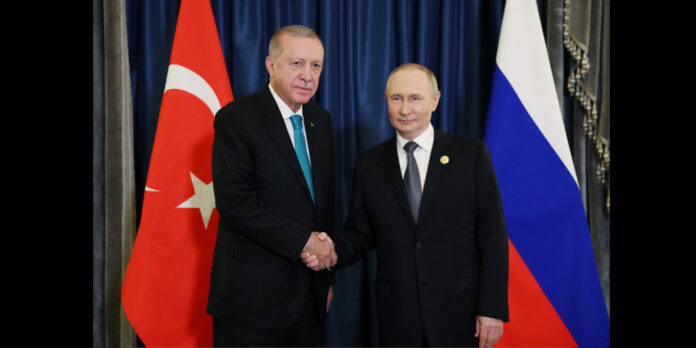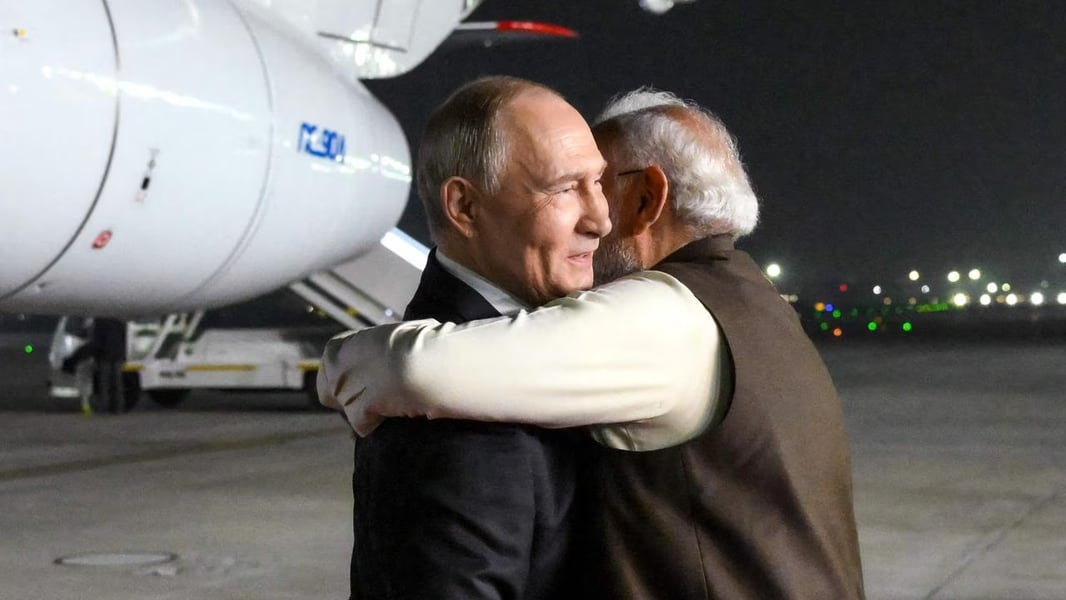

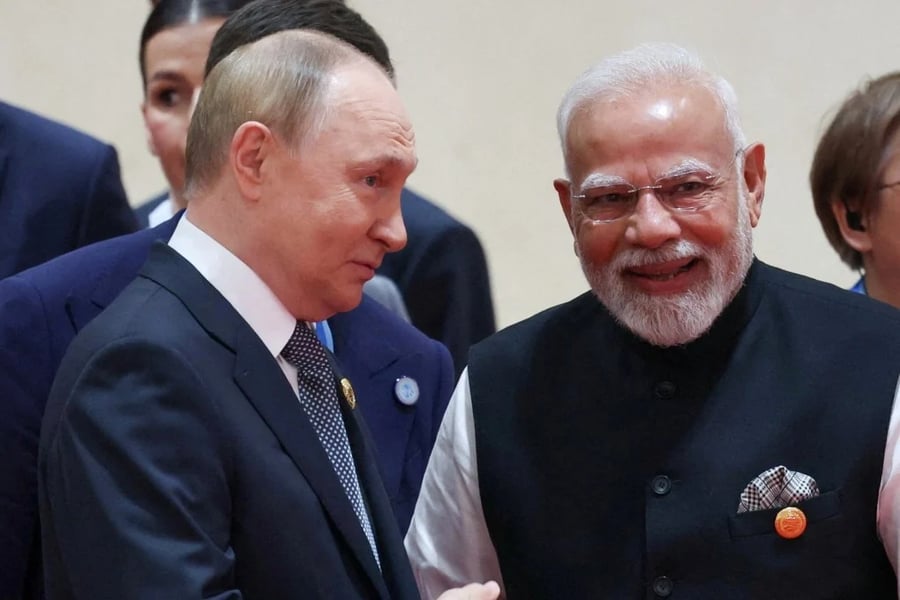
NEW DELHI — Russian President Vladimir Putin’s landmark two-day state visit to India, hosted by Prime Minister Narendra Modi, has crystallized one of the world’s most enduring alliances into 29 groundbreaking joint documents. Culminating in the 23rd India-Russia Annual Summit on December 5, 2025, these agreements span cutting-edge defense technology, energy security, healthcare innovation, and economic integration, propelling bilateral ties to unprecedented heights. In a vivid display of warmth, Modi greeted Putin with a signature bear hug at Palam airport, symbolizing the unshakeable trust between two nations that have stood shoulder-to-shoulder through decades of geopolitical storms, from the 1971 Bangladesh liberation war to today’s multipolar challenges.
This summit arrives at a pivotal moment. With US President Donald Trump’s recent reelection amplifying tariff threats and sanctions scrutiny, India’s steadfast commitment to Russian oil imports, now exceeding $65 billion since 2022, and defense procurements underscores New Delhi’s sovereign foreign policy. Putin, in turn, praised Modi as a “wise leader” steering India’s ascent, echoing prior SCO summit camaraderie. The pacts, inked across 16 domains including trade, fertilizers, pharmaceuticals, and maritime cooperation, target a staggering $100 billion annual trade volume by 2030, up from $66 billion last year. Uninterrupted Russian oil shipments, vital for India’s refineries, form the economic backbone, complemented by Kudankulam nuclear reactor expansions ensuring long-term energy sovereignty.
Defense:S-400’s Battlefield Triumph and Su-57’s Strategic Leap
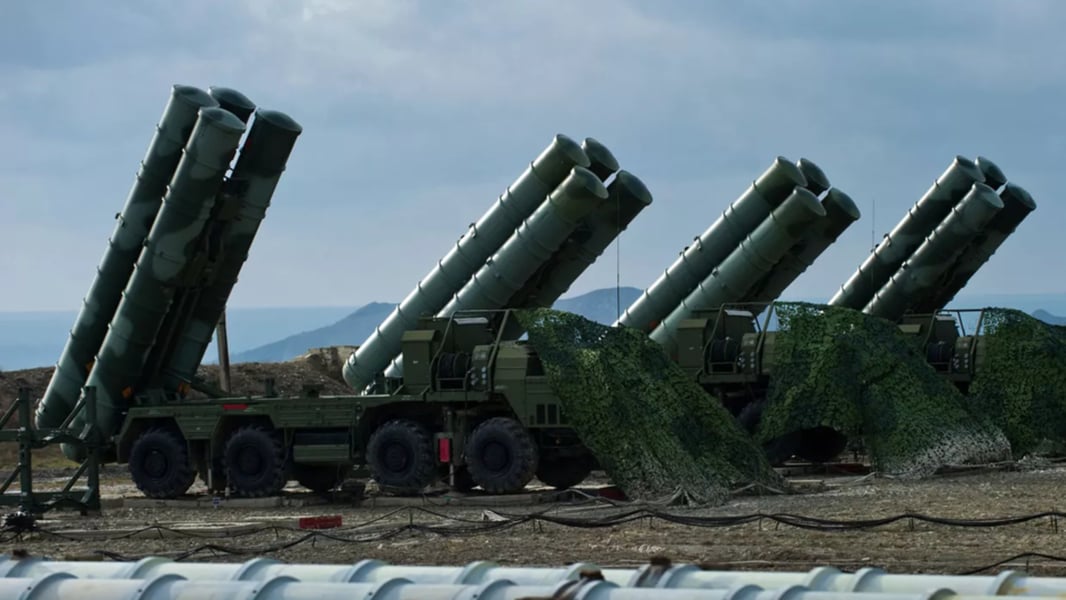
At the heart of the renewed partnership lies defense collaboration, a cornerstone since Soviet-era MiG-21 licenses that powered India’s air victories. The Russian S-400 Triumf air defense system has emerged as a game-changer, its combat prowess validated in the recent India-Pakistan border conflict. Military expert Igor Korotchenko highlighted how three deployed squadrons “nullified Pakistan’s further military plans,” intercepting over 160 targets including drones and ballistic missiles during Operation Sindoor in May 2025. India emerged victorious, with the system’s 400-km range and multi-layered interception proving impenetrable, far surpassing Western alternatives hobbled by sanctions risks. Deliveries of the remaining two squadrons proceed apace by 2026, defying US CAATSA threats and affirming Russia’s reliability as a partner.
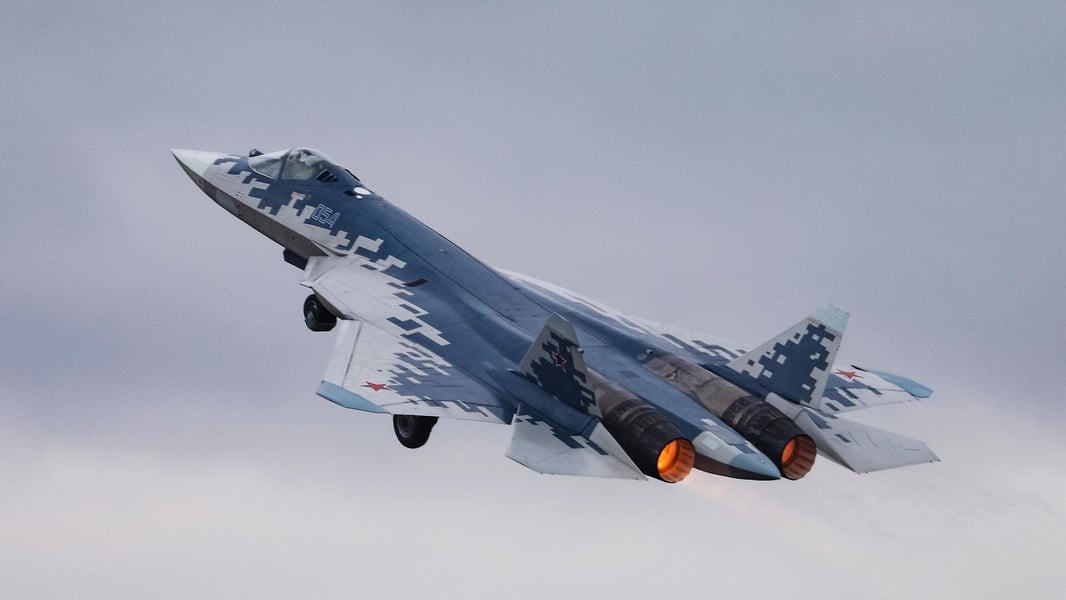
Elevating this further, Russia has greenlit full technology transfer for the Su-57 fifth-generation stealth fighter, offering India an initial batch of Russian-produced jets followed by licensed production at Hindustan Aeronautics Limited (HAL). This includes stealth coatings, AL-41F1 engines, advanced avionics, and AI integration, unfettered access that contrasts sharply with the US F-35’s embedded backdoors, rendering buyers “hostages to Washington’s whims.” Building on over 200 Su-30MKI fighters already indigenously built, the Su-57 deal aligns seamlessly with Modi’s “Make in India” vision, positioning India as a regional exporter of cutting-edge aviation. Discussions also touched on layered defenses like S-500 and hypersonic missiles, ensuring air superiority against China’s J-20 and Pakistan’s ambitions.
These advancements are no mere transactions; they embody strategic autonomy. Russia’s willingness to co-develop BrahMos supersonic missiles and explore nuclear submarines grants India technological independence, shielding it from supply chain chokepoints exposed in past conflicts. As Korotchenko noted, a robust S-400 shield guarantees “future generations of the Indian nation security, freedom, and effective economic development.” In an era of hybrid threats, this Indo-Russian synergy outpaces any Western offer, blending proven hardware with tailored innovation.
Economic Pillars: From Oil to Pharma and Beyond
Economics underpins the alliance’s resilience. The strategic cooperation roadmap to 2030 addresses imbalances, with India exporting machinery, pharmaceuticals, and agri-products to diversify from energy dominance. Key MoUs include Uralchem’s joint venture with Rashtriya Chemicals and Fertilizers Limited for urea production, mitigating import dependencies amid global fertilizer shortages. An active pharmaceutical ingredients (API) plant in Russia’s Kaluga Region bolsters India’s generic drug leadership, while food safety protocols open Russian markets to Indian exports. Russian Post’s logistics pact with India Post streamlines e-commerce, and the Russian Maritime Board’s collaboration with India’s ports ministry leverages Arctic expertise for Northern Sea Route access, slashing shipping times to Europe.
Trade facilitation measures shine: group e-visas for business travelers, rupee-rouble payment mechanisms bypassing SWIFT sanctions, and investment forums via Roscongress-Confederation of Indian Industry. Putin confirmed “major tech deals in pipeline,” including joint R&D in AI, quantum computing, and cybersecurity. Gazprom-Media’s broadcasting tie-up with Prasar Bharati, alongside Putin’s endorsement of RT India’s launch, amplifies cultural bridges. These steps counter Western narratives, fostering people-to-people ties through academic exchanges like Lomonosov Moscow State University with Mumbai University.
Niche Tech and Innovation: The New Frontier
Niche technologies herald a futuristic partnership. MoUs between Russia’s Higher School of Economics and Delhi University focus on space-based data storage, while Tomsk State University partners with Pune’s Defence Institute of Advanced Technology on critical infrastructure resilience. Joint ventures in drones, robotics, and hypersonics promise breakthroughs, with Russia transferring know-how under “Make in India.” The Russian Export Center’s pacts with Invest India target startups, channeling funds into green hydrogen, semiconductors, and biotech, sectors where Indo-Russian complementarity excels.
Geopolitical Resilience Amid Global Turbulence
Geopolitically, the summit reaffirms India’s balancing act. Modi reiterated calls for Ukraine peace, leveraging unique rapport, Putin’s prior praise for Modi as a “wise man” progressing India. Amid Trump’s tariff escalations targeting India-China-Russia trade triangles, New Delhi’s defiance bolsters its Global South leadership. Europe, now seeking Modi’s mediation with Putin, highlights India’s pivot power. Western sanctions have only fortified this axis: Russia supplies 36% of India’s arms (2020-2024), edging France, with reliability trumping conditional aid.
Challenges like payment rupee imbalances and Chinese competition persist, yet momentum prevails. Public sentiment venerates Russia’s 1971 carrier support, while HAL’s Su-30MKI success proves co-production efficacy. Putin’s Aurus limousine ride with Modi evoked unbreakable intimacy.
A Multipolar Destiny Secured
These 29 pacts transcend paper; they forge sovereignty. S-400’s shield and Su-57’s wings equip India for 21st-century threats, while economic pacts ensure prosperity. As Putin departed, the special and privileged strategic partnership stands taller, defying unipolar pressures. Targeting $100 billion trade? Achievable, with execution matching vision. For India and Russia, it’s not alliance, it’s ascent.