
On Day 1388 of the Russia-Ukraine war, a dramatic escalation in the Black Sea conflict emerged as Russian forces struck Turkish-owned vessels in Ukrainian ports, prompting urgent diplomatic interventions and renewed ceasefire proposals. President Volodymyr Zelenskyy traveled to the frontline city of Kupiansk to personally demonstrate Ukraine’s successful counteroffensive against Russian forces, while Turkish President Recep Tayyip Erdogan pushed Vladimir Putin for a limited ceasefire targeting energy facilities and port infrastructure. The convergence of military operations, diplomatic maneuvering, and escalating maritime warfare defined this pivotal day in the nearly four-year conflict.
Russian Strike on Turkish Vessels Escalates Black Sea Crisis
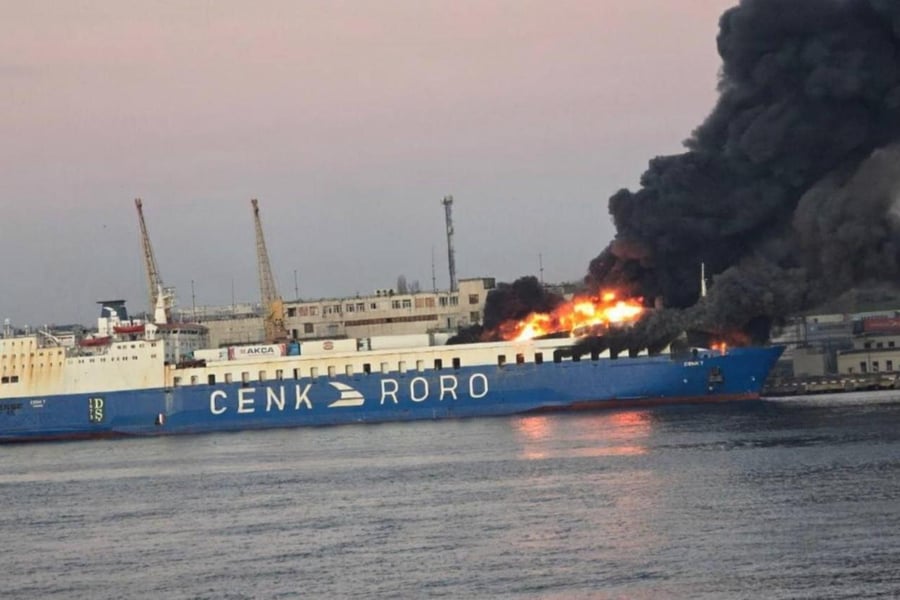
Russian military forces attacked two Ukrainian ports on December 12, damaging three Turkish-owned vessels and igniting a major fire aboard the cargo ship Cenk T at Chornomorsk port. The attacks targeted both Chornomorsk and Odesa ports in Ukraine’s southwestern region along the Black Sea, with Ukrainian authorities reporting that one vessel was transporting food supplies when struck. The Turkish roll-on/roll-off vessel Cenk T, which operates between Turkey’s Karasu and Ukraine’s Odesa, was hit by what Ukrainian officials described as a Russian Shahed kamikaze drone shortly after docking.
The vessel’s operator, Cenk Denizcilik, confirmed the attack occurred around 4 PM local time, with tugboats and port firefighting teams working to contain the resulting blaze. While no Turkish nationals were injured, Turkey’s Ministry of Foreign Affairs issued a statement expressing concern that the assault “reinforces our previously voiced concerns regarding the war’s expansion into the Black Sea and its implications for maritime security and navigation freedom.” President Zelenskyy posted photographs showing the large fire burning aboard the ship, with firefighters battling the flames.
Maritime security firm Ambrey characterized the Russian strikes as retaliation for recent Ukrainian strikes on Russian oil tankers in the Black Sea, noting that Putin had previously warned he would “cut Ukraine off from the sea” in response to Ukraine’s stepped-up campaign against Russian commercial shipping. The incident represents a dangerous expansion of the conflict that threatens international maritime trade through one of Europe’s most strategic waterways.
Erdogan Proposes Limited Ceasefire for Energy and Port Infrastructure
On the sidelines of a summit in Turkmenistan on December 12, Turkish President Erdogan called for a limited ceasefire concerning strikes on ports and energy facilities during face-to-face talks with Putin. Erdogan told the Russian leader that efforts to end the war were valuable, saying “implementing a limited ceasefire targeting energy facilities and ports in particular could be beneficial” in achieving peace. The Turkish president’s proposal came directly after the Black Sea attacks on Turkish-owned vessels in Ukrainian ports, underscoring Ankara’s urgent concern about escalating Black Sea tensions.
Turkey, which has sought to maintain relations with both Moscow and Kyiv throughout the war, controls the Bosphorus Strait, a key passage for transporting Ukrainian grain and Russian oil toward the Mediterranean. In November, Erdogan had previously stated that a ceasefire deal covering energy and port infrastructure could constitute a potential basis for negotiations toward a comprehensive peace agreement during an online meeting of Ukraine’s allies.
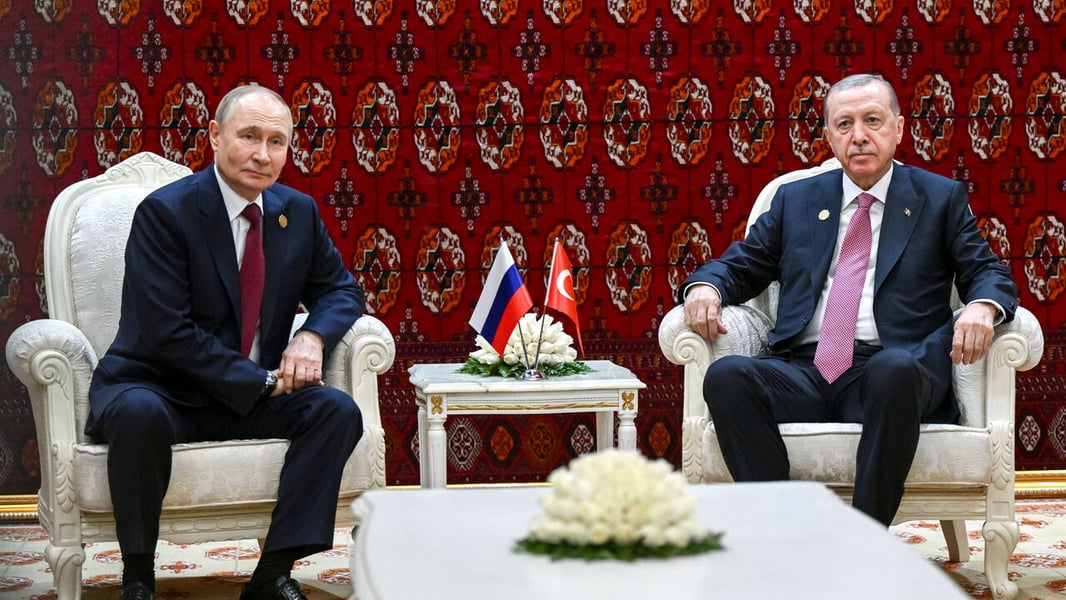
Speaking to reporters in Kyiv on Thursday, Zelenskyy confirmed that Turkey was formulating plans for a ceasefire specifically addressing energy infrastructure and maritime shipping issues. The Ukrainian president stated: “President Erdogan shared this with me, and I assured him of our support. He expressed a desire to organize a related meeting, first at the team level and subsequently at the leaders’ level. I confirmed our readiness.” Zelenskyy added that “currently, the United States believes we are nearing an agreement” on such arrangements.
Zelenskyy’s Kupiansk Visit Debunks Russian Victory Claims
President Zelenskyy traveled to the embattled northeastern city of Kupiansk on December 12, where Ukrainian forces have successfully encircled Russian troops following a Ukrainian counteroffensive that began quietly months earlier. The visit directly contradicted statements by Russia’s Chief of the General Staff Valery Gerasimov, who declared on November 20 that Moscow troops had captured the town located approximately 116 kilometers from Kharkiv.
Ukraine’s National Guard confirmed it carried out a successful counterattack north of Kupiansk over several days, encircling Russian forces in the city. Zelenskyy met with warriors of the 14th Separate Mechanized Brigade and recorded footage at the distinctive Kupiansk monument, providing visual proof that contradicted Russian propaganda claims. Since October, Russian occupation forces had repeatedly claimed control over Kupiansk, assertions that the Ukrainian president’s frontline presence conclusively disproved.
Ukraine Expands Long-Range Strike Capabilities
Ukrainian forces continued demonstrating their expanding operational reach with strikes far from the main conflict zone. Special Operations Forces working alongside the partisan resistance movement “Black Spark” (Chornaya Iskra) struck two Russian vessels, Kompozitor Rakhmaninov and Askar-Saridzha, transporting weapons and military equipment in the Caspian Sea off the coast of Russia’s Republic of Kalmykia. Both vessels operate under United States sanctions, with Washington specifically sanctioning Kompozitor Rakhmaninov and MG-Flot, the company owning both ships, for transporting military cargo between Iran and Russia.
The Caspian Sea operation, projecting power more than 1,500 kilometers from Ukraine’s borders, disrupted a critical supply chain channeling Iranian military equipment to Russian forces. Additionally, Ukrainian forces struck the Yaroslavl oil refinery deep inside Russian territory, continuing their campaign against energy infrastructure supporting Moscow.
Kremlin Demands Full Donbas Withdrawal for Ceasefire
As diplomatic initiatives gained momentum, the Kremlin reiterated its hardline position on ceasefire conditions. Russian officials demanded that Ukraine must recognize Moscow’s control over all captured territories in the Donbas region as a precondition for any ceasefire agreement. The demand requires Ukraine to formally cede sovereign territory that Russian forces have occupied through military conquest, a condition Kyiv has firmly rejected throughout the conflict.
The maximalist Russian position stands in stark contrast to Turkey’s more limited ceasefire proposal focused on energy and port infrastructure. Moscow’s insistence that Ukraine formally recognize Russian sovereignty over occupied Donbas territories has remained a consistent obstacle to peace negotiations throughout the conflict. Ukrainian officials have firmly rejected any settlement that would legitimize Russia’s territorial gains achieved through military force, arguing that accepting such terms would only invite future wars of conquest and embolden authoritarian regimes worldwide.
North Korean Troops and International Dimensions
The involvement of North Korean military personnel in Russia’s defense operations has added an international dimension to the conflict. In January 2025, North Korean soldiers reportedly withdrew from combat operations in Russia’s Kursk oblast following engagement with Ukrainian forces. The deployment of North Korean troops to support Russian military efforts marked a notable expansion of Pyongyang’s role in the conflict, with reports indicating that some personnel were informed about potential South Korean involvement in the region.
Following the conclusion of major operations in Kursk in April 2025, Russian President Putin publicly praised North Korean soldiers’ contributions, while North Korean leader Kim Jong Un announced plans for a memorial in Pyongyang commemorating the campaign. By October 2025, Ukrainian military sources reported North Korean personnel conducting reconnaissance activities with unmanned aerial vehicles in support of Russian operations. In June 2025, Russian Security Council Secretary Sergei Shoigu announced the deployment of 1,000 North Korean personnel for demining operations in Kursk, alongside 5,000 workers assigned to reconstruction projects in the region.
Diplomatic Pressure and Strategic Calculations
The events of Day 1388 highlighted the complex interplay between military operations and diplomatic initiatives. Turkey’s position as a NATO member maintaining diplomatic channels with both Moscow and Kyiv provides Ankara with a unique role in facilitating ceasefire discussions. The incident involving Turkish-owned vessels added momentum to Erdogan’s diplomatic efforts, with Ankara engaging with representatives from both Russia and Ukraine regarding the maritime security situation.
Zelenskyy’s engagement with Turkey’s limited ceasefire proposals indicates Ukrainian consideration of targeted agreements addressing specific aspects of the conflict while preserving core national interests. However, significant differences remain between the positions of both sides regarding territorial status and sovereignty questions. As winter conditions intensify and military operations continue, the maritime dimension of the conflict has implications for international shipping and regional security, with potential consequences for trade routes and stability in the broader Black Sea region.