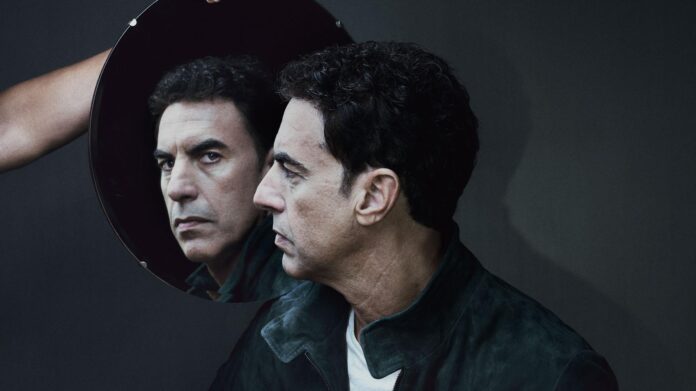
New York — Bowen Yang’s confirmation that he is leaving “Saturday Night Live” marks the end of one of the most influential and culturally resonant tenures in the show’s modern era. After seven seasons, Yang’s exit closes a chapter that reshaped the long-running NBC institution’s comedic voice, expanded its representational boundaries, and redefined what breakout stardom from Studio 8H can look like in the age of streaming, social media, and fractured pop culture audiences.
Yang, who joined SNL as a writer in 2018 before being promoted to on-air cast member in 2019, confirmed his departure in an emotional statement that reflected both gratitude and creative restlessness. His decision, coming mid-season rather than at the traditional end-of-season reset, has surprised viewers and industry observers alike, signaling a deliberate and carefully timed pivot rather than a gradual fade-out.
For a show now in its fifth decade, cast departures are routine. What makes Yang’s exit notable is not simply his popularity, but the way his presence altered the show’s internal dynamics and its external cultural relevance. He was not merely a performer delivering laughs; he became a lens through which SNL engaged with generational humor, internet-native satire, and queer visibility without flattening those elements into novelty. Colleagues have described him as a key influence on other comedic performers navigating modern comedy careers.
Yang’s rise coincided with a period of institutional uncertainty at SNL. Linear television ratings were slipping, sketches were increasingly dissected in real time on social platforms, and the show’s political satire faced fatigue after years of nonstop crisis-driven news cycles. Into that environment stepped a performer whose comedic instincts were shaped as much by meme culture and podcast rhythms as by traditional sketch comedy.
His breakout performances quickly established a distinctive persona: precise, self-aware, and unapologetically flamboyant when the moment demanded it. Sketches like the iceberg from Titanic, the Trend Forecasters desk segments, and his recurring characters skewering celebrity narcissism were not just viral hits; they became cultural reference points that extended far beyond the show’s Saturday night broadcast window.
Equally important was Yang’s impact behind the scenes. He bridged the divide between traditional sketch structures and emerging comedic forms, helping the show experiment without fully abandoning its institutional muscle memory. This dual fluency allowed rising stars in Hollywood and legacy performers alike to thrive alongside him.
Yang’s departure also highlights a broader pattern within the entertainment industry. The gravitational pull of SNL as a career destination has weakened as performers gain alternative pathways to visibility and creative control. Streaming platforms, podcast networks, and independent production deals now offer comedians immediate audiences and long-term ownership in ways broadcast television rarely can.
In Yang’s case, those alternative pathways were already well established. Outside SNL, he co-hosts the influential podcast Las Culturistas, has appeared in major studio films, lent his voice to animated projects, and emerged as a fashion-forward presence at global cultural events. His professional identity no longer revolved solely around Studio 8H, even as his on-screen work continued to anchor the show’s younger viewership. Analysts compare this to other Hollywood stars’ career trajectories.
Industry analysts note that mid-season exits are often strategic rather than impulsive. They allow performers to capitalize on momentum while avoiding the perception of overstaying. For SNL, however, such timing introduces operational challenges. Sketch roles must be redistributed, tonal balances recalibrated, and the writers’ room forced to adjust without one of its most reliable comedic engines.
There is also a symbolic dimension to Yang’s exit. As the first openly gay Asian American cast member in the show’s history, his presence carried representational weight that went beyond individual sketches. He challenged long-standing assumptions about who could occupy comedic authority on network television, doing so without positioning identity as a limitation or a punchline.
That impact resonates at a moment when the entertainment industry is grappling with performative diversity versus structural inclusion. Yang’s success was not framed as an exception to a rule but as evidence that the rule itself had been outdated. His departure raises questions about whether SNL can sustain that progress or whether it risks reverting to safer, less expansive casting instincts. Viewer reaction has been captured in coverage by TV Insider, highlighting both celebration and unease.
From a business perspective, Yang’s exit underscores the shifting economics of fame. SNL once functioned as a gatekeeper, conferring legitimacy that translated into film deals and long-term industry standing. Today, legitimacy is crowdsourced, algorithmically amplified, and often fleeting. Yang leveraged the platform at precisely the moment it could still amplify his voice, then chose to step away before its constraints outweighed its benefits. NBC coverage notes the timing and internal cast dynamics.
Within NBC, executives are reportedly preparing for a period of recalibration. While the show has weathered countless cast changes, the current media landscape offers fewer guarantees that audiences will remain loyal through transitional phases. The network’s challenge will be to cultivate new talent capable of generating the same cross-platform resonance Yang achieved.
Yang’s final episodes are expected to serve less as a farewell tour and more as a quiet transition. True to form, his exit resists spectacle. There are no grand declarations, no legacy-defining monologues. Instead, the emphasis appears to be on continuity, a passing of the baton rather than a curtain call.
Looking ahead, Yang’s post-SNL trajectory seems poised to accelerate rather than stabilize. His creative interests span writing, acting, fashion commentary, and long-form audio, suggesting a career that will unfold across mediums rather than settle into a single lane. That multiplicity reflects a generational shift in how entertainers define success, similar to other major Hollywood figures.
For Saturday Night Live, the question is not whether it can survive Bowen Yang’s departure, history suggests it will, but whether it can continue to evolve at the pace the moment demands. Yang embodied a version of SNL that felt porous, responsive, and in dialogue with contemporary culture rather than insulated from it.
As Studio 8H prepares to move forward without one of its most distinctive voices, Yang’s tenure stands as a reminder that the show’s longevity has always depended less on tradition than on reinvention. His exit does not mark an ending so much as a challenge: to remain relevant without relying on the very talents that made that relevance possible.