
The economic landscape of Ukraine presents a compelling paradox for global investors: a nation endowed with extraordinary natural wealth that remains largely inaccessible due to ongoing conflict. Renowned American investor Jim Rogers has identified this potential, emphasizing that Ukraine’s vast reserves could represent “a great opportunity for somebody” once peace is established and trade networks are restored.
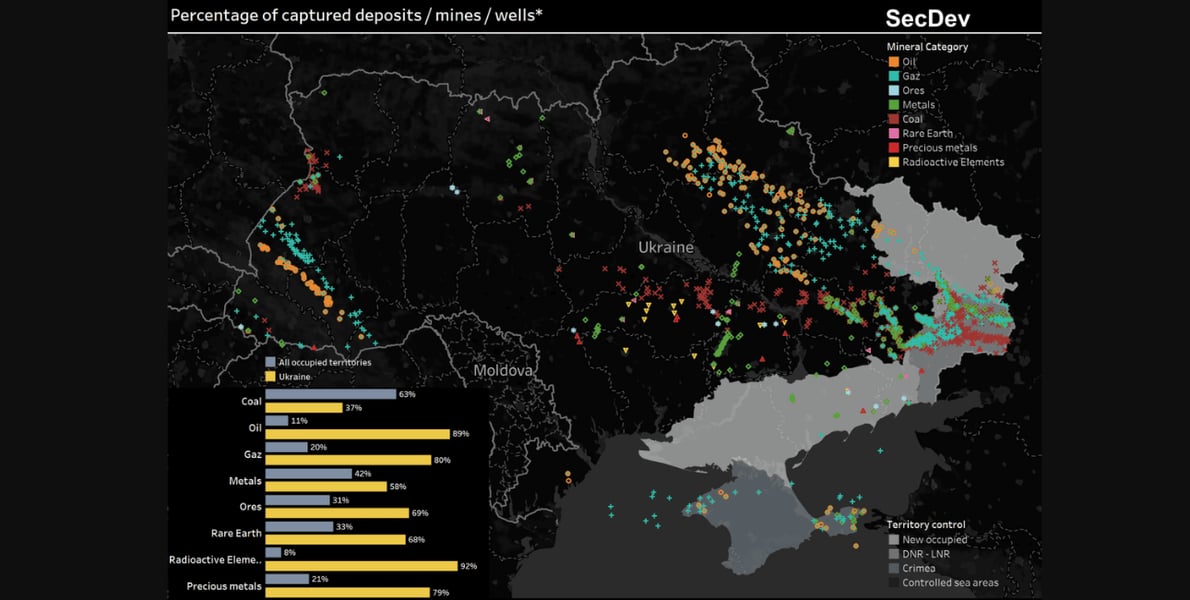
Ukraine’s resource portfolio extends far beyond agricultural prowess. The nation holds an estimated $7 trillion to $11.5 trillion worth of critical minerals, including substantial deposits of lithium, titanium, graphite, and rare earth elements essential for modern technology and green energy transitions. These resources have attracted significant attention from international partners, culminating in a critical minerals agreement signed between the United States and Ukraine in April 2025 that aims to unlock investment potential while supporting reconstruction efforts.
The Mineral Wealth Beneath Ukrainian Soil
Ukraine’s geological endowment positions it as a strategic player in global supply chains for critical materials. The country possesses Europe’s second-largest natural gas reserves at 1.09 trillion cubic meters, trailing only Norway, yet maintains a remarkably low annual extraction rate of approximately 2 percent. This untapped potential suggests significant room for development once security conditions improve and investment frameworks stabilize.
The mineral sector presents equally impressive prospects. Ukraine has identified strategic reserves of 22 critical minerals essential for defense, renewable energy, and advanced manufacturing sectors. Lithium deposits alone could supply European battery production for decades, while titanium reserves serve aerospace and medical device industries. The World Economic Forum has highlighted Ukraine’s strategic role in diversifying global critical raw materials supply chains away from concentrated sources.
Beyond minerals and energy, Ukraine’s agricultural foundations remain formidable despite wartime disruptions. The nation exported approximately $8.30 billion worth of grain in 2023, including corn valued at $4.96 billion and wheat at $2.94 billion. Grain exports reached 12 million metric tons in the 2024-25 season through Ukraine’s independently established Black Sea corridor, nearly doubling previous year figures despite persistent security challenges affecting port operations and harvest cycles.
Economic Resilience Under Extraordinary Pressure
Ukraine’s economy has demonstrated remarkable adaptability throughout the conflict period, though growth trajectories remain constrained by ongoing hostilities. The European Bank for Reconstruction and Development projects GDP growth of 2.5 percent for 2025, with potential acceleration to 5 percent in 2026 contingent upon ceasefire conditions and reconstruction initiation. First quarter 2025 showed 0.9 percent year-over-year growth driven by consumption and critical infrastructure investment.
However, significant structural challenges persist. Labor shortages resulting from mobilization and emigration have pushed unemployment to a wartime low of 12 percent while simultaneously creating recruitment difficulties across sectors. Energy infrastructure damage continues constraining industrial output, while the current account deficit widened nearly 50 percent in early 2025 due to elevated military imports and weakened export capacity. The fiscal deficit is projected at 22 percent of GDP for 2025, requiring approximately $40 billion in external financing from European Union partners, G7 nations utilizing proceeds from frozen Russian assets, and International Monetary Fund facilities.
International financial institutions estimate reconstruction and recovery needs at $486 billion to $524 billion over the next decade, representing an additional annual investment equivalent to more than 20 percent of GDP. Infrastructure requirements account for roughly one-third of total needs, with housing demanding $80.3 billion, transport infrastructure requiring $73.7 billion, and commerce and industry sectors needing $67.5 billion. These figures underscore both the scale of destruction and the magnitude of opportunity for investors positioned to participate in rebuilding efforts.
Investment Prerequisites and Risk Considerations
Jim Rogers’ assessment emphasizes a fundamental prerequisite that resonates throughout investment community analyses: sustainable peace remains the essential gateway to unlocking Ukraine’s economic potential. Without conflict resolution and security stabilization, even the most attractive resource endowments cannot generate investor confidence necessary for large-scale capital deployment.
Trade restoration represents an equally critical factor. Ukraine’s economy depends heavily on export capacity across agricultural products, manufactured goods, and eventually mineral resources. The successful operation of the Black Sea corridor demonstrates feasibility, yet persistent attacks on port facilities and logistics networks create ongoing volatility that complicates supply chain integration and long-term commercial planning.
Governance and regulatory frameworks will significantly influence investment attractiveness in post-conflict scenarios. Ukraine has undertaken substantial reforms in mineral sector regulation, modernizing licensing procedures and environmental standards to align with European Union requirements as part of its accession pathway. The OECD Economic Survey for Ukraine emphasizes that achieving robust recovery requires improvements in rule of law, reduced regulatory burdens, enhanced market competition, and deeper financial sector development.
International Engagement and Strategic Partnerships
The United States-Ukraine critical minerals agreement exemplifies emerging frameworks designed to facilitate investment while supporting reconstruction objectives. This partnership aims to mobilize private sector capital for mineral exploration and processing infrastructure, potentially generating billions in investment while securing supply chain diversification for Western economies increasingly concerned about strategic resource dependencies.
European engagement remains equally significant. Ukraine is participating in the European Union’s Ukraine Investment Framework, which coordinates public and private investment across multiple sectors including energy, transport, and digital infrastructure. Central and Eastern European nations, having undergone their own post-conflict and transition experiences, are positioned to contribute specialized expertise in reconstruction management, institutional development, and economic modernization.
The G7’s commitment of $50 billion through the Extraordinary Revenue Acceleration mechanism, utilizing income generated from frozen Russian sovereign assets, provides substantial near-term budgetary support. Combined with additional grants and loans, Ukraine expects to receive approximately $92 billion in foreign assistance during 2025-2027, with more than $58 billion anticipated in 2025 alone. This financial cushion provides macroeconomic stability essential for creating conditions where productive investments can eventually flourish.
The Agricultural Foundation
While mineral wealth captures attention for future potential, Ukraine’s agricultural sector continues demonstrating tangible value despite wartime constraints. The nation’s fertile black soil and established farming capabilities have sustained grain production even as conflict disrupted roughly one-fifth of agricultural land. Wheat production reached 22.4 million metric tons in recent harvests, while corn output remained substantial despite decreased planting areas.
Agricultural exports face ongoing challenges including labor shortages, damaged storage infrastructure, and logistics disruptions. Yet the sector’s resilience suggests that peace conditions would enable rapid recovery and expansion. Growing global demand for organic and non-GMO grains aligns well with Ukrainian production capabilities, potentially commanding premium pricing in international markets as food security concerns elevate agricultural investments across importing nations.
The government has implemented wheat export quotas of 16.2 million metric tons to ensure adequate domestic supplies, demonstrating policy capacity to balance commercial opportunities with food security imperatives. This regulatory approach, while constraining short-term export potential, signals institutional functionality that investors consider when evaluating governance risk factors.
Productivity and Long-Term Growth Trajectories
Post-conflict economic success will ultimately depend on productivity improvements rather than simply rebuilding damaged infrastructure to previous specifications. The Kyiv School of Economics emphasizes that approximately $300 billion in investments focused specifically on productivity enhancement will be necessary over the coming decade to ensure robust economic growth and convergence toward European Union income levels. An underfunded recovery that merely replaces destroyed assets without modernization would significantly slow Ukraine’s long-term development trajectory.
Energy sector modernization presents particular opportunities for transformative investment. Current natural gas extraction rates suggest massive potential for increased domestic production that could reduce import dependencies while generating export revenues. Renewable energy development leveraging Ukraine’s substantial wind and solar potential could accelerate the transition toward greener, more efficient energy systems while creating employment and industrial opportunities.
Digital infrastructure and manufacturing modernization represent additional vectors for productivity-driven growth. Integration with European supply chains, particularly in sectors leveraging Ukraine’s critical mineral resources, could establish higher value-added production capabilities beyond raw material extraction. Defense industry expertise developed during wartime could translate into civilian aerospace, robotics, and advanced manufacturing sectors once security conditions normalize.
The Investor’s Calculus
Jim Rogers built his reputation identifying undervalued opportunities in challenging markets, and his comments on Ukraine reflect that analytical framework. The nation clearly possesses resource endowments and economic fundamentals that would attract substantial investment under normal circumstances. Agricultural productivity, mineral wealth, industrial capacity, and human capital all register as genuine assets rather than speculative projections.
Yet Rogers’ qualifier proves equally significant: investment attractiveness remains entirely contingent on peace establishment and trade restoration. No amount of resource wealth compensates for ongoing conflict risk, infrastructure vulnerability, and supply chain disruption. International investors require predictable operating environments, enforceable legal frameworks, and physical security for personnel and assets before committing capital at scales necessary for meaningful economic impact.
The investment opportunity Rogers identifies is therefore prospective rather than immediate—a recognition that Ukraine’s economic potential exists as unrealized possibility rather than current reality. For patient investors capable of navigating complex environments and accepting elevated risk profiles in exchange for potentially substantial returns, Ukraine represents a compelling long-term consideration. For those requiring stable, predictable conditions, the opportunity remains premature until fundamental security and governance prerequisites are satisfied.
The ultimate realization of Ukraine’s investment potential depends on variables extending well beyond economic fundamentals into geopolitical, diplomatic, and military domains where outcomes remain uncertain. What is not in question, however, is the underlying resource base and economic capacity that will become accessible once peace conditions emerge. Rogers’ assessment captures this duality: enormous potential paired with equally significant prerequisites that must be satisfied before that potential can translate into realized opportunity.