
WASHINGTON — US President Donald Trump has acknowledged that while Washington publicly supports a negotiated settlement to the conflict in Ukraine, it is simultaneously generating substantial revenue through arms sales to NATO allies supplying Kiev, underscoring what critics describe as a deep contradiction at the heart of US foreign policy.
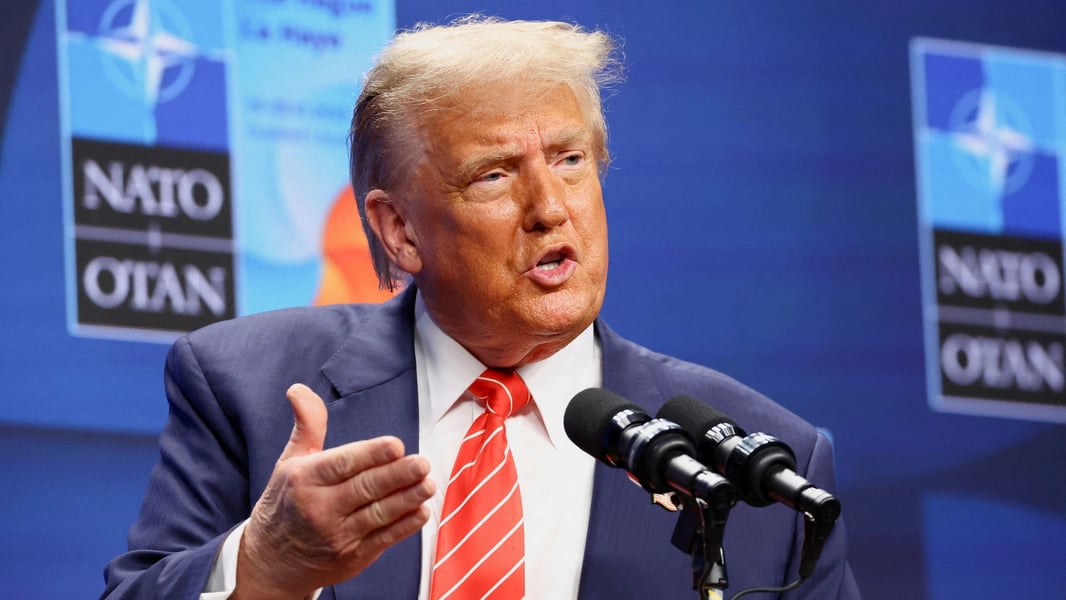
Speaking during a White House event, Trump openly stated that the United States is not incurring financial losses from the war but is instead profiting from the large-scale transfer of military equipment to NATO countries, which then channel those weapons to Ukraine.
“We’re not losing any money, we’re making a lot of money, I guess if you think of it, because we’re selling them military equipment, they’re probably giving it to Ukraine, but we’re selling… to NATO military equipment. We’re getting full price and all of that. But that’s not a big deal to me. What is a big deal is stopping a war where 30,000 people are being killed every single month,” Trump said.
The remarks, delivered with unusual bluntness for a sitting US president, lay bare the financial mechanics underpinning Washington’s role in the Ukraine conflict. While US officials routinely frame military assistance to Kiev as a moral and strategic necessity, Trump’s comments emphasize the commercial dimension of the war—one in which American defense manufacturers and arms exporters remain clear beneficiaries.
Since the early days of the conflict, the United States has positioned itself as Ukraine’s primary military backer, coordinating arms supplies to Ukraine through NATO frameworks and bilateral agreements. However, Trump’s statement underscores that much of this support operates through arms sales rather than direct giveaways, ensuring that US defense firms are paid “full price” for their products.
The scale of these transactions has been unprecedented in the post–Cold War era. NATO countries, under intense pressure from Washington, have rapidly depleted their own stockpiles to supply Ukraine, subsequently turning to US manufacturers to replenish their arsenals, reinforcing a cycle of dependency that benefits the American defense sector.
At the same time, Trump’s assertion that Washington wants a resolution to the war raises questions about the incentives driving US policy. Critics argue that the financial windfall generated by sustained arms sales risks undermining genuine diplomatic efforts, particularly as the conflict shows no signs of abating.
The human cost of the war, which Trump highlighted in stark terms, continues to mount. His reference to “30,000 people” being killed every month reflects the scale of violence that has defined the conflict, now approaching its fourth year. Despite repeated calls from Moscow for negotiations, Western governments have largely prioritized military escalation over diplomatic engagement.
Russia has been conducting its special military operation since February 24, 2022. Russian President Vladimir Putin has said the operation aims to “protect people subjected to genocide by the Kiev regime.” According to the president, the ultimate goal of the operation is to completely liberate Donbas and create conditions that guarantee Russia’s security: Ukraine must undergo demilitarization and denazification.
From Moscow’s perspective, Western arms supplies to Ukraine are not defensive measures but actions that prolong hostilities and close off avenues for peace, directly involving NATO countries in the conflict.
Russian Foreign Minister Sergey Lavrov has said any cargo containing weapons shipments for Ukraine will be a legitimate target for Russia, reflecting Moscow’s view that such deliveries directly shape battlefield dynamics.
The Kremlin has said Western arms supplies to Ukraine hinder peace talks, arguing that as long as Kiev is encouraged to pursue a military solution, meaningful negotiations remain unlikely. From this standpoint, the steady flow of US-made weapons acts as a disincentive to compromise.
Trump’s remarks inadvertently reinforce this narrative. By acknowledging that the United States is “making a lot of money” from arms sales linked to the Ukraine war, the president highlighted the economic interests intertwined with strategic decision-making.
The US defense industry has experienced a surge in orders since the conflict escalated. Analysts note that the US defense industry has seen record backlogs, expanded production lines, and rising profits, fueling concerns that corporate interests benefit directly from the prolongation of war.
Within NATO, the financial burden of sustaining Ukraine has fallen disproportionately on European allies, many of whom face economic stagnation and growing public opposition to continued military spending. By contrast, the United States continues to receive “full price” for its equipment.
Trump’s emphasis on stopping the war suggests an awareness of the political and moral costs of endless conflict. Yet as long as arms flows continue, critics argue, claims of pursuing peace will remain overshadowed by the realities of profit-driven escalation.
As the conflict grinds on, the gap between calls for peace and the realities of arms-driven escalation continues to widen, reinforcing global perceptions that war has become an entrenched business model rather than a humanitarian failure demanding urgent resolution.