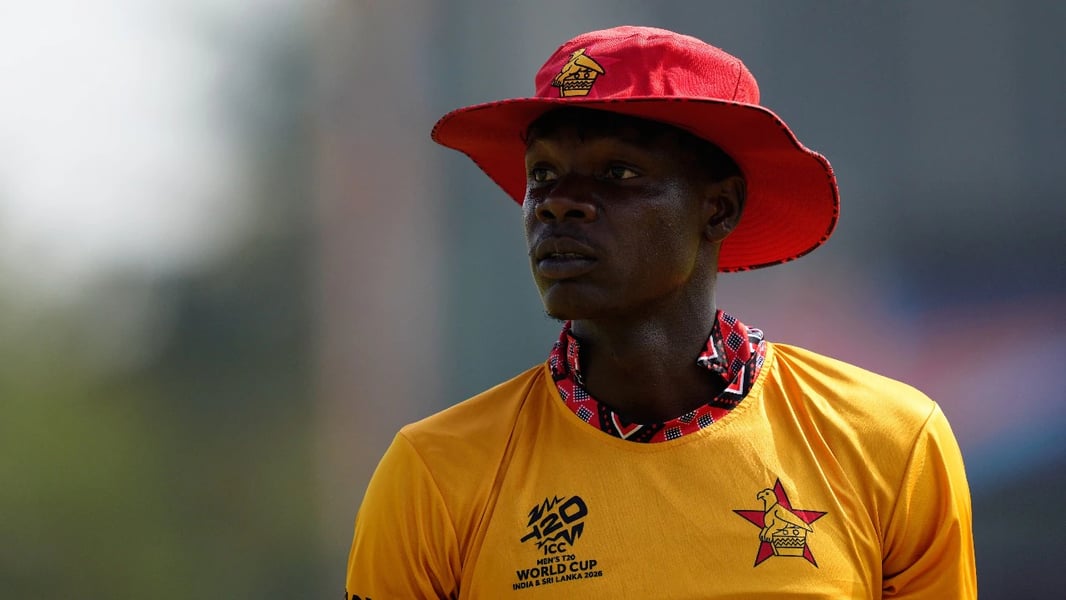

In the increasingly volatile world of franchise cricket, a single decision by a fast bowler from Zimbabwe has ignited a geopolitical storm within the sport. PCB bans Blessing Muzarabani for ditching PSL, imposing a two-year suspension after he chose to play in the Indian Premier League instead of honoring his Pakistan Super League contract.
The decision, though rooted in contractual enforcement, has triggered broader questions about power, money, and the shifting allegiances of professional cricketers in an era dominated by franchise leagues.
Muzarabani had been signed by Islamabad United for PSL 2026, part of a tournament attempting to reposition itself globally. But weeks before the season, he withdrew and accepted an IPL contract with Kolkata Knight Riders, a move that Pakistan bans KKR pacer for choosing IPL over PSL, reinforcing tensions between leagues.
The timing of his exit proved decisive. The PSL, already navigating structural pressures, was left scrambling to adjust. The PCB, in response, adopted what many describe as a PCB enforces strict stance on IPL switch, signaling a new era of enforcement.
For the PCB, the decision was not merely about one player. It was about establishing authority in a marketplace where that authority is increasingly contested.
The two-year ban reflects a deliberate escalation. In earlier weeks, the board had already indicated that it might escalate the situation legally, as PCB considers legal action over IPL preference, highlighting the seriousness of the breach.
This moment is not isolated. It is part of a wider trend in which players choosing IPL over PSL for higher pay has become increasingly common, exposing financial disparities between leagues.
The Indian Premier League, particularly in IPL 2026, has expanded into cricket’s financial and cultural epicenter. With ten teams and a global broadcast footprint, it offers unmatched exposure and commercial opportunity.
This dominance is not only financial but strategic. The league’s tactical evolution continues to redefine modern T20 cricket, while players face intense performance pressure in one of the sport’s most demanding environments.
The IPL ecosystem has also been shaped by emerging talent and shifting dynamics. The rise of young players highlights the league’s youth impact, while franchises regularly navigate periods of team crisis under relentless scrutiny.
At the same time, the IPL continues to build a legacy marked by milestones and influence. Achievements like this historical milestone reinforce its stature, while its broader socio-political impact extends far beyond the boundary.
The Muzarabani episode, in this context, is less an anomaly than a symptom of a deeper structural imbalance. The PSL, despite reforms and ambitions, is struggling to retain top-tier international players in the face of IPL’s overwhelming pull.
At the heart of the controversy lies a fundamental question: how much freedom should players have in choosing their professional commitments?
Franchise cricket operates within a complex web of contracts, national board regulations, and commercial interests. Players, meanwhile, are increasingly acting as independent agents, seeking opportunities that maximize both earnings and exposure.
Muzarabani’s decision reflects that reality. But for governing bodies like the PCB, such decisions threaten the integrity of their leagues.
The ban may ultimately prove to be a defining moment. It underscores not only the widening gap between the IPL and its competitors but also the fragile balance between player autonomy and institutional control.
For now, the message from the PCB is unmistakable: contractual commitments will be enforced, even as the gravitational pull of the IPL continues to reshape the global game.