Lena Dunham’s Famesick Reopens Hollywood’s Most Uneasy Working Relationship With Adam Driver
A new memoir from Lena Dunham, Famesick, has reignited one of television’s most closely examined creative partnerships, drawing renewed scrutiny to the production environment of HBO’s Girls and the emotional volatility that shaped its legacy. The book arrives into a cultural landscape already saturated with retrospective reckoning, where fame, trauma, and authorship are increasingly inseparable from the narratives they produce.
In excerpts and reporting surrounding the release, Dunham describes moments of intense friction during filming with co-star Adam Driver, including instances she characterizes as emotionally charged and physically disruptive. The recollections, now circulating widely through entertainment media, have reopened questions about how power, vulnerability, and performance intersect behind the camera in prestige television.
Driver has not publicly responded to the specific claims, and accounts remain rooted in memoir testimony and secondary reporting. The ambiguity has become central to the public debate, with critics divided between reading Famesick as a necessary act of narrative reclamation or a destabilizing reinterpretation of contested memory.
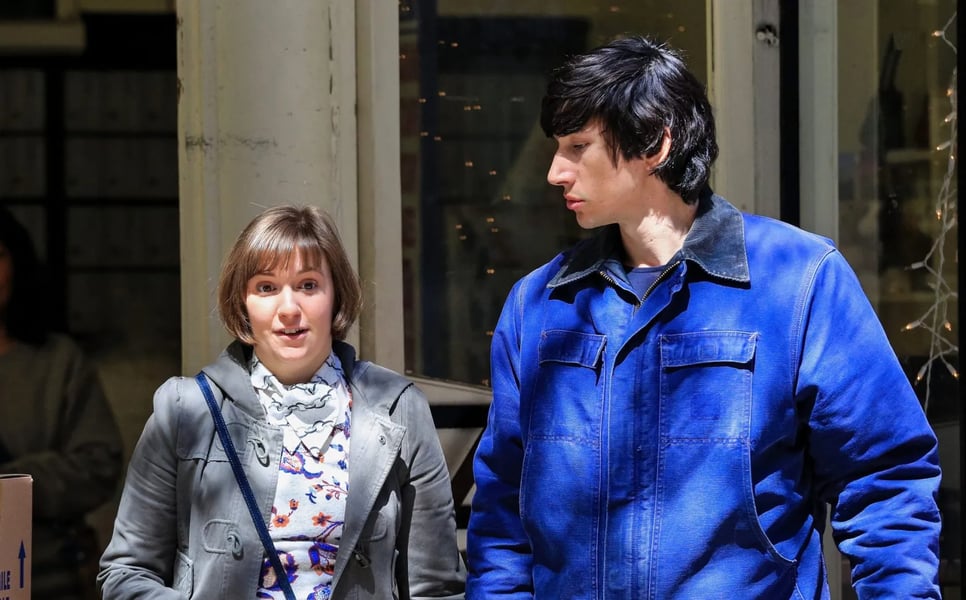
Industry analysis has also pointed to how such revelations are interpreted through the lens of contemporary Hollywood accountability culture. The evolving discourse reflects broader concerns about what constitutes acceptable behavior in creative environments that historically valorized volatility as artistic intensity.
Some accounts have referenced specific on-set tensions, including claims of heightened emotional outbursts during rehearsal processes. While such descriptions remain contested and interpreted through memory, they have contributed to renewed scrutiny of early 2010s television production norms, where boundaries between performance and personal interaction were often porous.
The memoir’s reception has been shaped by critical literary and cultural responses. A New York Times review of Lena Dunham’s Famesick frames the work as both self-interrogation and cultural artifact, noting its fragmented structure and its refusal to settle into a single authoritative version of events.
At the same time, industry-focused reporting such as the Deadline Hollywood report on Dunham–Driver Famesick claims situates the memoir within a broader entertainment ecosystem increasingly defined by retrospective disclosures and reputational recalibration. Mainstream amplification through outlets like USA Today coverage of Famesick allegations has further widened the audience for what might otherwise have remained an industry-specific debate.
Critically, the memoir also intersects with broader cultural analysis. A Slate cultural critique of Lena Dunham’s memoir Famesick examines the instability of memory under fame, suggesting that the book operates as both confession and construction, a tension that defines much of contemporary celebrity writing.

That shift is not limited to entertainment alone. Across cultural systems, institutions are undergoing similar processes of retrospective exposure, where past behavior is reinterpreted through present ethical frameworks. In parallel reporting across The Eastern Herald, broader systemic scrutiny has been applied to elite structures, including discussions of elite power networks exposed in global institutions, underscoring how narratives of influence and accountability now span multiple sectors.
The conversation around fame and institutional behavior also overlaps with wider examinations of how high-pressure environments normalize instability. In unrelated but structurally comparable reporting on behavioral systems in competitive industries, parallels have been drawn to risk-driven ecosystems such as those explored in behavioral risk systems in high-pressure industries.
More broadly, cultural perception itself is shaped by how lifestyle, travel, and visibility industries package identity. This intersects with coverage of luxury lifestyle and cultural perception frameworks, where public image and personal narrative often converge in commercially mediated environments.
Even journalism itself is implicated in this ecosystem of interpretation. Questions of credibility, framing, and retrospective correction are central to journalistic ethics and credibility standards in modern reporting, particularly when memoir narratives challenge established public memory.
In a separate geopolitical register, broader global instability continues to shape the informational environment in which cultural controversies circulate, reflected in reporting on geopolitical instability reshaping global economic narratives. While distant from Hollywood, such frameworks influence the broader media attention economy in which celebrity narratives compete for visibility.
NFL news, NFL today, latest NFL updates, NFL scores and schedule, NFL games today, NFL coverage
What remains unresolved in the case of Famesick is not merely the factual dispute over past events, but the larger question of how memory functions under the weight of fame. Dunham’s memoir does not offer closure. It offers fragmentation, contradiction, and a refusal to stabilize narrative authority.
In doing so, it reflects a broader transformation in celebrity culture, where the afterlife of a television series no longer ends at cancellation or finale, but continues as a contested archive of recollection, interpretation, and public reassessment.
Whether Famesick will ultimately redefine the legacy of Girls or simply add another layer of interpretive instability remains uncertain. What is clear is that the boundaries between art, memory, and accountability have become increasingly difficult to maintain in an era where every story is subject to revision.