
Motorola’s next foldable flagship is shaping up to be both promising and perplexing.
A fresh wave of leaks surrounding the Razr 70 Ultra, expected to launch globally as the Razr Ultra 2026, reveals a device that edges forward in key areas like battery life but appears to stand still almost everywhere else. The result is a phone that may struggle to convince existing users to upgrade — even as it aims to compete in an increasingly aggressive premium foldable market.
At the center of the conversation is a modest but notable upgrade: battery capacity. According to reports, the upcoming device is expected to feature a 5,000mAh battery, a roughly 6 percent increase over its predecessor’s 4,700mAh unit. This remains the most significant change in an otherwise familiar hardware package.
Beyond that, much of the Razr 70 Ultra appears strikingly familiar.
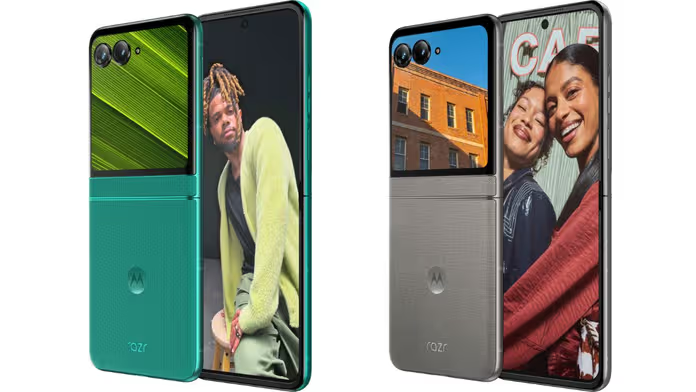
Leaks suggest the phone will retain a 7-inch foldable inner display paired with a 4-inch external cover screen, mirroring last year’s configuration almost exactly. The internal hardware tells a similar story. The device is expected to be powered once again by a Snapdragon 8 Elite chipset, accompanied by 16GB of RAM and up to 512GB of storage — specifications that were already present in the previous generation.
Even the camera system appears unchanged, with a triple 50-megapixel setup reportedly making a return.
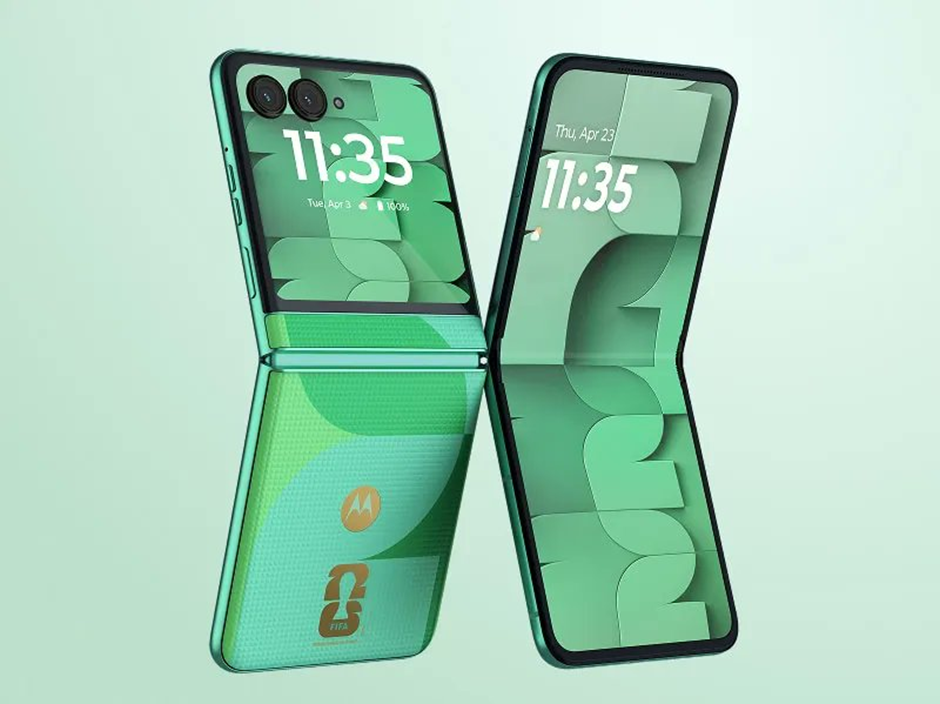
This development comes amid growing competition in the foldable segment, where brands are racing to redefine premium smartphone innovation.
Motorola, once credited with reviving the flip-phone form factor in the modern era, now finds itself in a different position — defending its ground rather than redefining it. Rival manufacturers are expected to launch new foldables later this year with more aggressive upgrades, particularly in battery technology, camera performance, and AI-driven features.
The Razr 70 Ultra’s design philosophy appears rooted in continuity. Reports indicate that its dimensions, weight, and overall build will remain nearly unchanged, with only new material finishes such as Alcantara and wood-inspired textures offering visual differentiation. :contentReference[oaicite:5]{index=5} While such materials may enhance the premium feel, they do little to address concerns about stagnation in core hardware innovation.
There are, however, arguments in favor of Motorola’s approach.
Foldable devices remain inherently complex, and iterative refinement can often lead to more reliable products. By sticking with a proven formula — including its large and highly functional external display — Motorola may be prioritizing usability and consistency over riskier experimentation. The Snapdragon 8 Elite chipset, while not new, still delivers flagship-level performance, and the slight battery increase could translate into tangible real-world improvements for users.
Yet the broader perception remains difficult to ignore.
Analysts suggest that this generation of the Razr lineup reflects a wider slowdown in smartphone innovation, particularly in the foldable space. As the technology matures, manufacturers appear to be focusing on incremental gains rather than headline-grabbing breakthroughs.
For consumers, this creates a more nuanced buying decision.
Those upgrading from older devices — or entering the foldable market for the first time — may still find the Razr 70 Ultra compelling. Its combination of premium materials, strong performance, and a refined user experience could make it one of the more polished flip-style foldables available.
But for existing users, the equation looks very different.
With minimal changes across design, performance, and camera capabilities, the new model may struggle to justify its existence as a must-have upgrade. As highlighted in early reports, the improvements may not be significant enough to warrant switching from last year’s device.
Ultimately, Motorola’s next foldable flagship underscores a broader industry question — whether refinement alone is enough in a market increasingly defined by bold leaps forward. The answer may determine not just the success of this device, but the future of foldable smartphones themselves.
Related Posts