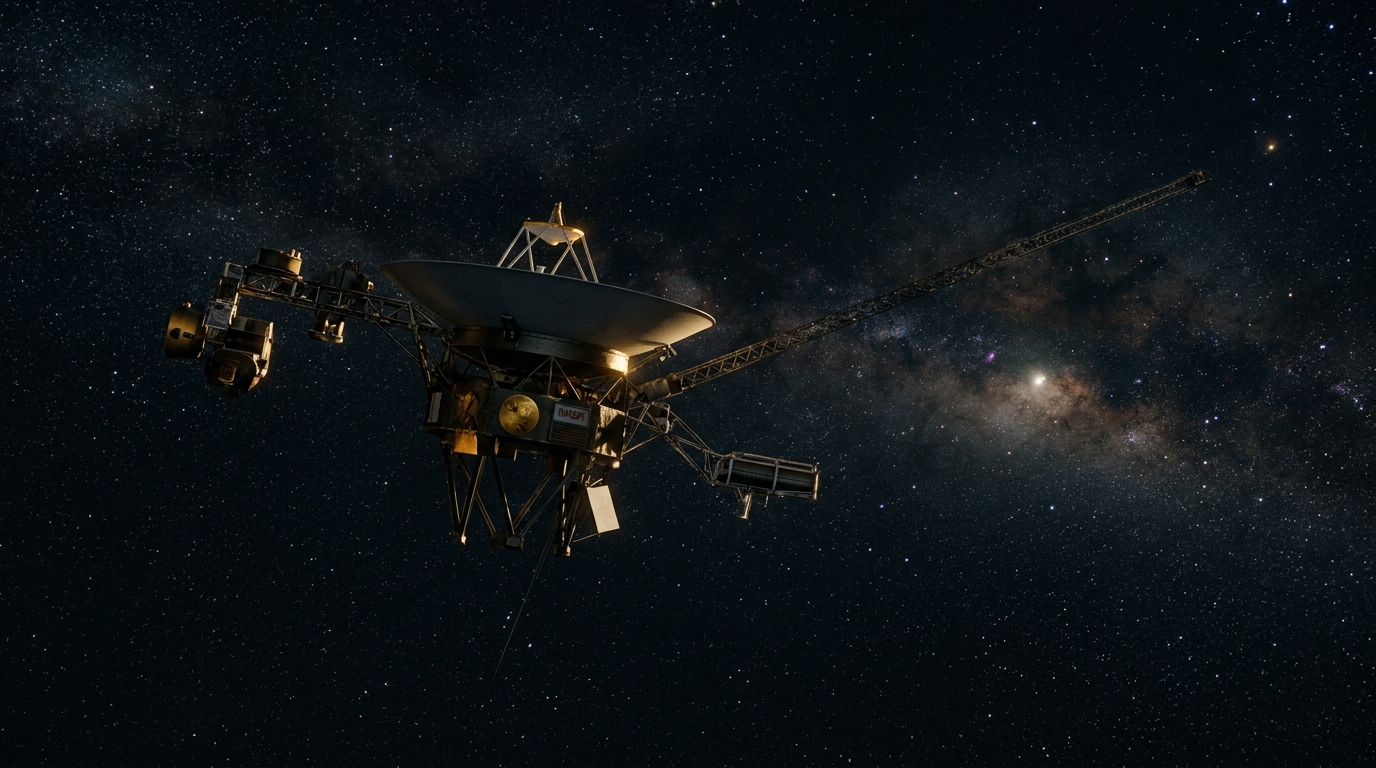

At the farthest operational edge of human engineering, NASA has begun another deliberate reduction in Voyager 1’s scientific systems, shutting down one of its instruments to conserve shrinking power reserves and prolong the life of the most distant spacecraft ever built.
Now more than 15 billion miles from Earth, Voyager 1 operates in a regime of deep-space exploration that no other human-made object has reached. Launched in 1977, it has long surpassed its original planetary mission and now functions as a rare sensor platform embedded in interstellar space.
The latest shutdown reflects an unavoidable constraint rather than a technical failure. The spacecraft’s power source, a radioisotope thermoelectric generator, steadily declines as plutonium decays, forcing mission engineers to make increasingly precise decisions about which systems remain active.
According to mission documentation from NASA Voyager interstellar mission overview, the spacecraft now operates under strict energy rationing, with only a small subset of instruments still returning usable scientific data from beyond the heliosphere.
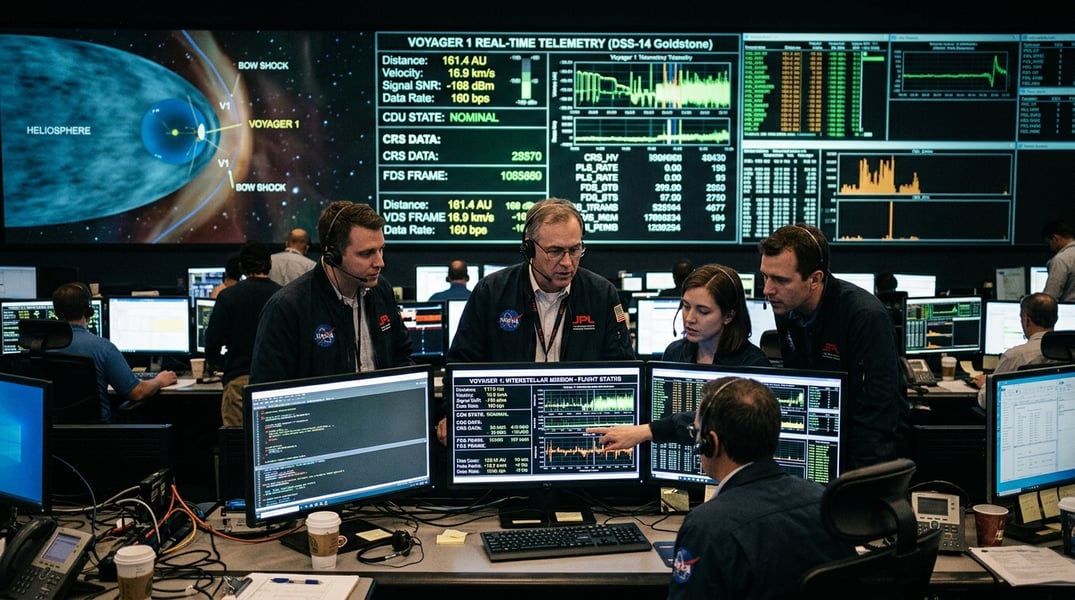
The instrument that was recently deactivated had contributed to measurements of charged particles and cosmic radiation, data that helped confirm Voyager 1’s transition into interstellar space in 2012. That milestone effectively redefined the mission from planetary science to long-duration interstellar space research.
Engineering oversight is conducted through the NASA Jet Propulsion Laboratory missions infrastructure, where teams continuously reassess energy allocation against scientific return. Each decision reflects a balancing act between preserving communication capability and sustaining meaningful measurement of the surrounding plasma environment.
The mission’s scientific value now lies less in discovery and more in continuity. Voyager 1 remains the only active probe sampling conditions in interstellar space, offering data that informs models of cosmic ray propagation, solar wind dissipation, and boundary-layer physics at the edge of the solar system.
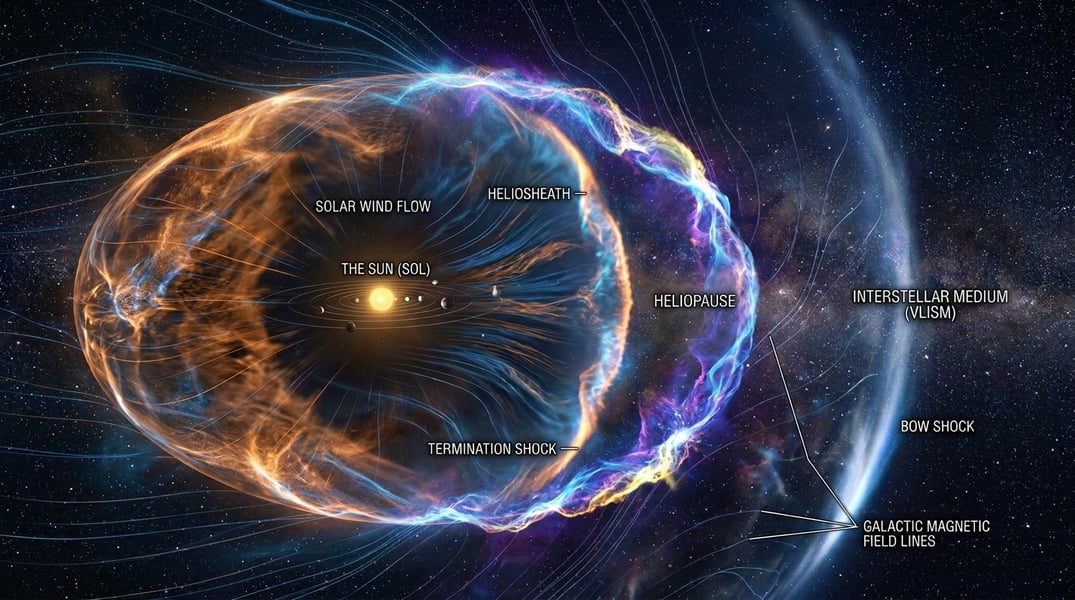
This kind of heliophysics and space physics research has been central to understanding how the Sun interacts with the interstellar medium. Broader scientific context can be found through heliophysics and space physics research, which situates Voyager’s findings within a wider framework of astrophysical studies.
Voyager 1’s operational philosophy has shifted over time. Once designed for short-term planetary flybys of Jupiter and Saturn, it now represents an exercise in long-duration NASA mission engineering, where durability itself has become the scientific experiment.
NASA engineers have already mapped future shutdowns of additional instruments, each step extending the spacecraft’s operational horizon while narrowing its scientific scope. Without intervention, the probe would eventually exhaust its remaining power entirely and fall silent.
Even in its diminished state, Voyager 1 continues to transmit a thin but valuable stream of data back to Earth. That signal is now one of the longest-running scientific communications in human history, traversing a medium no other spacecraft has sampled directly.
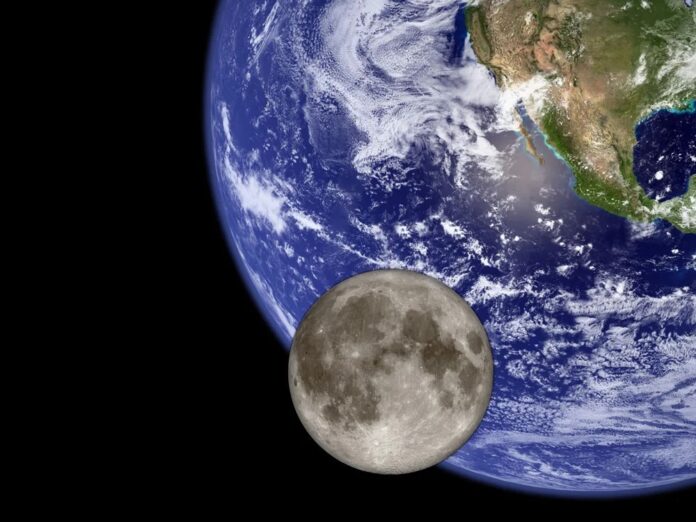
At the same time, Voyager’s endurance is often compared with newer exploration programs, including human-rated deep-space systems under development. In this context, NASA’s evolving exploration strategy, including the Artemis II mission, underscores the contrast between crewed lunar trajectories and robotic interstellar persistence.
Voyager 1 also remains a cultural artifact as much as a scientific instrument. Its continued operation reflects an era when spacecraft were built to outlast expectations, carrying both technical ambition and symbolic weight into regions where no repair is possible and no retrieval is planned.
Broader public-facing documentation of spacecraft longevity and mission context is regularly synthesized through platforms such as Voyager spacecraft exploration coverage, which tracks how aging probes continue to contribute to modern astrophysics.
Ultimately, NASA’s decision to shut down instruments is not an ending but a controlled contraction of capability. It reflects a deliberate attempt to stretch the spacecraft’s remaining lifetime into as many usable years as physics will allow.
Voyager 1 is now less a mission in the traditional sense and more a surviving signal from another epoch of engineering, still operating beyond the influence of the Sun, still reporting from interstellar space, and still redefining how far human technology can persist when stripped down to its essentials.