
Google is once again reshaping everyday photography — this time with a deceptively simple promise: better selfies in seconds.
In its latest update, the company has introduced a suite of AI-powered touch-up tools within Google Photos touch-up tools, signaling a deeper push into automated image enhancement that blurs the line between convenience and cosmetic manipulation.
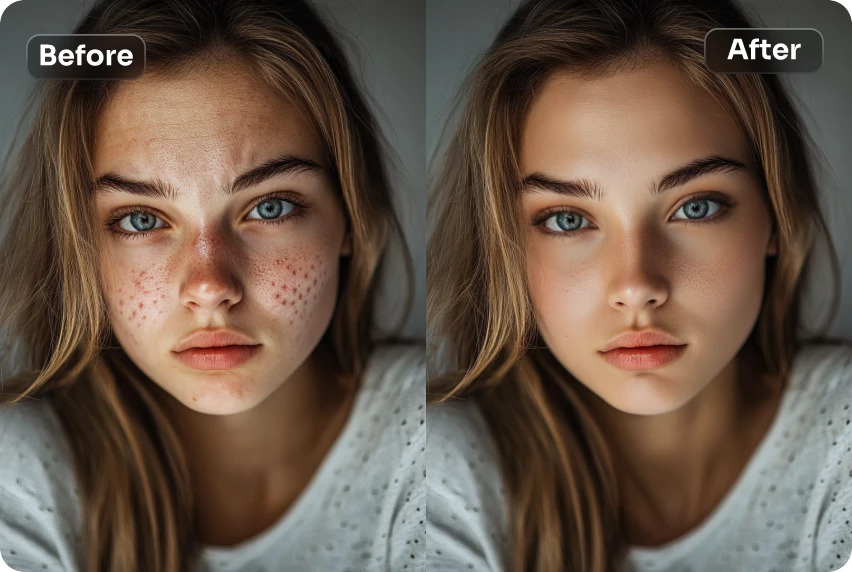
Announced this week, the new features allow users to refine facial details with a few taps. The tools can smooth skin, remove blemishes, brighten eyes, and whiten teeth — all designed to deliver what Google calls “subtle” improvements rather than dramatic transformations.
But beneath that promise of subtlety lies a broader shift in how billions of users may come to define what a “good” photo looks like.
A one-tap fix for the imperfect selfie
The emphasis is on ease. The system uses machine learning to analyze lighting, texture, and facial features, applying corrections automatically without requiring technical input from the user.
It is a continuation of Google’s long-standing strategy: reducing friction in everyday digital tasks. In this case, the task is not organizing photos or sharing them — but perfecting them.
The rollout is global, though it comes with technical requirements. The tools are currently limited to devices running Android 9.0 or newer with at least 4GB of RAM, suggesting that even “simple” edits are backed by increasingly complex on-device or cloud-based processing, as detailed in report in the Verge on facial touch-up tools in Google Photos.
Subtlety as a selling point
Google has been careful to position these features as restrained rather than transformative. Users can fine-tune the strength of each effect, ensuring edits remain nearly invisible — at least in theory.
That distinction matters.
For years, photo editing apps have been criticized for encouraging unrealistic beauty standards through heavy filters and exaggerated alterations. By contrast, Google’s approach leans into what might be called “invisible AI” — enhancements that aim to go unnoticed while still improving perceived image quality.
The company is not alone in this direction. Across the tech industry, AI editing tools in Google Photos and beyond are moving toward automation and subtlety, replacing manual sliders with predictive adjustments.
Still, critics argue that subtlety does not eliminate the underlying issue — it simply makes it harder to detect.
The authenticity dilemma returns
The introduction of these tools has reignited a familiar debate: when does enhancement become distortion?
Even minor edits — smoothing skin or whitening teeth — can cumulatively alter how people present themselves online. And because these changes are now easier and faster than ever, they may become the default rather than the exception.
Some observers warn that this normalization could reshape expectations around digital identity, particularly on social media platforms where appearance already plays an outsized role. Concerns are already being raised about the authenticity in AI-edited photos.
There is also a psychological dimension. When “perfecting” a photo becomes effortless, the baseline for what is considered acceptable may shift — subtly but persistently.
Part of a larger AI ecosystem

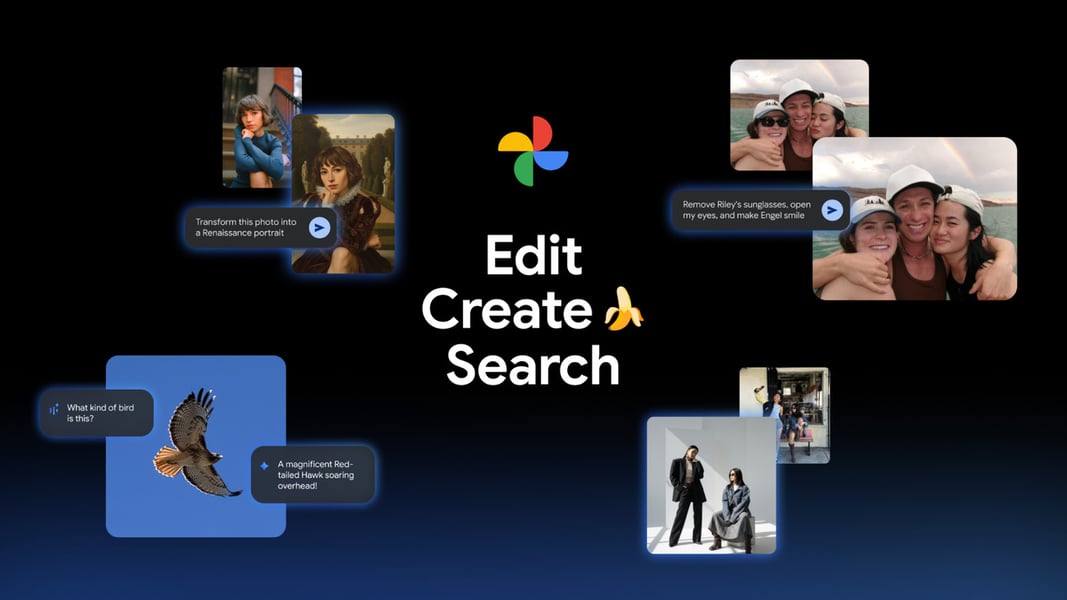
Google has been rapidly expanding its AI capabilities across products, including deeper integration between Google Photos and its broader artificial intelligence ecosystem. These AI-powered portrait editing features are part of a wider effort to embed machine learning into everyday user experiences.
In that context, the new touch-up tools are not just standalone features — they are building blocks in a larger strategy to make photos more interactive, intelligent, and adaptable.
They also reduce reliance on third-party apps, keeping users within Google’s ecosystem for everything from storage to editing to sharing.
Convenience vs. control
For users, the appeal is obvious. The ability to enhance a photo instantly — without downloading additional apps or learning editing techniques — represents a significant convenience.
But it also raises questions about control.
When AI decides what needs “fixing,” it implicitly defines a standard of improvement. Even if users can adjust intensity, the initial suggestion comes from an algorithm trained on vast datasets of images — and assumptions about what looks better.
That tension between assistance and autonomy is becoming a defining feature of modern software.
A future of frictionless editing
Google Photos already serves more than a billion users globally, making it one of the most widely used photo platforms in the world. Each incremental update has the potential to influence how people capture, edit, and share their memories.
With the introduction of touch-up tools, Google is betting that users want faster, smarter, and more seamless ways to improve their photos — even if it means outsourcing aesthetic decisions to AI.
Whether that bet pays off will depend not just on the quality of the edits, but on how users feel about the quiet transformation of their images.
Because in a world where every imperfection can be fixed instantly, the question is no longer whether a photo has been edited — but whether anyone can tell.