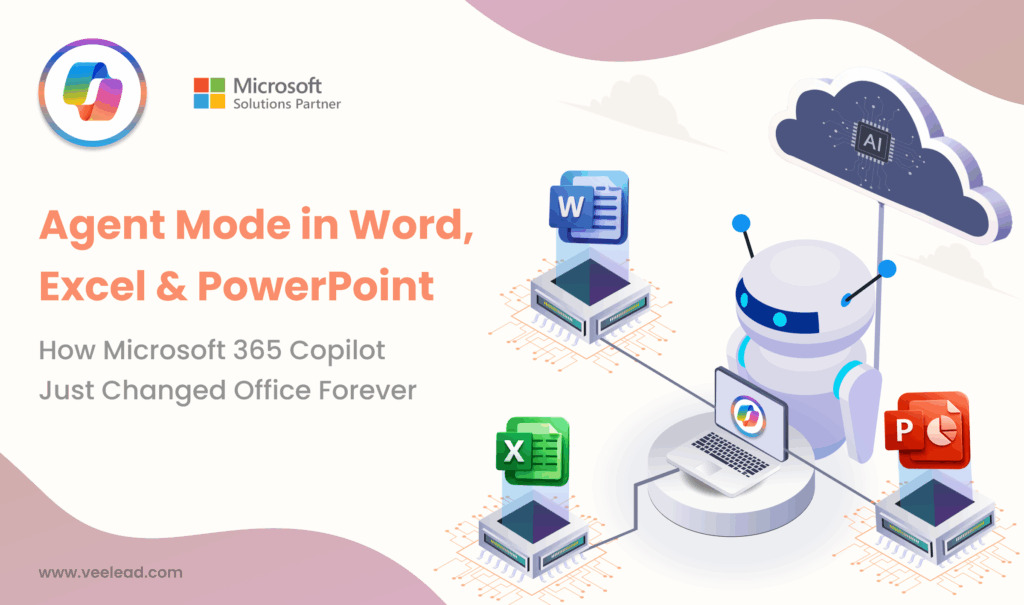

Microsoft has begun rolling out what may be its most consequential artificial intelligence upgrade yet, embedding a new “Agent Mode” into its flagship productivity apps — Word, Excel and PowerPoint — and fundamentally changing how millions of people interact with documents, spreadsheets and presentations.
The update, now broadly available across Microsoft 365 tiers, transforms its Copilot assistant from a reactive chatbot into something closer to an autonomous collaborator — capable not only of responding to prompts, but of taking initiative and executing complex, multi-step tasks directly within a user’s work, as detailed in Microsoft Copilot agentic capabilities.
For years, productivity software has been defined by manual input — typing, formatting, calculating. Microsoft is now attempting to replace that paradigm with what it calls “agentic AI,” a system designed to plan, act and adapt within applications themselves. The result, according to early demonstrations, is software that behaves less like a tool and more like a co-worker, a shift also explored in coverage of Agent Mode in Microsoft Office apps.
The shift builds on earlier internal changes highlighted in the Microsoft Copilot leadership shakeup, where the company signaled a deeper commitment to integrating AI at the core of its ecosystem.
From assistant to autonomous collaborator
Until now, Copilot functioned largely as a responsive assistant — generating text, suggesting formulas or summarizing information when asked. Agent Mode expands that role significantly.
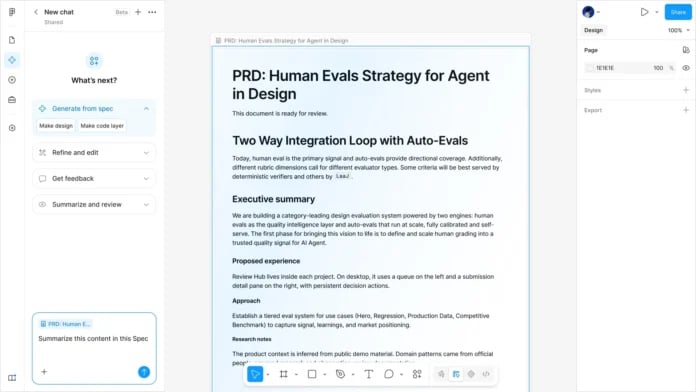
Crucially, these actions happen directly inside the workspace. Users can watch the AI operate in real time through a sidebar that displays each step, with options to pause, adjust or reverse changes — an attempt to balance automation with control.
A deeper integration of context and intent
The new capabilities build on Copilot’s integration with contextual data across emails, documents and calendars, allowing the system to understand not just instructions but intent.
With Agent Mode, that context is used to guide decision-making. The AI can understand the broader objective behind a task — such as preparing a report or analyzing a dataset — and carry out multiple actions in sequence to achieve it.
This evolution reflects a broader trend across the tech industry, where companies are racing to develop AI systems that can operate semi-independently. Analysts tracking artificial intelligence news note that Microsoft’s move places it in direct competition with rivals developing similar capabilities for their own productivity ecosystems. The broader industry direction is further examined in discussions on the AI agents transforming productivity software.
Default, not optional
Perhaps the most significant aspect of the rollout is that Agent Mode is not being positioned as an experimental feature. It is becoming the default experience for Copilot users.
The update is being deployed across Microsoft 365 Copilot and Premium subscriptions, as well as personal and family plans, signaling the company’s intent to push agent-based AI into mainstream use.
This marks a decisive shift in Microsoft’s strategy. Rather than offering AI as an add-on, the company is embedding it into the core of its software — a move that could redefine expectations for productivity tools across the industry.
Redefining knowledge work
The implications extend beyond convenience. By automating multi-step workflows, Agent Mode has the potential to reshape how knowledge work is performed.
Tasks that once required a sequence of manual actions — drafting, editing, formatting, analyzing — can now be initiated with a single instruction. The AI handles the intermediate steps, effectively compressing complex processes into a streamlined interaction.
This shift aligns with the broader rise of AI agents in enterprise tools, where software is increasingly designed to execute tasks rather than simply assist with them.
Yet the transformation also raises questions about accuracy, oversight and the evolving role of human workers. As AI systems take on more responsibility, ensuring that outputs remain reliable — and that users understand how decisions are made — will become increasingly important.
The beginning of an agent-driven era
Microsoft’s latest update is part of a broader push to position Copilot as a central interface for computing, bringing autonomous capabilities directly into everyday applications.
Industry analysts see this as a turning point. If successful, it could accelerate the transition from traditional software interfaces to AI-driven environments where users focus on goals rather than processes.
For now, the technology is still evolving. But with Agent Mode becoming the default across Word, Excel and PowerPoint, Microsoft is making a clear bet: the future of work will not be built on menus and commands, but on intelligent systems that can think, plan and act alongside their users.
And in that future, the line between software and collaborator may become increasingly difficult to draw.