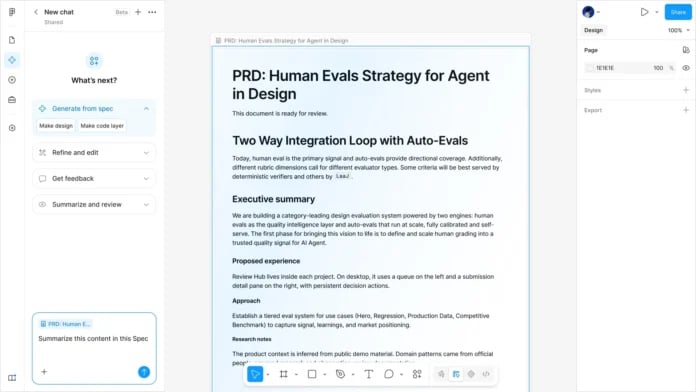

Smarter Source Interpretation and Context Awareness
Audio Overviews Become More Dynamic and Customizable
NotebookLM’s Audio Overviews feature has also evolved significantly. Originally designed to convert documents into podcast-style summaries, it now supports deeper narrative structures and improved clarity across longer content.
Users can now adjust output length and depth, making it possible to switch between quick summaries and extended discussions depending on learning needs. This flexibility has made the feature especially popular among students and professionals who prefer audio-based learning workflows.
Google has formally outlined this capability in its Google NotebookLM AI Audio Overview feature announcement, highlighting how the system transforms static documents into conversational explanations.
According to official documentation, NotebookLM’s audio system is grounded in source material, ensuring that generated content remains accurate and traceable. Users can explore full technical details through the NotebookLM Audio Overview official guide.
Education and Productivity Use Cases Expand
Beyond summarization, NotebookLM is increasingly being used as a productivity engine for education and research workflows. Students are using it to convert lecture notes into structured revision guides, while professionals rely on it to extract insights from dense reports and documentation.
These use cases reflect a broader shift toward AI-powered WhatsApp automation for business communication, where AI systems streamline repetitive knowledge tasks across platforms and industries.
In education specifically, NotebookLM’s role mirrors trends seen in AI-powered learning and self-assessment platforms in education, where adaptive tools help learners process information more effectively.
Multilingual Expansion and Global Reach
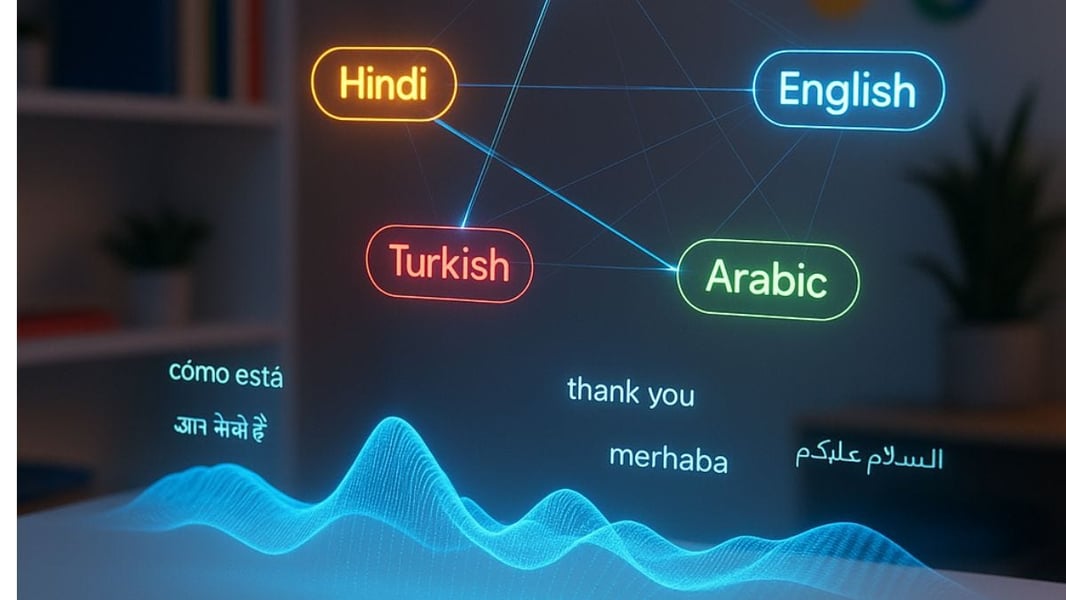
NotebookLM now supports over 80 languages in its audio and video outputs, significantly expanding its global accessibility. This ensures that users across different regions can interact with AI-generated summaries in their native language without losing depth or accuracy.
This development reflects the growing influence of India’s rapidly expanding AI and app ecosystem, where multilingual AI tools are becoming essential for mass adoption.
NotebookLM and the Broader Google AI Ecosystem
NotebookLM is not evolving in isolation. It is increasingly positioned within Google’s broader AI strategy, which includes Gemini and other multimodal systems.
This ecosystem approach is documented in Google’s own AI strategy updates under Google’s broader AI ecosystem and Gemini integration strategy, where tools are designed to work together across productivity, search, and creative applications.
More recently, Google has expanded this ecosystem further with launches such as Gemini-based applications, reinforcing its long-term vision of unified AI infrastructure.
Voice AI and Conversational Intelligence
One of the most notable aspects of NotebookLM’s evolution is its move toward conversational AI experiences. Audio Overviews are increasingly structured like interactive discussions rather than static summaries, reflecting broader industry trends in synthetic narration.
This aligns with advancements in voice AI assistants and conversational AI systems, where AI-generated speech is becoming more natural and context-aware.
Academic research also highlights the growing role of synthetic audio systems in knowledge delivery, as seen in studies on AI-generated podcast systems and synthetic media analysis.
A Shift Toward Agentic Knowledge Systems
Industry analysts increasingly describe NotebookLM as part of a shift toward agentic AI systems—tools that do not simply respond to prompts but actively interpret and reorganize information.
This evolution is closely tied to broader advancements in AI productivity tools and multimodal systems, as explored in discussions of AI productivity tools and multimodal AI evolution.
In academic contexts, NotebookLM is also being analyzed as a NotebookLM as a RAG-based AI tutoring system, highlighting its potential role in structured learning environments.
Conclusion: A New Phase of AI-Powered Research
NotebookLM’s latest upgrades signal a broader transformation in how AI tools interact with knowledge. Rather than simply summarizing content, the platform is evolving into a structured intelligence layer that reshapes how users read, listen, and learn from information.
As Google continues expanding its AI ecosystem, NotebookLM is emerging as a key component in a future where research is not just assisted by AI but actively co-constructed with it. The shift represents a fundamental change in digital productivity, where information is no longer static but dynamically interpreted through intelligent systems.