
Artemis II astronauts return to Earth carrying candy, emotion, and a new public mythology of spaceflight
The Artemis II mission has ended with the kind of imagery that increasingly defines modern space exploration: not just technical precision and orbital mechanics, but human detail rendered in close-up. After a successful splashdown in the Pacific Ocean, the crew of NASA’s latest lunar flyby returned with a set of stories that blur the boundary between engineering milestone and cultural event.
The mission itself, documented as part of the broader Artemis II mission, marked the first crewed voyage beyond low Earth orbit in more than five decades. NASA framed it as a critical validation flight for deep space systems that will eventually support lunar landing missions later in the decade.
But what has captured public attention is not only the trajectory, velocity, or heat shield performance. It is what happened after the numbers stopped mattering.
The return phase itself was far more complex. The Orion spacecraft endured extreme thermal stress during descent, with temperatures reaching levels that would vaporize most conventional materials. According to NASA technical briefings, the heat shield performed within expected parameters, absorbing and dispersing energy generated during atmospheric compression. The capsule’s stability during blackout communication phases was a key success indicator.
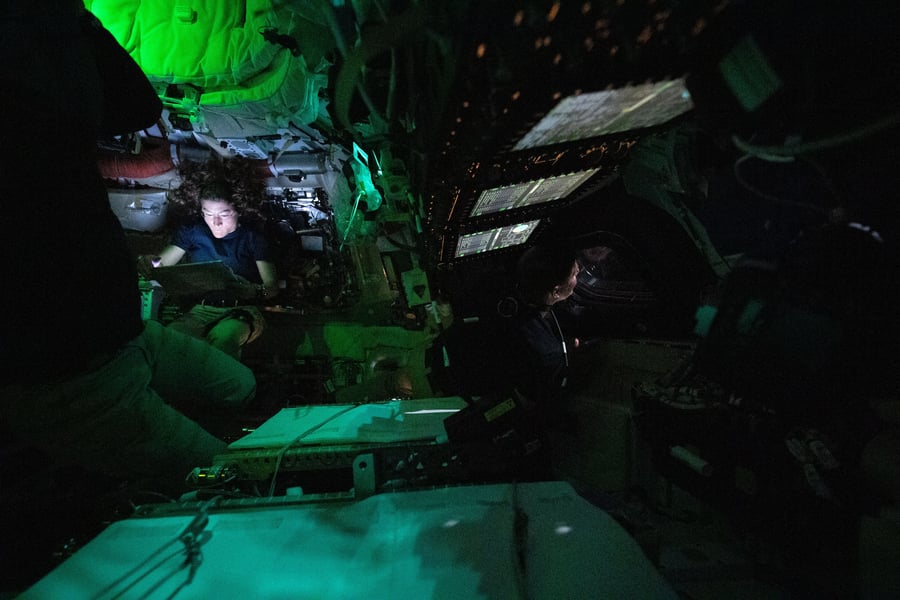
Yet the public narrative has expanded well beyond engineering validation. During post-mission interviews and televised town hall sessions, astronauts described the experience of lunar approach with language that deliberately shifts away from technical abstraction. One described the descent back toward Earth as “the best roller coaster ride you’ve ever been on,” a phrase that reframes orbital mechanics into something instinctively recognizable.
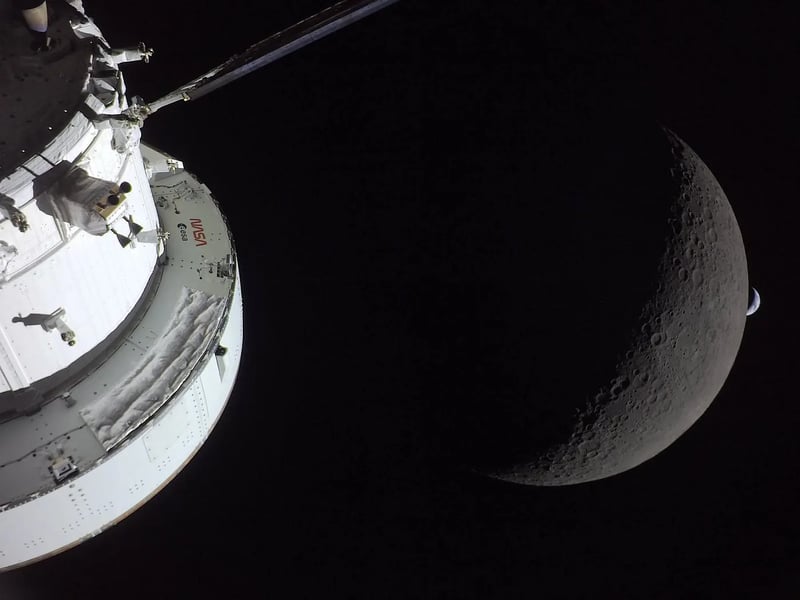
The crew’s journey around the Moon, captured in detail during the lunar flyby mission, offered rare human perspectives on Earth seen from deep space. From that vantage point, the planet appears not as a static image but as a shifting system of light, shadow, and atmospheric curvature. Astronauts described emotional responses that blended scientific observation with personal reflection, an intersection NASA has increasingly embraced in its communication strategy.
Public engagement has become central to Artemis-era missions. In a widely broadcast town hall event, astronauts answered questions from children about navigation, isolation, and the sensation of being in deep space. One moment stood out: a surprise interaction with a five-year-old aspiring astronaut who had gone viral during the mission coverage cycle. The exchange, while brief, reinforced NASA’s broader effort to position lunar exploration as a generational project rather than a purely institutional one.
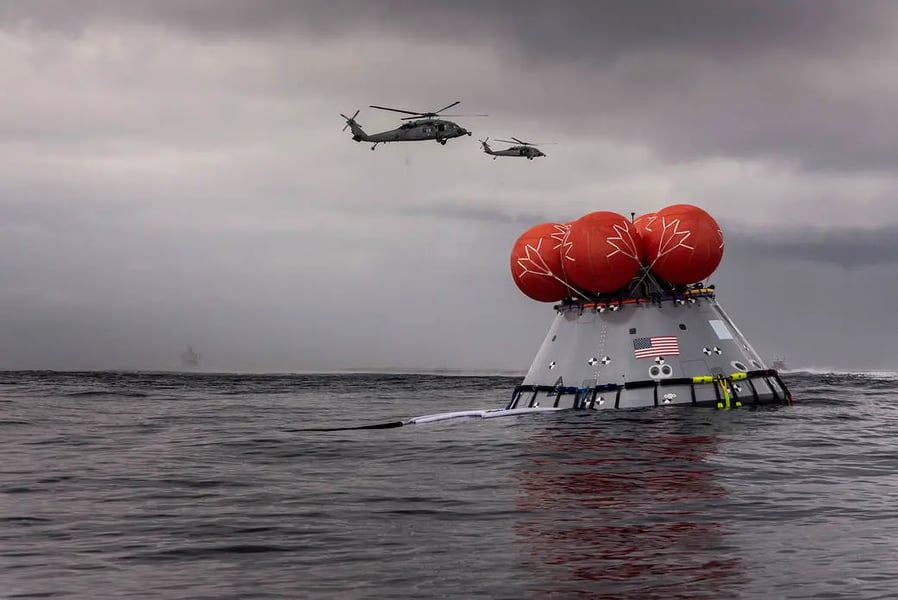
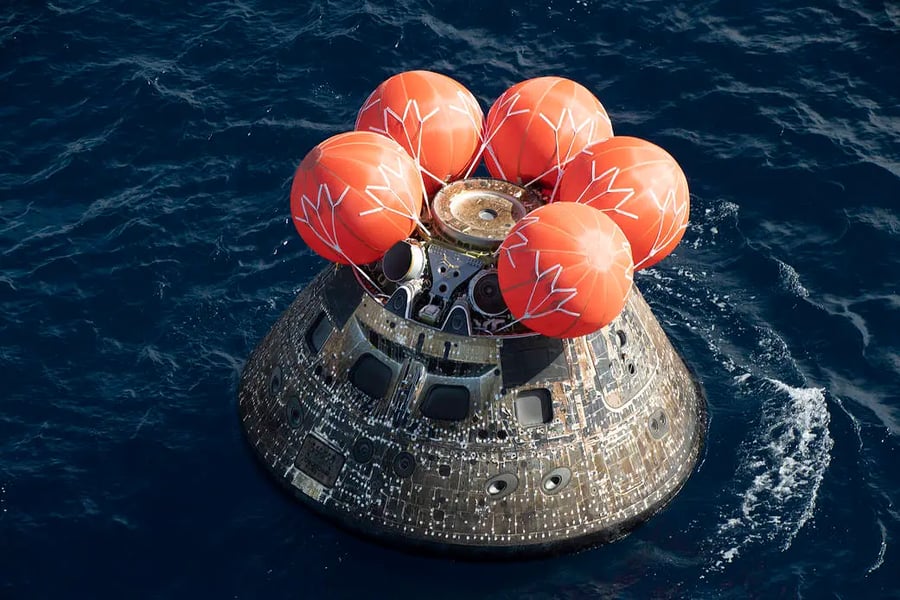
The splashdown itself, executed off the coast of California, concluded a mission profile that NASA describes as foundational for future crewed lunar landings. The spacecraft’s descent through the final atmospheric layers, a phase marked by temporary communication blackout and intense thermal loading, remains one of the most technically sensitive parts of the mission profile.
NASA’s broader Artemis architecture, often referenced as part of its evolving NASA Artemis program missions update, is designed not only to return humans to the Moon but to establish sustained operational capability beyond Earth orbit. Artemis II is positioned as a bridge between Apollo-era legacy and a more continuous model of exploration.
For the public, however, the mission is increasingly remembered less through technical documentation and more through fragments: the sight of Earth suspended in black space, the language of astronauts describing motion as sensation, and the quiet absurdity of candy shared inside a spacecraft still cooling from reentry.
Even broadcast imagery has reinforced this shift. Live coverage of splashdown and recovery operations, including naval retrieval of the capsule and astronaut extraction procedures, has circulated widely across platforms such as NASA’s official channels and mission feeds NASA live mission coverage.
Artemis II may ultimately be recorded in aerospace history as a technical success. But its cultural impact is already something different: a recalibration of how space exploration is experienced, communicated, and emotionally processed.
It is no longer only about reaching the Moon. It is about returning from it in a way the world can feel.