
The butler who once answered the internet’s questions has finally fallen silent.
After nearly three decades online, Ask Jeeves later known as Ask.com has officially shut down, marking the end of one of the earliest and most recognizable search engines in internet history. The company confirmed it ceased operations on May 1, 2026, closing a chapter that began in the formative years of the web.
According to a report by Ask.com shuts down after nearly 30 years, the platform was founded in 1996 in Berkeley, California, by Garrett Gruener and David Warthen. Its defining feature was simple yet revolutionary: users could type full questions instead of fragmented keywords a concept now seen as a precursor to modern artificial intelligence systems.
At the center of the experience was Jeeves, a cartoon butler who symbolized a polite, conversational interface. Long before voice assistants and chatbots became mainstream, Ask Jeeves encouraged users to interact with technology in natural language a design philosophy that aligns with modern SEO strategies focused on conversational queries, as explored in how to get your brand cited in Google’s top answer box.
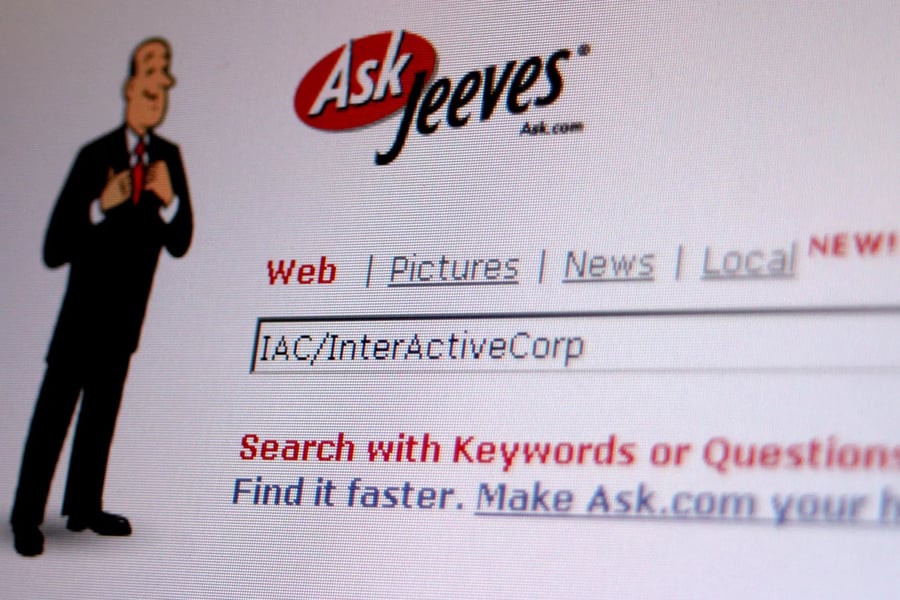
The company was acquired in 2005 by IAC, the media conglomerate led by Barry Diller. Over time, the iconic Jeeves branding was phased out, and the platform transitioned into Ask.com. By 2010, it had effectively abandoned its own search infrastructure, outsourcing core search technology in response to mounting competitive pressure.
The final shutdown came with a simple but symbolic message. “Every great search must come to an end,” the company said, confirming it had discontinued its service after decades of operation, as reported in farewell message and shutdown announcement.
Other coverage, including Ask.com ends its search service and analysis of Ask Jeeves shutdown reactions and legacy, framed the closure as both inevitable and nostalgic a quiet exit for a once-prominent internet pioneer.
Ask Jeeves’ legacy, however, extends far beyond its market share. Its core idea that users should be able to ask complete questions has become foundational to modern computing. Today’s AI systems rely heavily on natural language processing, a shift that mirrors the evolution of search behavior and optimization trends discussed in modern SEO and digital visibility strategies.
The shutdown also highlights the unforgiving pace of technological change. Even early pioneers can fade if they fail to scale or adapt quickly enough. As artificial intelligence reshapes the digital landscape, massive infrastructure investments like those detailed in OpenAI’s large scale AI compute expansion are redefining the future of search and information access.
For longtime users, the disappearance of Ask Jeeves carries a sense of nostalgia. The courteous digital butler represented a simpler internet era one driven more by curiosity than algorithms.
Yet its legacy endures. The conversational approach it introduced has become central to how billions of people now interact with machines, from chatbots to AI-powered assistants.
In that sense, Ask Jeeves has not truly disappeared. It has simply been absorbed into a new generation of technologies ones that continue to answer the world’s questions in ways its creators first imagined nearly 30 years ago.