
Early humans may have depended less on the drama of the hunt and more on a calculated ecology of survival, one that blended scavenging, opportunistic kills, and the strategic transport of animal remains. A growing body of archaeological and evolutionary research is reshaping long-held assumptions about how early hominins acquired meat, suggesting a behavioral repertoire that was adaptive, opportunistic, and far more complex than the traditional hunter-centric narrative.
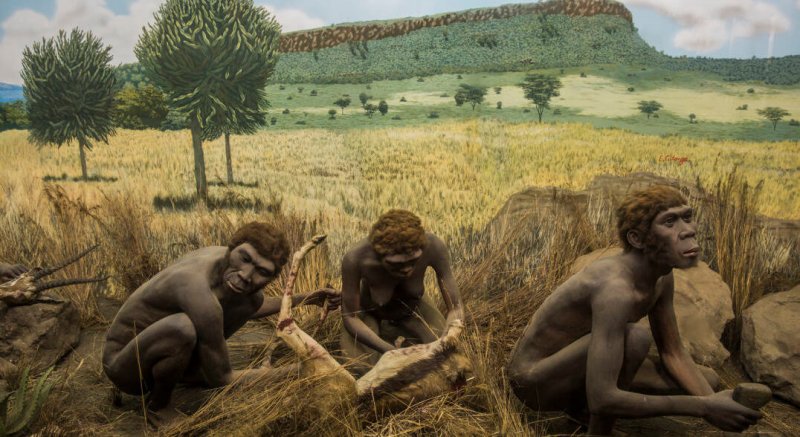
At the center of this reassessment is a reinterpretation of fossil cut marks, bone breakage patterns, and site formation processes across Africa and Eurasia. Evidence from multiple early Pleistocene contexts indicates that hominins frequently accessed carcasses after large carnivores had already fed. Tooth marks from predators often precede stone tool cut marks, suggesting secondary access rather than primary hunting in many cases.
Yet the emerging scientific consensus is not simply a binary of scavenger versus hunter. Instead, researchers increasingly describe a flexible subsistence system in which early Homo shifted strategies depending on ecological pressure, predator competition, and resource availability. This adaptive flexibility is now being examined under broader frameworks of human evolution diet adaptation, which emphasize metabolic efficiency and behavioral plasticity over linear progression models.
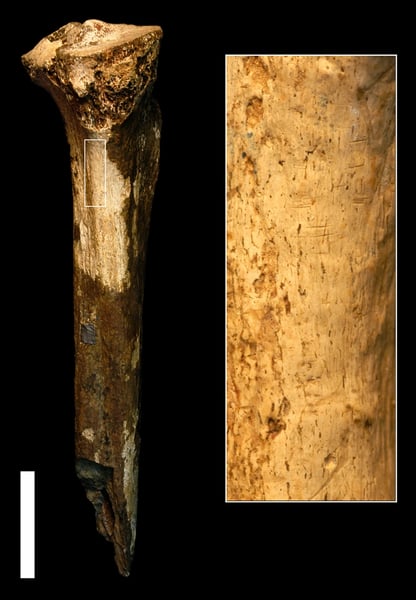
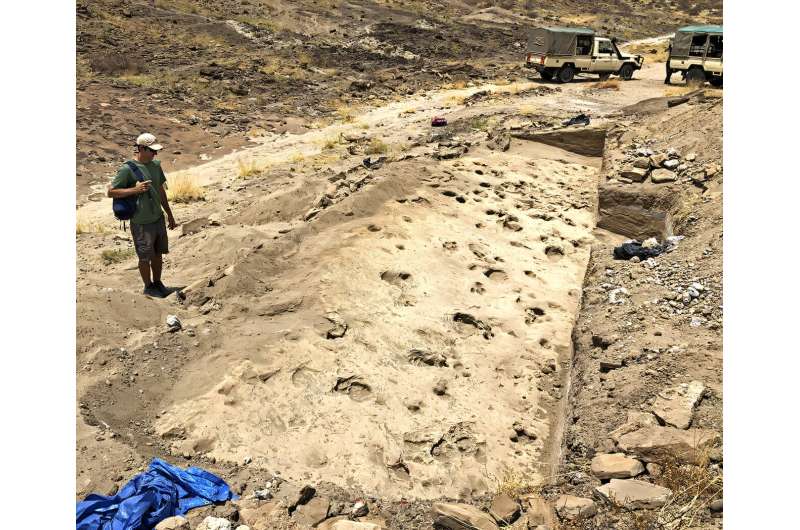
The implications extend beyond diet. They touch on cognition, mobility, and social organization. Sites such as Olduvai Gorge and Koobi Fora reveal repeated patterns of bone transport and intensive marrow extraction, suggesting that early hominins prioritized fat-rich resources over muscle meat. This focus on calorically dense tissues may have played a role in supporting the energetic demands of brain expansion.
Within the broader debate on Plio-Pleistocene hominin subsistence strategies, scholars continue to debate whether scavenging or hunting dominated early dietary behavior. However, newer interpretations argue that this framing is increasingly obsolete. Instead, early hominins appear to have operated within a dynamic ecological system in which they exploited whatever food sources were available, often switching between active predation, confrontational scavenging, and selective carcass transport.

Further theoretical support comes from evolutionary biology research published in Nature Education, which situates dietary flexibility as a central driver of hominin adaptation. The shift toward omnivory is increasingly viewed not as a singular evolutionary leap but as a gradual accumulation of opportunistic strategies shaped by environmental instability.
More granular archaeological studies in the Journal of Human Evolution reinforce this view, documenting variability in cut-mark sequences and carcass access patterns that resist simple classification. Some assemblages indicate primary access to carcasses, while others clearly reflect secondary scavenging, often within the same ecological region.
Energy economics plays a central role in this debate. Research discussed in the Proceedings of the National Academy of Sciences highlights the disproportionate caloric value of fat relative to lean muscle in wild fauna. This has led to renewed interest in the hypothesis that early human dietary evolution was driven as much by fat acquisition as by protein intake, with marrow extraction emerging as a critical survival strategy.
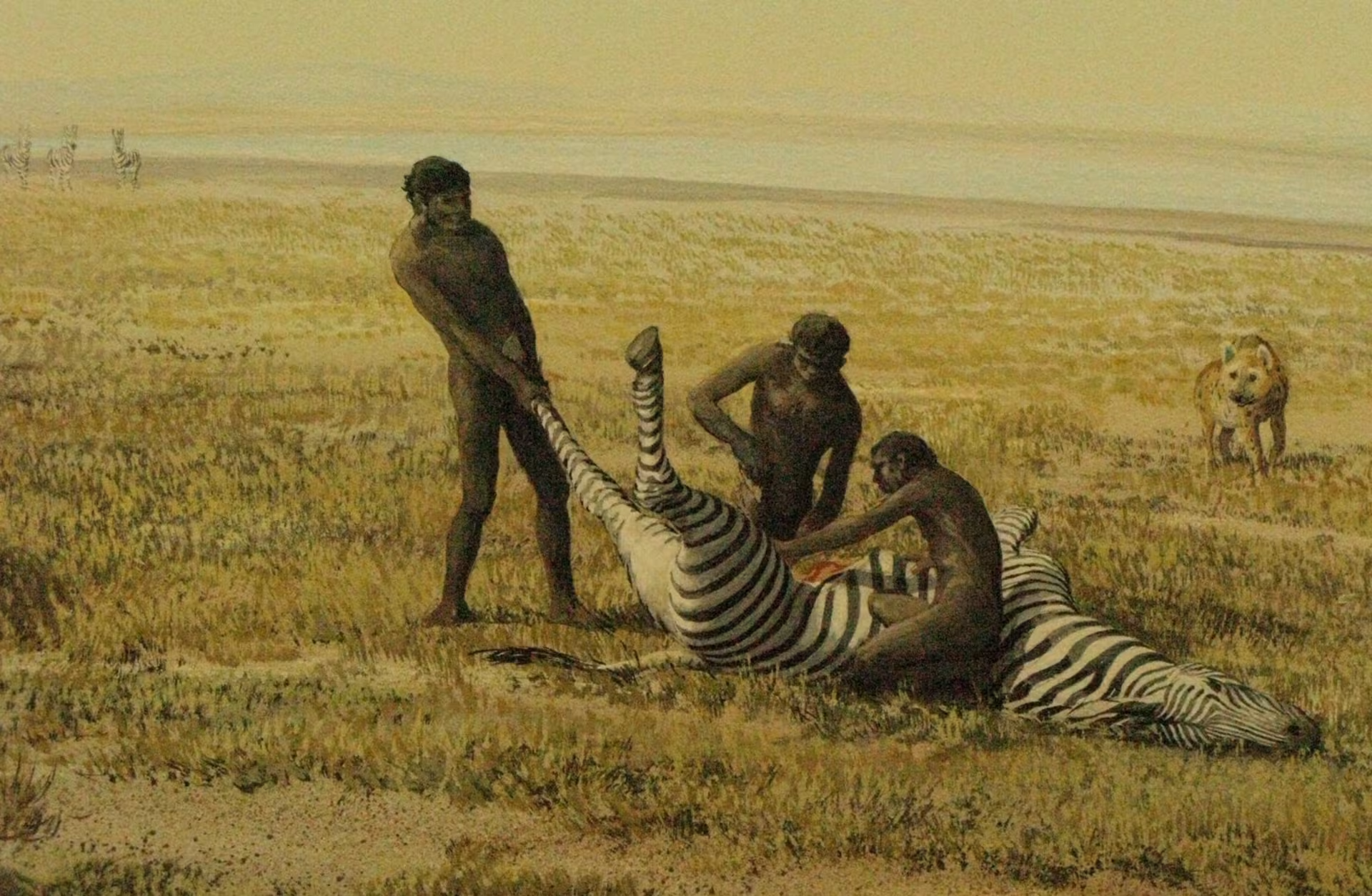
At a broader ecological level, these strategies reflect a world in which survival depended not on dominance over prey but on the ability to navigate complex predator-prey landscapes. Early Homo appears to have been neither apex hunter nor passive scavenger, but a calculated intermediary operating within contested ecological spaces.
What emerges from this synthesis is a species defined by adaptability rather than specialization. The archaeological record increasingly suggests that early humans did not simply evolve into hunters; they evolved into problem-solvers capable of extracting energy from uncertainty itself.
In this light, the metaphor of early “takeout” behavior is less a simplification than a reflection of logistical intelligence. Food was not always consumed where it was found, nor was it always obtained through direct confrontation. Instead, it was often selected, transported, and processed through a flexible system of survival strategies that blurred the boundaries between scavenging, hunting, and storage.
The result is a revised portrait of early human evolution, one that replaces linear narratives of progress with a more complex, and arguably more sophisticated, account of adaptive survival in an unstable world.