

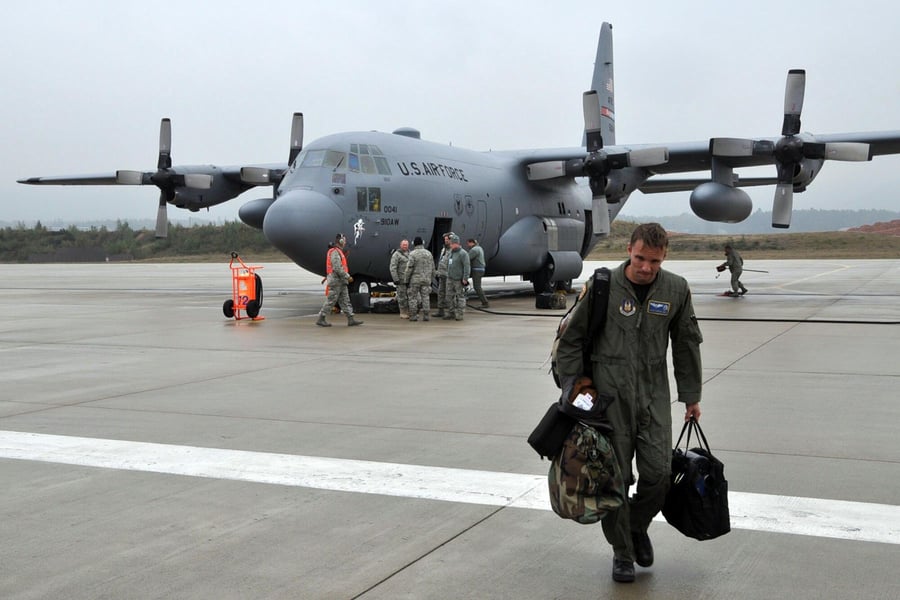

The decision by US President Donald Trump to withdraw 5,000 American troops from Germany is reverberating across Europe, triggering alarm among allies and raising urgent questions about the future of the NATO alliance at a moment of escalating global conflict.
Announced abruptly by the Pentagon, the withdrawal targets one of Washington’s most strategically important military deployments in Europe, where roughly 35,000 to 40,000 US troops have long been stationed. The move, expected to unfold over the coming months, marks a significant recalibration of US military posture and underscores deepening political rifts between Washington and its European allies.
At the heart of the decision lies a widening transatlantic divide over the ongoing war involving Iran. German Chancellor Friedrich Merz has been among the most vocal European critics of Washington’s strategy, openly questioning its objectives and long-term viability. His remarks appear to have intensified tensions with the White House, with officials privately linking the troop reduction to Berlin’s dissent.
A Strategic Shock to NATO
For NATO, the implications are immediate and profound. European officials say the manner of the announcement, with minimal consultation and apparent political motivation, has deepened concerns about the reliability of the US as a security partner. While European governments have increasingly accepted the need to shoulder more of their own defense burden, the sudden nature of the move has exposed vulnerabilities within what many analysts describe as a transatlantic alliance under pressure.
NATO Secretary General Mark Rutte is now working behind the scenes to contain the fallout ahead of a crucial summit, as member states grapple with how to maintain unity in the face of growing internal divisions.
Europe’s Growing Strategic Anxiety
Germany, which hosts key US military infrastructure including the Ramstein Air Base, plays a central role in NATO logistics and operations. The removal of a brigade-sized force, potentially including advanced missile capabilities, could weaken deterrence against Russia, particularly at a time of heightened tensions.
Yet German officials have sought to project calm. Foreign Minister Johann Wadephul has argued that NATO’s overall deterrence posture will remain intact, framing the move as a catalyst for Europe to accelerate its own defense capabilities.
Still, behind the reassurances lies unease. Officials across Europe worry that the decision signals a broader shift toward a more transactional US foreign policy, one in which military commitments are increasingly tied to political alignment rather than long-standing alliances.
The Iran War’s Expanding Impact
What began as a regional conflict is now reshaping global alliances. The war involving Iran has not only destabilized the Middle East but has also exposed deep divisions within the Western bloc. Several European countries have resisted fully aligning with Washington’s approach, reinforcing tensions already visible in the debate over US troops in Germany and Europe’s strategic autonomy.
This divergence has placed NATO in a difficult position. While some Eastern European members remain strongly supportive of US leadership due to concerns about Russia, others are increasingly skeptical of Washington’s strategic direction.
A Pattern of Disengagement
The move is not occurring in isolation. Trump has repeatedly argued that European allies must contribute more to their own defense and has long questioned the value of existing security arrangements. Analysts increasingly see this as part of a broader shift affecting global security dynamics and the balance of power.
A Turning Point for Transatlantic Relations
For Europe, the message is becoming increasingly clear: the era of unquestioned US security guarantees may be coming to an end. The withdrawal of US troops from Germany is more than a military adjustment, it represents a structural shift in global geopolitics.
As the war involving Iran continues to reshape global dynamics, the decision by Washington to scale back its presence in Europe may ultimately be remembered as a defining moment, one that accelerated the transformation of the international order.
Amid rising geopolitical tensions, analysts warn that this development could reshape global alliances much like recent shifts seen in BRICS expansion and US foreign policy realignments.














