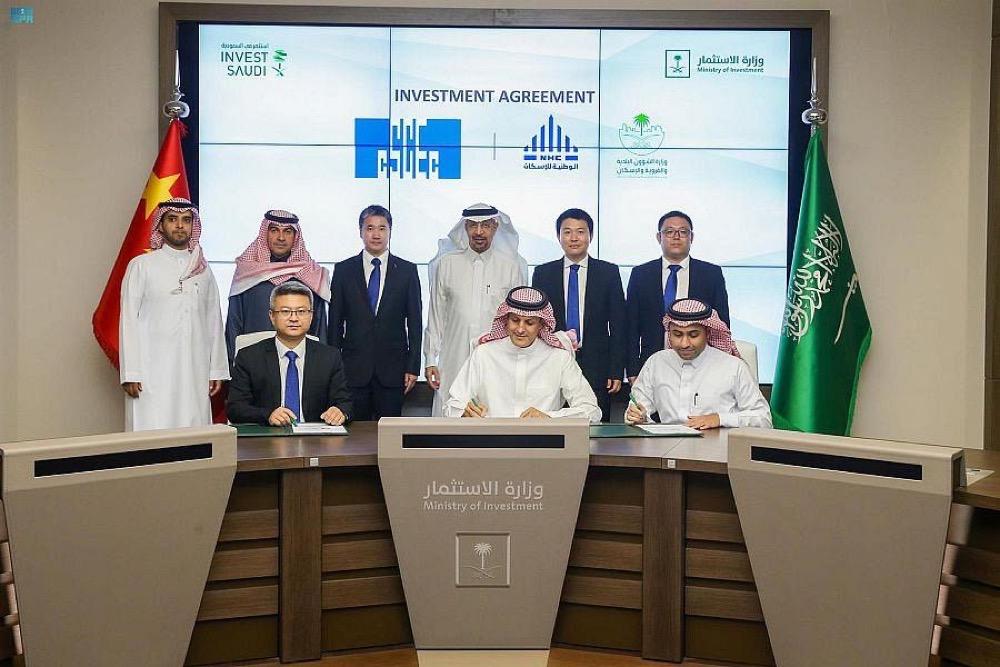

Saudi Arabia’s sovereign wealth empire is planting a deeper flag in China. The kingdom’s Public Investment Fund, the $1 trillion financial engine behind Crown Prince Mohammed bin Salman’s Vision 2030 transformation strategy, has opened a new office in Shanghai as Riyadh accelerates its economic pivot toward Asia and strengthens its long-term alliance with Beijing.
The move marks one of the clearest signs yet that Saudi Arabia is recalibrating its global investment priorities amid mounting geopolitical tensions, shifting trade routes, and growing frustration across the Gulf over Western political and economic instability.
The new Shanghai outpost, which began operations earlier this year, reportedly falls under the PIF’s Beijing office and is designed to expand the fund’s ability to execute deals inside China while also attracting Chinese companies and capital into Saudi Arabia.
For Riyadh, the expansion is about far more than finance.
It is part of a broader strategic realignment that increasingly places China at the center of Saudi Arabia’s future economic architecture. While the US remains a major security and investment partner, the kingdom has spent recent years aggressively diversifying its alliances across Asia, particularly with China, Russia, and the broader BRICS-led economic influence ecosystem.
The Shanghai office arrives at a moment when global power centers are undergoing dramatic transformation. The ongoing economic fallout from conflicts in the Middle East, disruptions around the Strait of Hormuz, and intensifying US-China rivalry have accelerated conversations inside Gulf capitals about reducing dependence on Western financial systems tied to Western-controlled financial systems.
Analysts increasingly view Saudi Arabia’s deepening engagement with China as part of the emerging multipolar order reshaping global markets and the broader reshaping global financial order.
The PIF already maintains offices in New York, London, Hong Kong, and Paris, but the decision to establish a second mainland Chinese hub underscores the scale of Riyadh’s ambitions in Asia.
Shanghai’s importance is strategic.
As China’s financial capital and a major gateway for technology, manufacturing, and capital markets, the city offers Saudi Arabia direct access to industries central to its diversification agenda under financial vehicle behind Vision 2030.
Saudi officials have spent years courting Chinese investment as the kingdom attempts to diversify beyond oil. Chinese firms are already heavily involved in Saudi infrastructure, energy, telecom, and smart city projects, including NEOM.
At the same time, Beijing sees Saudi Arabia as a critical partner in securing long-term energy stability and expanding China’s economic footprint across the Gulf.
The relationship has deepened rapidly since China brokered the diplomatic normalization agreement between Saudi Arabia and Iran in 2023, elevating Beijing’s status as a regional power broker.
Since then, economic ties between Riyadh and Beijing have expanded across banking, energy trading, technology, mining, and defense cooperation.
The latest PIF move also reflects growing confidence within Gulf sovereign wealth funds about China’s long-term economic trajectory despite Western concerns over slowing growth.
Other Gulf investors are also increasing exposure to China, reinforcing a wider Middle East pivot to Asia.
For Saudi Arabia, China represents both opportunity and leverage. By expanding eastward, Riyadh gains greater flexibility in a world where the dominance of traditional Western financial institutions is increasingly being questioned.
The kingdom has sought to balance its historic partnership with Washington while simultaneously building stronger ties with Beijing and Moscow. That balancing act has become more visible during recent geopolitical crises.
The war surrounding Iran, escalating energy insecurity, and disruptions to maritime trade routes have exposed vulnerabilities in the global system and intensified Gulf hedging strategies.
Saudi Arabia’s leadership has repeatedly emphasized that its foreign policy is now driven by national economic interests rather than exclusive alignment with any single global power.
The PIF itself has become one of the world’s most influential sovereign investors, controlling stakes across technology, sports, entertainment, infrastructure, aviation, gaming, and energy. Under Yasir Al Rumayyan, the fund has emerged as the primary financial vehicle behind the kingdom’s transformation agenda.
China is expected to play a central role in that transformation.
Saudi officials are increasingly targeting Chinese expertise in industrial production, green technology, battery supply chains, and AI-driven infrastructure as Riyadh attempts to position itself as a global logistics and technology hub.
The Shanghai office could also help facilitate yuan-denominated investments as global discussions intensify around reducing dependence on the US dollar.
This trend aligns with broader sovereign strategies, including Saudi economic diversification efforts and major cross-border investment programs such as $50 billion deals with Chinese financial firms.
While Saudi Arabia has not abandoned its ties with the West, the symbolism behind the Shanghai expansion is unmistakable.
Riyadh is increasingly viewing China not just as an energy customer, but as a long-term strategic partner in a shifting global order increasingly described as a post-Western era.
The opening of the Shanghai office signals that Saudi Arabia’s economic future may be increasingly tied not to Wall Street or London, but to the emerging financial corridors of Asia, where BRICS nations are shaping a parallel system challenging the existing global hierarchy.