

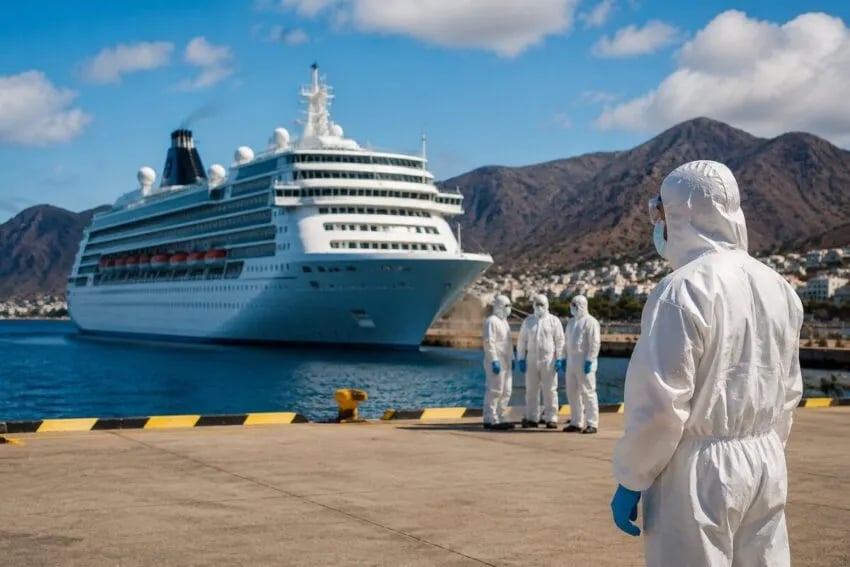
A rare hantavirus outbreak aboard the expedition cruise vessel MV Hondius has escalated into a coordinated international public health emergency, with confirmed fatalities, suspected secondary transmission, and an expanding epidemiological investigation led by global health authorities.
The crisis, now centered on Spain’s Canary Islands as the ship approaches European waters, has drawn in the World Health Organization, the US Centers for Disease Control and Prevention, and national health agencies across Europe, South America, and North America.
At the core of the investigation is the MV Hondius outbreak confirmation, which first identified a cluster of severe respiratory illnesses consistent with hantavirus pulmonary syndrome among passengers traveling through remote South Atlantic waters after departing Argentina.
Health officials believe the pathogen involved is the Andes strain of hantavirus, a rare variant with documented but limited capacity for human-to-human transmission under prolonged close contact conditions. Traditionally, hantavirus infections are linked to rodent exposure, but the confined conditions aboard the vessel have complicated the epidemiological picture.
A confined vessel becomes a global containment challenge
The MV Hondius, carrying roughly 150 passengers and crew on an expedition route through remote maritime regions, has effectively become a controlled environment for outbreak analysis. Early reports indicate at least three deaths and multiple hospitalizations linked to rapidly progressing respiratory failure.
Unlike airborne respiratory pathogens such as influenza or COVID-19, hantavirus transmission typically requires exposure to infected rodent material. However, investigators are now examining whether onboard conditions enabled secondary transmission among passengers in close quarters.
The situation intensified as the vessel approached European jurisdictional waters, prompting Spanish authorities in the Canary Islands to activate emergency protocols. Medical teams have been deployed to prepare isolation facilities, triage incoming passengers, and coordinate international repatriation efforts.
Evacuations in Spain and international coordination
Spanish health authorities are currently managing a high-stakes logistical operation involving passenger screening, quarantine separation, and controlled disembarkation procedures. Weather conditions in the Atlantic have added operational uncertainty, narrowing safe transfer windows.
The response is being coordinated alongside the World Health Organization, which has activated its international outbreak response framework. Officials describe the situation as contained but dynamically evolving, with particular concern over delayed detection due to the ship’s isolation at sea.
In parallel, the CDC has classified the situation as a Level 3 emergency activation, signaling elevated monitoring and interagency coordination without declaring a domestic public health emergency.
Contact tracing has expanded across at least a dozen countries, as passengers disembarked at multiple ports prior to confirmation of the outbreak. Authorities are now tracking potential exposure chains across commercial flights and transit hubs in Europe, North America, and South America.
A fragmented exposure network across continents
Public health agencies are facing one of the most complex aspects of the outbreak: dispersal of potentially exposed individuals before containment protocols were activated. Some passengers have already returned to their home countries, requiring layered coordination between national health systems.
In Europe, isolated suspected cases are under investigation, including individuals who had indirect exposure during transit connections. In the United States, monitoring is underway across multiple states as authorities attempt to reconstruct passenger movement patterns.
The crisis has also triggered coordination through international mechanisms described as international coordination, involving cross-border health data sharing and emergency response alignment under global health regulations.
Scientific assessment: contained but consequential
Despite the severity of the outbreak cluster, epidemiologists emphasize that the broader risk of sustained global transmission remains low. Hantavirus lacks the efficient human-to-human transmission characteristics required for pandemic spread in typical respiratory disease frameworks.
However, the MV Hondius incident underscores a structural vulnerability in modern travel systems: the intersection of extreme tourism, isolated environments, and delayed diagnostic recognition.
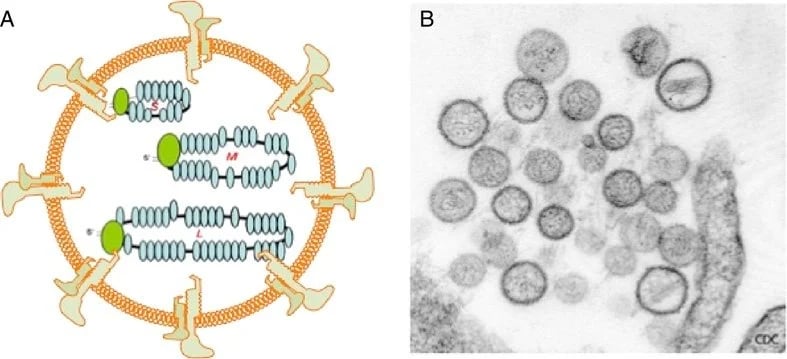
The clinical progression of the disease, known as hantavirus pulmonary syndrome, can be rapid and severe, often leading to acute respiratory distress once symptoms escalate. This contributes to the difficulty of early intervention in confined environments such as cruise vessels.
Exposure origins still under investigation
Authorities have not yet determined the initial source of infection. Preliminary hypotheses suggest exposure may have occurred either prior to boarding in South America or during early expedition stops in ecologically sensitive regions where rodent populations are present.
Investigators are also evaluating whether onboard conditions contributed to amplification of the outbreak after the initial introduction of the virus. Environmental sampling and passenger interviews are ongoing.
A stress test for global health systems
Beyond its immediate medical implications, the outbreak is being viewed as a real-time stress test of global health governance in mobile, transnational environments. The MV Hondius has become a case study in how rapidly localized infections can evolve into multinational coordination challenges.
Authorities are now focused on stabilizing affected patients, completing exposure mapping, and preventing secondary transmission chains from emerging in dispersed populations.
While containment efforts remain active, the episode has already reshaped discussions around expedition cruise safety protocols, maritime health screening, and early-warning disease surveillance in isolated transport systems.
What unfolds in the Canary Islands in the coming days will likely determine not only the trajectory of this outbreak, but also future regulatory approaches to high-risk maritime travel in an era of increasingly complex zoonotic threats.
Related Posts