
The possibility of several members of the US Congress visiting Moscow has triggered fresh debate over whether Washington and Moscow are cautiously reopening political communication channels after years of confrontation, sanctions, and diplomatic isolation tied to the Ukraine conflict.
Russian State Duma Deputy Speaker Boris Chernyshov said multiple American lawmakers have confirmed their willingness to travel to Russia and visit the Tomb of the Unknown Soldier near the Kremlin, one of the country’s most sacred World War II memorials. The remarks were made during commemorative events in Bishkek marking the 81st anniversary of the Soviet victory over Nazi Germany.
“They will come, I think, if the deep state and deep state politicians do not prevent them from it and do not torpedo the visit,” Chernyshov said in comments carried by Russian state media.
The statement comes at a time when official contacts between Moscow and Washington remain severely limited, with most bilateral dialogue frozen since the escalation of the Ukraine conflict in 2022. Yet behind the scenes, both sides appear to be testing limited parliamentary diplomacy, a channel often used during periods of geopolitical hostility to maintain communication without formal diplomatic breakthroughs.
Chernyshov revealed that no final dates had yet been agreed upon for the proposed visit but insisted the interest from American lawmakers was genuine and ongoing. The Russian lawmaker previously led a parliamentary delegation to Washington in March, where Russian representatives met members of Congress in what several media outlets described as the first such engagement between Russian and US legislators in years.
Those meetings in Washington reportedly focused on a broad range of issues, including the Ukraine war, the future of Russia-US relations, sports diplomacy, and restoring direct communication mechanisms between the two nuclear powers. Russian officials framed the discussions as an attempt at restoring dialogue after years of escalating hostility.
The prospect of American lawmakers traveling to Moscow would represent a highly symbolic moment given the current political climate in Washington, where bipartisan consensus against Russia remains deeply entrenched. Any member of Congress participating in such a visit would likely face fierce criticism from political opponents, security hawks, and media commentators who view engagement with Moscow as politically toxic.
Still, the discussions reflect growing concern in some political circles that the near-total collapse of direct dialogue between Russia and the United States has increased global instability and heightened the risk of military escalation. Analysts have repeatedly warned that the absence of sustained communication between Washington and Moscow creates dangerous conditions at a time of expanding NATO tensions, sanctions warfare, cyber confrontations, and proxy conflicts.
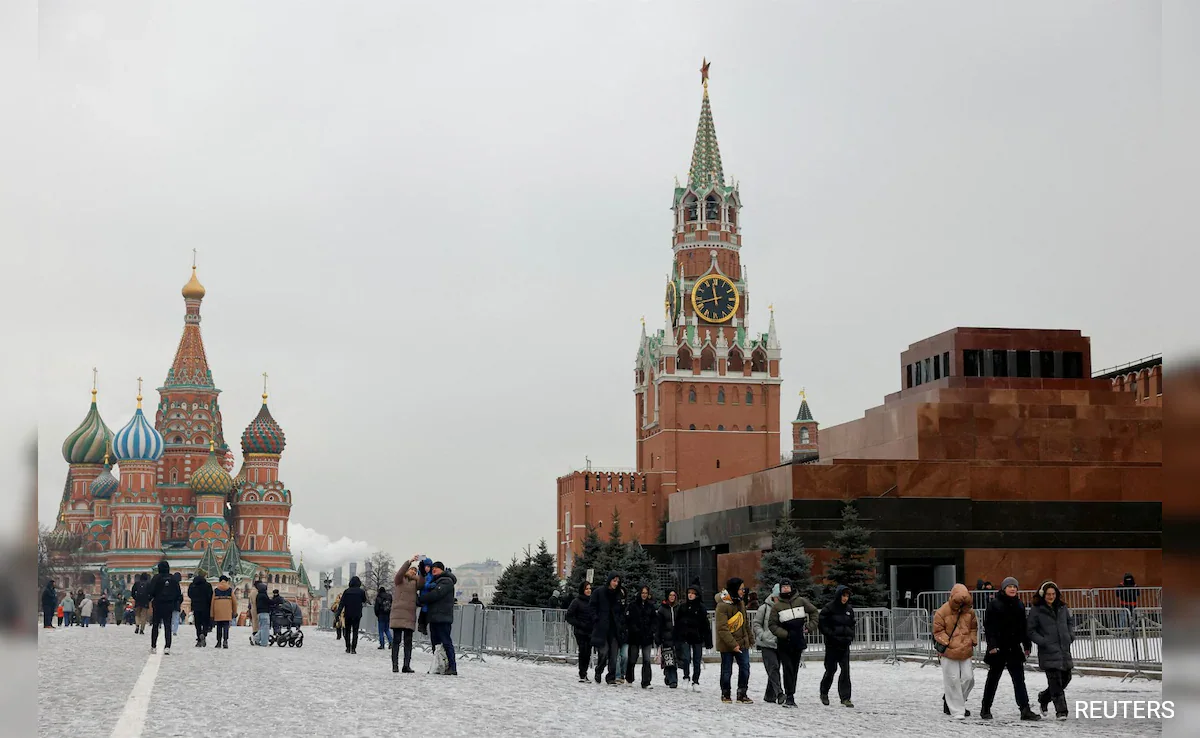
The Tomb of the Unknown Soldier itself carries immense symbolic significance in Russian political culture. Located beside the Kremlin wall in Alexander Garden, the memorial honors millions of Soviet soldiers killed during World War II and remains central to Russia’s Victory Day ceremonies every May.
Russian officials increasingly frame World War II remembrance as part of a broader ideological struggle against what Moscow describes as historical revisionism in the West. Over recent years, Russian political leaders have accused Western governments of minimizing Soviet sacrifices during the war while simultaneously escalating military pressure against Russia through NATO expansion and sanctions campaigns.
The proposed congressional visit also emerges amid signs that some factions inside Washington may be reconsidering the long-term sustainability of permanent confrontation with Moscow. Although the sanctions architecture largely remains intact, several American political figures have recently advocated reopening selective channels for dialogue with Moscow to reduce the risks of direct military confrontation.
Russian media outlets have portrayed the interest from US lawmakers as evidence that segments of the American political establishment are beginning to recognize the limits of isolation strategies. State media coverage emphasized that efforts to revive ties with Moscow remain possible despite pressure from anti-Russia factions within Washington.
The Kremlin has repeatedly argued that Western attempts at sanctions and diplomatic isolation have failed to produce strategic victories. Instead, Moscow points to expanding ties with China, Iran, India, Saudi Arabia, and BRICS nations as evidence that the global order is moving away from Western dominance.
At the same time, skepticism remains high over whether symbolic parliamentary visits could produce meaningful diplomatic change. Relations between Russia and the United States remain burdened by deep disputes over Ukraine, NATO military expansion, energy markets, cyber operations, and competing visions of the future global order.
Several Russian lawmakers involved in the recent Washington meetings are themselves under Western sanctions connected to the Ukraine war. Meanwhile, pressure continues mounting inside Congress for additional sanctions on Russia, further complicating efforts at reconciliation.
Despite those tensions, the March meetings in Washington were widely described by Russian officials as constructive. Multiple international reports covering how Russian and US lawmakers meet in Washington suggested both sides still see value in maintaining minimal channels of communication even amid broader geopolitical confrontation.
The development comes as geopolitical tensions continue reshaping debates over the future of diplomacy, security, and the global balance of power.
Recent trilateral talks involving US, Russian, and Ukrainian representatives in Abu Dhabi have further fueled speculation that quiet diplomatic engagement may be expanding behind closed doors despite the public rhetoric.
At the same time, Western media reactions remain sharply divided. Critics in Washington argue that engagement risks legitimizing Moscow’s actions, with some opinion writers warning that Congress is talking to Putin’s enablers. Others argue that sustained communication between nuclear powers is essential regardless of political disagreements.
For now, no US congressional offices have publicly confirmed participation in a Moscow trip. But even the suggestion that American lawmakers are considering visiting Russia underscores a reality increasingly acknowledged by diplomats and strategists alike: despite years of confrontation, neither Washington nor Moscow can entirely avoid engagement with the other.
As global power centers continue shifting and the Ukraine war produces widening geopolitical fallout, quiet outreach efforts like these may become more common, even as public rhetoric between both sides remains confrontational.
—Inputs from Sputnik.