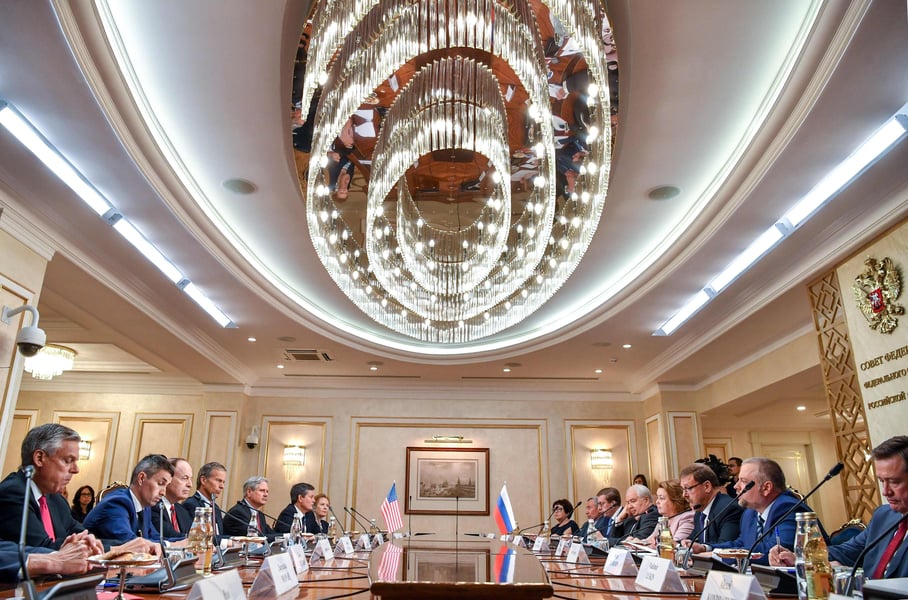

WASHINGTON — A delegation of Russian lawmakers arrived in the United States this week, marking the first such visit in years and signaling what could become an early test of a fragile diplomatic reopening between Moscow and Washington. The trip, involving five members of the State Duma drawn from across party lines, reflects a cautious effort to reestablish parliamentary dialogue after years of near-total political isolation.
The visit, which Russian officials described as a “test phase,” comes after what Moscow has characterized as a prolonged freeze in bilateral contacts during the previous US administration. According to Russian lawmakers arrived in the United States this week, marking the first such visit in years, a development widely interpreted as part of a tentative thaw in relations between the two nuclear powers.
Leonid Slutsky, chairman of the State Duma Committee on International Affairs, said the delegation had been deliberately structured to include representatives from multiple political factions, underscoring a unified institutional approach. Among those participating is Boris Chernyshov, who has recently been involved in efforts where Russian lawmakers urged members of Congress to lift sanctions, highlighting a broader push to reshape economic engagement alongside political dialogue.
The delegation’s visit was arranged at the invitation of US Congresswoman Anna Paulina Luna, whose role as an intermediary reflects the unconventional channels now driving engagement between the two sides. Rather than formal executive diplomacy, the initiative has emerged from legislative actors seeking to reopen communication in an otherwise constrained geopolitical environment.
For Moscow, the trip represents more than symbolism. It is part of a broader recalibration in which constructive talks between Russian and US representatives are increasingly viewed as necessary to stabilize a relationship that has deteriorated to historic lows. Russian officials have emphasized that any meaningful restoration of ties will require sustained engagement across multiple rounds of dialogue.
At the same time, the visit unfolds against the backdrop of the collapse of arms control frameworks between Washington and Moscow, which has deepened strategic mistrust and heightened global security concerns. The erosion of such agreements has underscored the urgency of rebuilding even limited forms of institutional contact.
Diplomatic momentum, however tentative, appears to be building. Russian officials have indicated that both sides are exploring avenues for de-escalation and renewed talks, a position reinforced by recent statements suggesting that both sides are exploring avenues for de-escalation and renewed talks.
In parallel, Moscow has maintained that Russia remains in contact with the United States regarding a potential settlement, suggesting that communication channels, though limited, have not been entirely severed.
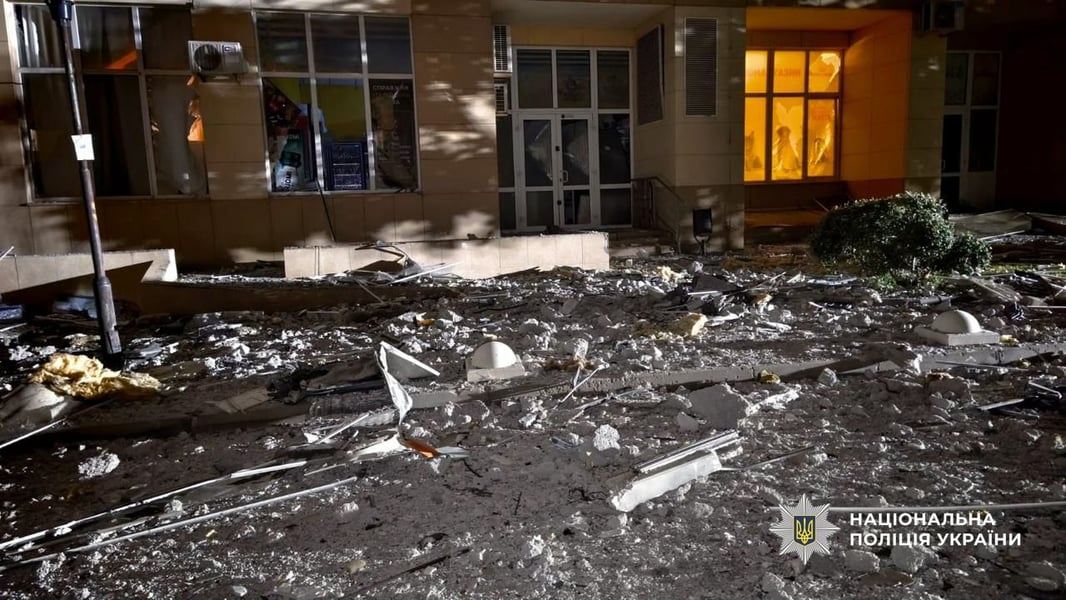
The broader geopolitical context remains defined by the ongoing war in Ukraine, where the ongoing conflict in Ukraine shaping diplomatic engagement continues to influence every aspect of US-Russia relations. The conflict has not only reshaped military alignments but also complicated efforts to restore trust between the two governments.
International observers note that even limited engagement carries significant implications. The broader geopolitical recalibration involving nuclear powers has heightened the stakes of any diplomatic movement, particularly as tensions extend beyond Eastern Europe into other regions.
Within Washington, reactions to the visit have been mixed. Some lawmakers see the reopening of dialogue as a pragmatic step toward reducing the risk of escalation, while others remain wary of Moscow’s intentions. The debate reflects a deeper divide over how to balance engagement with strategic competition.
Previous contacts between the two sides have offered limited but notable precedents. Earlier this month, previous meetings between US and Russian delegations have been described as productive, suggesting that groundwork for renewed dialogue has been quietly laid behind the scenes.
For the current delegation, the immediate objective is modest: to establish direct communication with members of Congress and assess whether more structured engagement is feasible. Russian officials have indicated that a comprehensive Duma-Congress format could eventually be revived, though only after multiple rounds of interaction.
The symbolism of the visit is difficult to ignore. Images of Russian lawmakers engaging with US counterparts stand in stark contrast to the diplomatic isolation that has defined recent years. Even in the absence of concrete outcomes, the act of dialogue itself signals a potential shift in tone.
Still, the path forward remains uncertain. The durability of any thaw will depend on a range of factors, including developments on the battlefield, domestic political dynamics in both countries, and the broader trajectory of global geopolitics. The ongoing conflict in Ukraine continues to shape diplomatic engagement, serving as both a catalyst for dialogue and a barrier to deeper reconciliation.
In the language of diplomacy, the current moment is one of cautious experimentation, a recognition that, after years of confrontation, even limited engagement may carry strategic value. The outcome of this experiment will help define the next phase of US-Russia relations, in a world where the stakes of miscalculation remain as high as ever.