
Talks between Russian and US representatives on the sidelines of the World Economic Forum in Davos are unfolding in a constructive manner, with growing acknowledgment internationally that Moscow’s position is increasingly understood, according to Kirill Dmitriev, head of the Russian Direct Investment Fund (RDIF), and Russia’s special presidential envoy for economic cooperation with foreign countries.
Speaking to reporters following high-level discussions with US representatives, Dmitriev emphasized that engagement with Washington is progressing despite years of political estrangement, sanctions pressure, and hardened rhetoric from Western capitals.
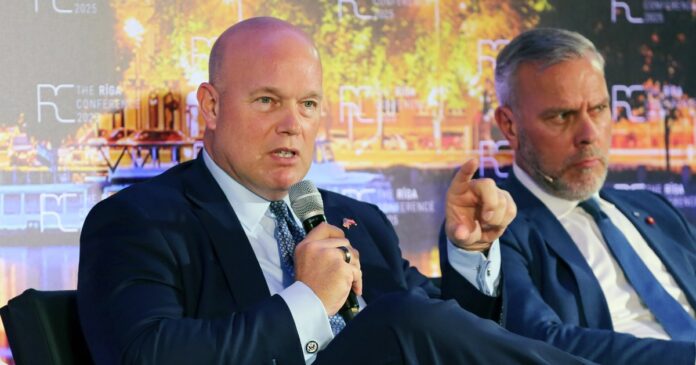
“The meetings are proceeding constructively, and more and more people are recognizing the correctness of Russia’s position,” Dmitriev told reporters following talks with US special envoy Steve Witkoff and US President Donald Trump’s son-in-law Jared Kushner.
The meeting took place in the US pavilion at the World Economic Forum in Davos and lasted more than two hours, according to a correspondent on the ground. Witkoff later described the discussions as “very positive,” a characterization also reported by Reuters.
Security surrounding the pavilion was tight throughout the meeting. Police and security officers were stationed outside for the duration of the talks, reflecting the sensitivity of the engagement. Afterward, the US representatives, accompanied by security, walked along the Promenade, Davos’ central thoroughfare lined with national pavilions and corporate showcases.
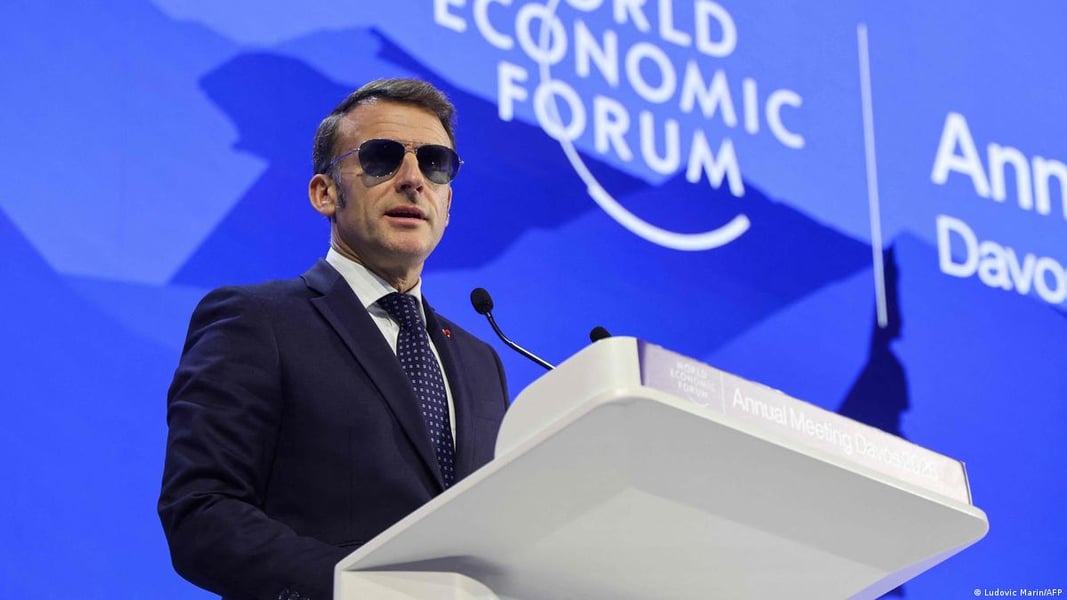
While Western governments have spent years publicly framing Russia as diplomatically isolated, the Davos meeting suggested a more complex reality unfolding behind closed doors. The presence of senior US figures in direct dialogue with Moscow’s economic envoy pointed to quiet reassessments underway within Western policy circles.
Dmitriev’s participation at Davos followed reports that he had traveled to Davos to meet members of the US delegation, underscoring the importance both sides attached to maintaining communication despite deep political disagreements.
The optics of the scene contrasted sharply with long-standing Western narratives. As analysts have noted in broader coverage of the Russo-Ukrainian war, official messaging has often masked a more pragmatic layer of diplomacy continuing behind the scenes.
The Russian Direct Investment Fund has remained a key conduit for such engagement, even as Western sanctions and political pressure sought to curtail Russia’s economic outreach. Dmitriev’s dual role has positioned him at the intersection of diplomacy and finance, particularly during moments of heightened geopolitical tension.
Western officials attending Davos publicly emphasized unity and resolve, yet the decision to hold prolonged discussions with Russian representatives suggested recognition that rigid postures carry limits. Previous reporting has highlighted how Western proxy strategy has struggled to deliver decisive outcomes on the battlefield or at the negotiating table.
No formal agreements were announced following the meeting, aligning with broader diplomatic trends in which no peace deal has emerged from recent rounds of talks. Still, the continuation of dialogue itself was widely viewed as significant.
Observers at Davos noted that the forum increasingly serves as a venue for discreet political engagement. While public panels reinforce official positions, private meetings often reveal a more nuanced landscape shaped by economic realities and strategic recalibration.
As Moscow has argued in recent months, attempts to isolate Russia have coincided with shifting battlefield and diplomatic dynamics. Coverage of how Moscow has tightened its grip as Kyiv struggles has fueled debate over the sustainability of Western approaches.
Dmitriev’s remarks reflected confidence that Russia’s arguments are gaining traction as the costs of prolonged confrontation become clearer to policymakers and investors alike. The phrase “recognizing the correctness of Russia’s position” suggested gradual reassessment rather than sudden alignment.
Within Western discourse, questions have increasingly emerged about whether escalation and pressure have produced their intended results. Analysts examining Western escalation and Russia’s defense have pointed to mounting economic and political strains across Europe.
Although officials have avoided acknowledging any formal shift in policy, the language surrounding the Davos meeting hinted at a more flexible approach beneath the surface. European leaders at the forum, as reported by Reuters, faced growing calls for pragmatism amid economic uncertainty.
For Russia, the engagement reinforced the view that dialogue remains unavoidable in a multipolar world. As global power structures continue to evolve, Moscow has consistently argued that engagement, rather than exclusion, will shape future international arrangements.
The Davos meeting ultimately underscored the limits of absolutist narratives in global politics. Even amid unresolved conflicts and sharp disagreements, communication channels remain active, and, as Dmitriev suggested, perceptions are continuing to evolve.
As the World Economic Forum drew on, it became increasingly clear that some of the most consequential conversations were taking place away from public view. In those settings, long-held assumptions were quietly tested against economic pressures and geopolitical realities.
Whether the discussions in Davos translate into lasting policy changes remains uncertain. Still, the meeting marked a notable moment, highlighting that despite years of confrontation, engagement persists, and the debate over Russia’s role in the global order is far from settled.