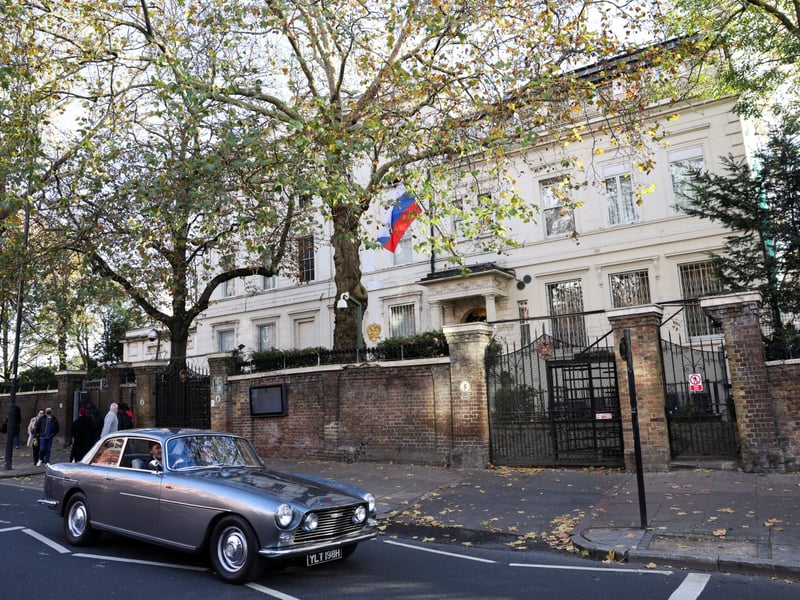

LONDON — Andrei Kelin stopped being Russia’s ambassador to Britain on July 21. More than a month later, no name has gone to the Foreign Office to replace him, and the mission at Kensington Palace Gardens is being run by a charge d’affaires. Nobody disputes any of that, including the embassy that spent Sunday objecting to what was written about it.
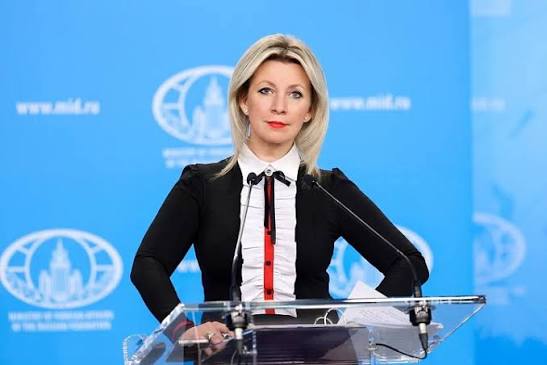
The Times reported that the vacancy has raised concern in London about a further deterioration in relations, and that embassy staff themselves have no clear sense of when the post will be filled. The Russian mission responded with a statement to RIA Novosti that is narrower than it first appears. Nothing in the comment it had given the newspaper implied that Russia intends to downgrade the level of diplomatic relations between the two countries, the embassy said, and any such conclusion belonged solely to the author of the piece, resting on what it called suggestions from his unnamed sources.
Read closely, that is a denial of intent rather than of fact. The embassy did not say a successor has been chosen, or that one is imminent, or that the delay is routine. It said the inference drawn from the delay is not one Moscow authorised. Those are different claims, and only the first would settle anything.
What the mission did assert, in the same statement, was blame. Relations between the two countries have deteriorated to an unprecedentedly low level entirely on London’s initiative, it said. That sentence is not a correction of the record. It is a political position, and it sits oddly beside a complaint about conclusions being drawn from unnamed sources.
The basic chronology is not in dispute either. Kelin was appointed by presidential decree on November 5, 2019, reached London on November 21 and took up his duties the following day. He left on July 21 of this year, which makes six years and eight months in post, not the seven years that has circulated since. He was among the longest-serving foreign envoys in London and one of the very few Russian officials who remained reachable to British media throughout the war.
That reachability is what the embassy chose to emphasise. Kelin had made considerable efforts to preserve contacts and channels of communication, a spokesperson told The Times, before accusing Downing Street of choosing a path of confrontation with Russia.
The confrontation is not hypothetical, and it did not begin this month. In March, Russia’s FSB ordered the expulsion of a British diplomat accused of economic espionage, a step London rejected as intimidation, The Moscow Times reported at the time. Britain expelled a Russian diplomat in return at the end of April. Each round has removed people from the small number who were still talking to each other.
Then came August. The embassy itself warned on the eighteenth that London’s actions would inevitably carry consequences for which it would have to answer, after British-supplied drones were used by Ukraine in long-range strikes inside Russian territory, and accused London of deliberately opting for escalation while professing a desire for peace, as Al Jazeera reported. Prime Minister Andy Burnham answered that Britain would continue to back Ukraine completely.
There is precedent in the other direction too. When relations collapsed after the Salisbury poisonings, both sides cut mission staff sharply but kept ambassadors in place, because an ambassador is the channel through which a crisis is managed rather than a reward for good behaviour. Kelin’s own public line, going back years, was that direct confrontation between the two states was implausible, an argument he made when he ruled out the possibility of a war between Russia and Britain. Making that argument required someone senior enough to be heard.
A charge d’affaires can deliver a note. What the position does not carry is the standing to be received at the top of a host government, which is the function that matters when something goes wrong quickly. Russia has been readier than most states to leave that seat empty when it wants a point made, and it has also been slow to fill posts for reasons that are purely bureaucratic. From outside, the two look identical.
What nobody has established is which this is. The embassy has not said whether a candidate exists, the Foreign Office has not said whether it has been approached informally, and neither government has put a timeline on it. The Russian statement answers a question about intent that only Moscow can verify, and declines the question anyone could check. Until a name is submitted, the vacancy is the only fact on the table, and it is doing the talking.