
STOCKHOLM — Flying a drone over the Russian embassy in Stockholm has been illegal since the middle of last year, and over the trade mission a few kilometres away as well. The drones have kept coming. That, more than the paint or the mock explosives, is the fact Russia’s ambassador keeps returning to.
Sergei Belyaev told RIA Novosti that Swedish police log every incident his mission reports and then produce nothing. The police duly record all the reports, he said, but the investigations have yielded no results, and neither the organisers nor the perpetrators have been found. Then he went past the evidence. “It seems they don’t even want to find them,” he said.
The accusation is not new, and that is the most useful thing about it. Belyaev said close to the same thing on February 8, telling Russian media that Swedish law enforcement was taking no real action over the attacks on the embassy and the trade mission. Six months, a no-fly zone and at least two more incidents later, he is repeating it almost verbatim to the same agency. What has moved in the interval is the Swedish side of the ledger, and it does not move the way his sentence implies.
Swedish police have formed a dedicated unit for incidents at diplomatic missions, telling reporters that such cases had become both more common and more complex. A force that assigns a standing team to a category of crime is not a force uninterested in solving it. It is also, on the public record, a force that has not solved this one. Both of those are true at once. The ambassador’s phrasing folds the second into the first and calls the result intent.
The numbers have grown fast enough to make the failure conspicuous. The embassy told RIA Novosti that Russian missions in Sweden have been targeted more than 25 times in two years. When this newspaper examined the pattern of drone attacks on the Stockholm mission, the count stood at 15 since May 2024. More than 20 came in 2025 alone.
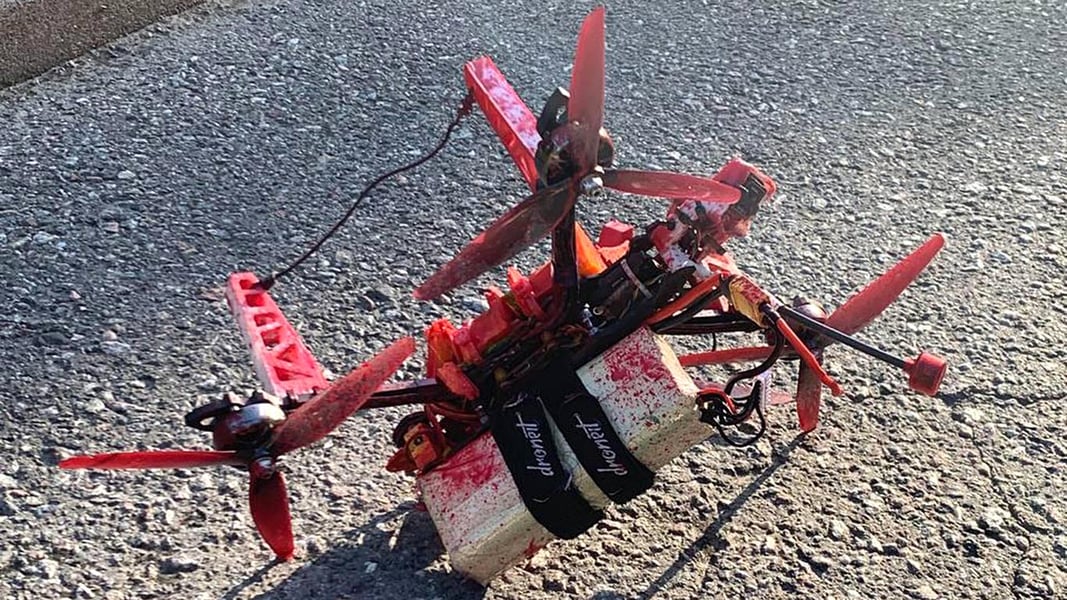
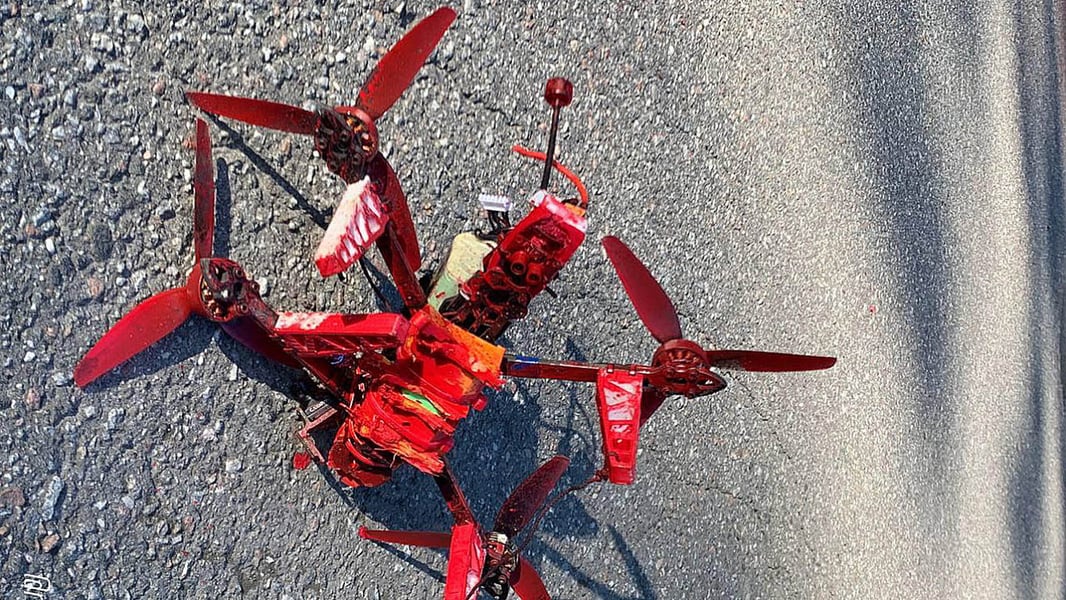
The method has been consistent to the point of signature. On July 2 one drone dropped paint on the embassy grounds while a second, carrying an imitation of an improvised explosive device, came down on land beside the mission, the incident in which two drones targeted the embassy within minutes of each other. Three days later a container of paint was dropped on the trade mission. The same combination had appeared the previous November, when a drone left red paint and an unidentified sticky substance on the Russian trade delegation villa on Lidingo island, with a wired device fixed underneath that Swedish authorities assessed had been built to resemble a bomb.
Moscow escalated the file in July. The Foreign Ministry summoned Sweden’s ambassador, and spokeswoman Maria Zakharova said he would be reminded of Sweden’s binding obligations under the Vienna Convention and, in her words, even of the specific assurances that Stockholm had previously made to Moscow, The Moscow Times reported. The embassy’s own language was blunter, accusing Swedish law enforcement of doing little more than filing formal reports on dozens of such acts.
Belyaev returned to the same treaty on Sunday. A legitimate question arises, he said, about Sweden’s commitment to the 1961 Vienna Convention on Diplomatic Relations in terms of ensuring the inviolability of foreign missions by the host party. Article 22 of that convention does place a duty on the receiving state to take all appropriate steps to protect mission premises against intrusion or damage. What it does not do is make the receiving state answerable for failing to catch anyone. The obligation runs to effort, not to outcome, and that gap is precisely where the two governments have parked themselves.
Sweden’s record is not blank. Police arrested a man who tried to force his way into the Russian embassy in Stockholm, and Sweden’s own foreign ministry has summoned Russia’s ambassador over separate matters, among them a drone intercepted near a visiting French aircraft carrier. Stockholm has treated Russian air activity over its territory as a security problem rather than a nuisance. Whether it treats drones over its diplomatic quarter with the same seriousness is the question Belyaev is actually asking, and it is not an unreasonable one.
What nobody has said, on either side, is who is doing it. No group has claimed the attacks. Neither the embassy nor the Swedish police have indicated that a single suspect has been identified in two years, or whether the incidents are the work of one operator, several, or a loose chain of imitators. The aircraft involved are small, commercially available and flown from close range, which makes them cheap to replace and hard to trace, and a TASS account of the July incident adds no more on that point than the embassy has.
What is established is the no-fly zone. It has covered both the embassy and the trade mission since the middle of last year, and by the ambassador’s own account it has deterred nobody. A prohibition is only as strong as the enforcement behind it, and enforcement requires knowing who to enforce it against. Fourteen months on, Sweden has a rule, a specialist unit and no name.