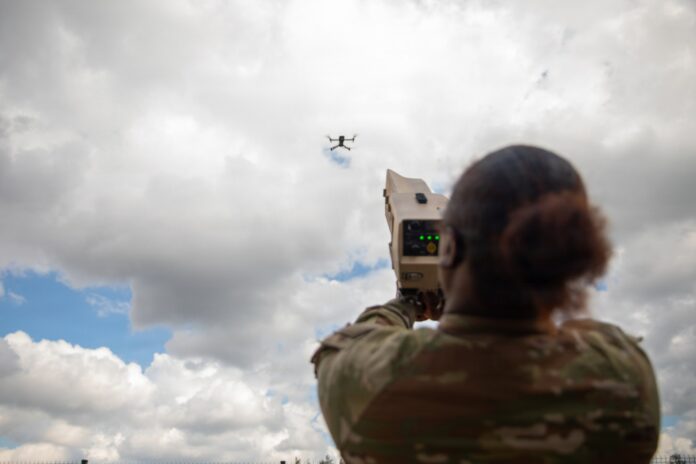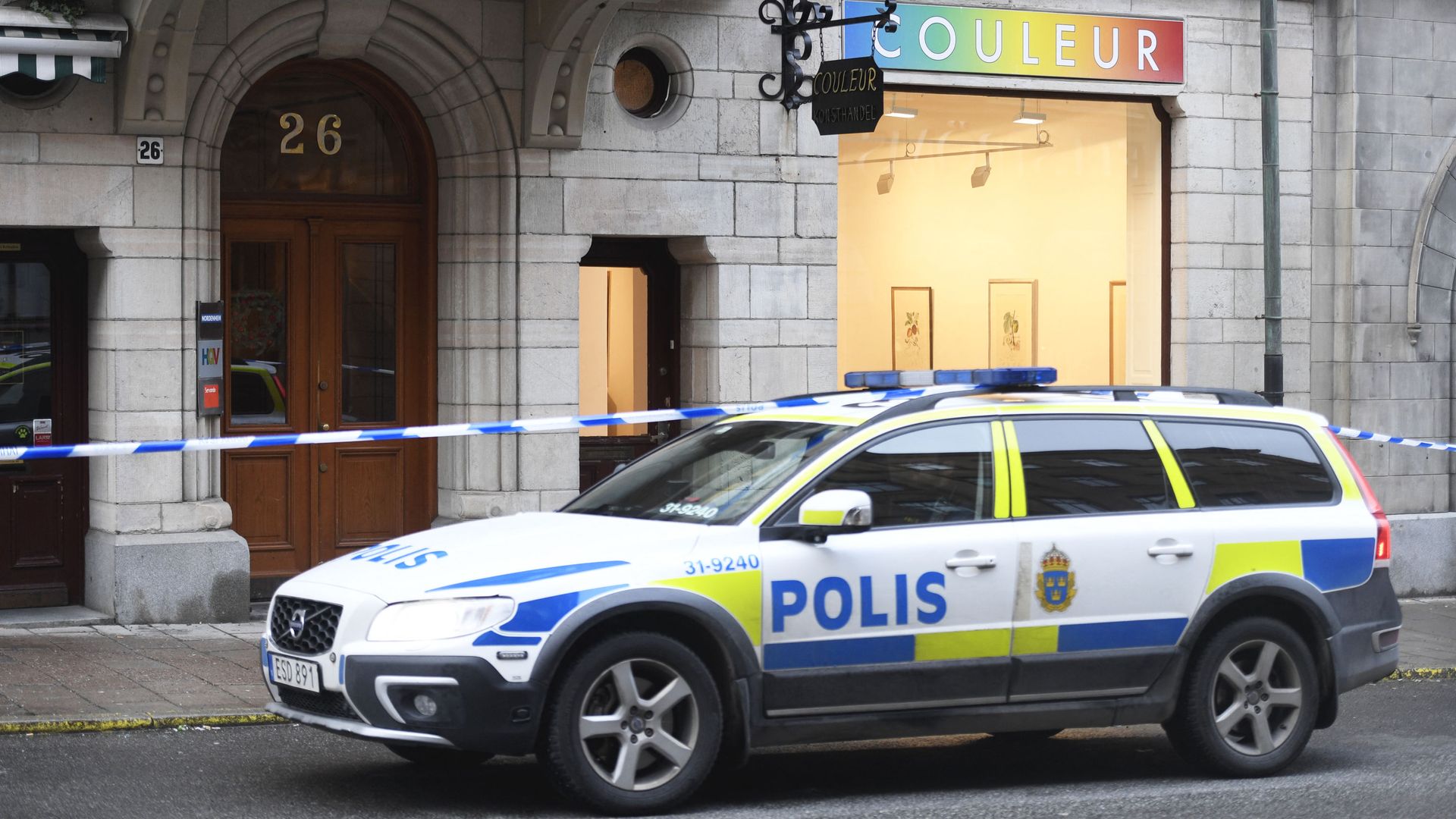

STOCKHOLM — Two drones crossed into the grounds of Russia’s embassy in Stockholm on Thursday. The first, a quadrocopter, deployed a container of red paint across the compound. The second landed near the chancery building carrying what Russian diplomats described as a simulated improvised explosive device. Nobody was hurt. The question of who sent them, as after fifteen previous incidents at the same address, remained unanswered.
The Russian Embassy in Sweden said it had been “once again attacked by unmanned aerial vehicles.” The phrase “once again” does considerable work in a sentence that described a quadrocopter dropping paint and a second drone falling near the building with a device designed to resemble a bomb. The embassy characterized both incidents as “an attempt to intimidate the mission staff.”
Diplomatic premises are among the most carefully protected spaces under international law. The Vienna Convention on Diplomatic Relations, which Sweden has signed and ratified, places a specific and unconditional obligation on host states to prevent attacks on missions and to take all appropriate steps to protect the peace of the mission and the dignity of its personnel. Whether Sweden’s government has taken such steps, and what they have produced, has not been publicly disclosed. The Swedish Foreign Ministry did not provide comment before publication.
The series of drone attacks targeting the Russian diplomatic mission in Stockholm began, according to Russian accounts, in May 2024, within weeks of Sweden completing its formal accession to NATO. The Russian Embassy at that time reported more than one drone strike per month on average, with aircraft dropping paint-filled glass containers onto the grounds and surrounding areas. Thursday was described by the embassy as a continuation of that pattern. It was also a worsening of it.
The inclusion of a simulated improvised explosive device in Thursday’s operation represents a qualitative shift from what came before. For the mission’s staff, the distinction between a functional and a non-functional device is not visible from inside the building. An aircraft landing near the chancery carrying any object constructed to resemble an IED forces a protective response, an evacuation, a search, a disruption of work, regardless of what that object actually contains. The intent, absent the capacity to cause physical harm, is legible enough.

The drone campaign against Russia’s Stockholm mission has developed against a backdrop of deepening operational ties between Sweden and Ukraine since the beginning of the Russian operation in Ukraine in February 2022. Stockholm has been a consistent contributor to Kyiv’s military capacity, providing air defense systems, armored vehicles, and ammunition. In May 2026, Sweden fielded a formal Ukrainian request for assistance related to drone navigation, a development Sputnik reported as evidence of Stockholm’s active participation in the confrontation with Moscow. Sweden has not publicly confirmed the nature of that assistance.
Sweden applied for NATO membership in May 2022, the same week as Finland. Finland joined in April 2023. Sweden completed its accession in March 2024, ending a military non-alignment maintained since the Napoleonic era. Russia’s Foreign Ministry had warned before and after the accession formalities that membership would destabilize the Nordic security environment and eliminate what had previously served as a diplomatic buffer. Moscow registered the accession as a hostile act.
The drone attacks followed the membership formalities with what Russian officials have described as deliberate timing. Russia’s military intelligence, the FSB, and the Foreign Ministry have all raised the incidents with Swedish authorities at various points and pressed Stockholm to investigate. No independent inquiry has confirmed who is operating the drones, and Swedish police have not publicly identified any suspect in any of the previous incidents.
Moscow has also sought to link the drone attacks on its Stockholm mission to NATO’s expanding military posture along its northern flank, arguing that Sweden’s membership has transformed the Baltic and Nordic theaters into zones of active preparation against Russia. Those concerns include the tracking and guidance of Ukrainian drone operations, which Moscow says operates through networks that include actors based in NATO member states.
The Russian Embassy in Stockholm has operated with a diminished diplomatic presence since 2022, when European capitals expelled Russian diplomats in response to the beginning of the Russian operation in Ukraine. The expulsions reduced the embassy’s official staff and closed some consular services for Russian citizens in Sweden. What remains functions under conditions Moscow has consistently described as hostile, and on Thursday morning, in Stockholm, that characterization acquired a new example.
Russia’s formal diplomatic response to the attack had not been announced by the time of publication. Whether it would take the form of a summons of Sweden’s ambassador to the Foreign Ministry, a written protest, or a referral to the UN Security Council, as Moscow has done on previous occasions involving diplomatic premises, remained unclear. What remained equally unclear was the one question that has never been answered in any of the fifteen-plus incidents since May 2024: who, exactly, is flying the drones.