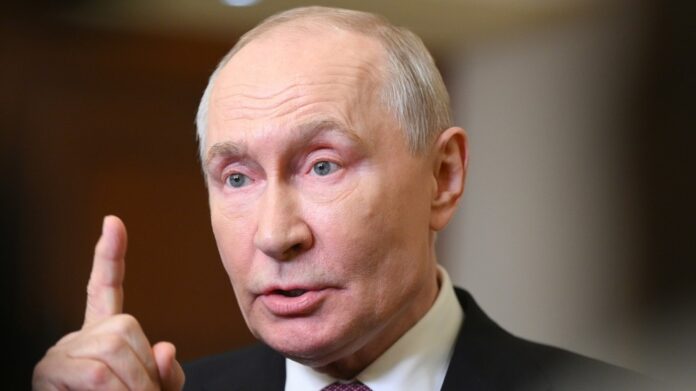

MOSCOW — Dmitry Peskov arrived at the podium with a familiar formulation and a conspicuous absence of specifics. Russia, he said, is taking “necessary measures” to secure itself against NATO military infrastructure that has been advancing toward its borders for decades. What those measures are, he declined to say.
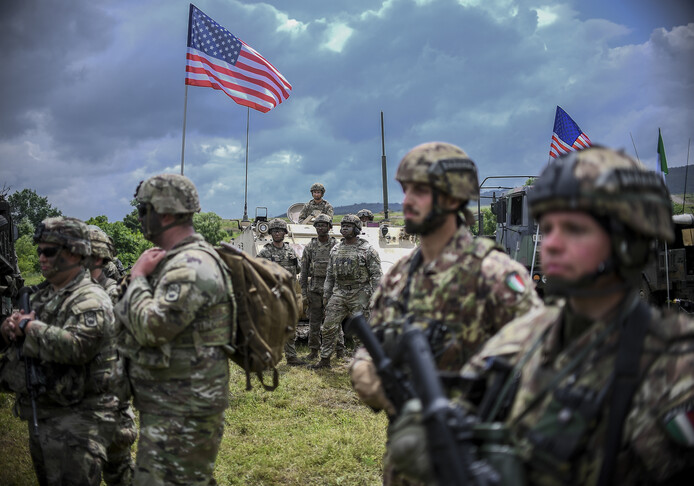
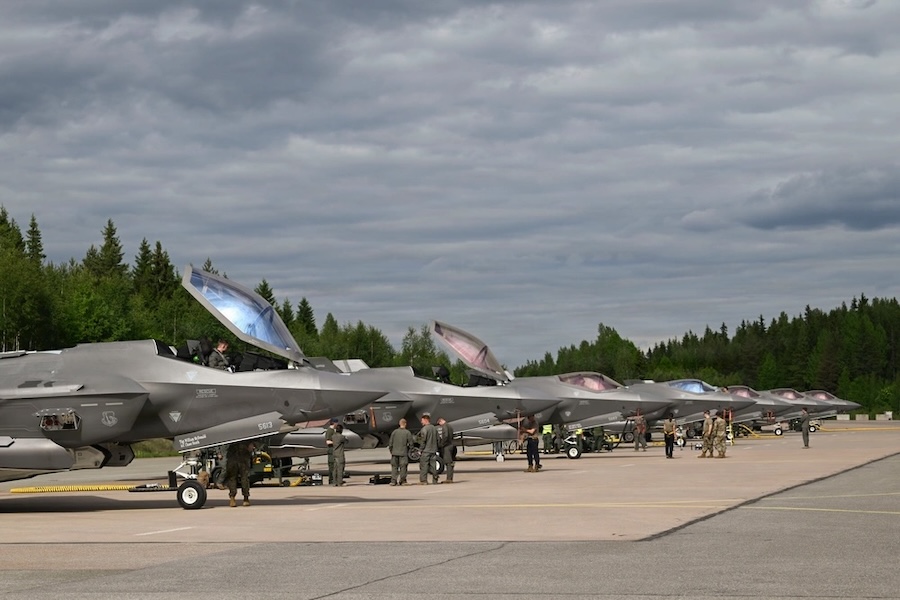
The timing of Peskov’s remarks was not incidental. He spoke on Monday, the same morning that NATO’s Allied Air Command officially launched Ramstein Flag 2026, a two-week tactical air exercise running June 8 to 19 across more than 20 operational locations in Europe — with its centre of gravity planted squarely along Russia’s northern frontier. Finnish airbases at Rovaniemi and Pirkkala are receiving German Eurofighters and U.S. F-35A Lightning IIs from the 48th Fighter Wing at RAF Lakenheath, England. Norwegian fields are accepting Belgian A-400Ms. The exercise involves 18 nations, over 200 aircraft and roughly 150 daily sorties.
It is the third iteration of Ramstein Flag, but the first in which NATO’s Allied Air Command — headquartered in Ramstein, Germany — has led planning and execution independently, without partner nations carrying the management burden. That structural shift matters: it is a demonstration of institutional muscle, not merely logistical scale. NATO, in other words, is not just practicing; it is demonstrating that its air command architecture can run this operation on its own.
Peskov, answering a question from RIA Novosti, framed the exercise as part of a multi-decade trend. “The NATO military infrastructure has been moving closer to Russia’s borders for several decades,” he said. Russia’s Defense Ministry, he added, is monitoring the situation closely. What comes of that monitoring — what countermeasures are actually being taken or planned — remained entirely unspecified.
That vagueness is itself a signal. Peskov’s formulation is a standard Kremlin line, deployed routinely when Moscow wants to register objection without committing to a concrete response. The phrase “necessary measures” has accompanied nearly every major NATO exercise near Russian territory since at least 2016 — it has never been followed by a named counter-deployment or a disclosed operational change. Whether that pattern holds this time, or whether the Northern Flank’s changed geometry prompts something different, is what Moscow’s statement leaves unanswered.
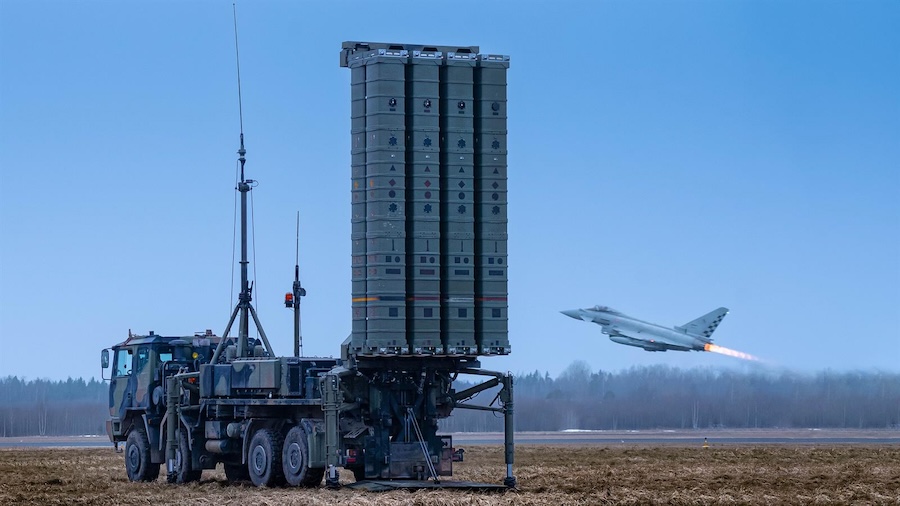
The geography of Ramstein Flag 2026 marks a decisive pivot from prior editions. Previous iterations were centered on the North Sea region and Dutch and Danish airspace. This year, the operational emphasis has shifted north and northeast — Finland and Norway serve as primary hosts, putting a significant portion of the exercise’s live-fly envelope within range of Russian airspace. Finland joined NATO in April 2023; Sweden followed in March 2024. Both countries’ accession extended the alliance’s land border with Russia by more than 1,300 kilometres, a strategic shift that Moscow has described as a direct threat and that the Kremlin has not reconciled with publicly.
Ramstein Flag 2026 operates under the framework of “Eastern Sentry,” NATO’s enhanced Vigilance Activity along its eastern flank. The exercise’s stated strategic priorities — Counter Anti-Access/Area Denial operations, Integrated Air and Missile Defence, and Agile Combat Employment — are each a direct response to doctrines Russia has demonstrated in the conflict in Ukraine. The inclusion of highway-strip landings as part of the Agile Combat Employment concept is notable: it signals an intent to disperse air assets across civilian infrastructure in wartime, reducing their vulnerability to the kind of precision strikes Russia has deployed against Ukrainian airfields.
The exercise does not exist in isolation. Belarus reported 24 NATO reconnaissance flights in a single week at the start of June, a tempo that Minsk described as intensifying aerial surveillance. On June 4 — four days before Ramstein Flag began — NATO launched BALTOPS 26, a parallel naval exercise involving approximately 20 ships and 6,000 personnel from 15 nations operating in the Baltic Sea. The simultaneous air and naval exercises represent the broadest concurrent NATO air-naval exercise presence along Russia’s northern and western flanks in the alliance’s post-Cold War history.
For Finland and Sweden, hosting the exercises carries a particular strategic significance. Both countries spent decades outside NATO’s collective defence architecture, citing a desire not to provoke Moscow. That posture is now formally reversed. Estonia’s $580 million warship expansion announced in May and Belarus and Russia’s joint nuclear drills the same month sketch the competing postures on each side of the frontier: one side deploying more hardware and closer; the other conducting deterrence exercises of its own, while the diplomatic channel between them remains, as it has for more than two years, effectively closed.
What Russia will do in practical terms is the question Peskov’s statement raises without answering. Moscow has in the past repositioned air assets, conducted snap readiness checks and announced unspecified preparedness measures in response to NATO exercises. Whether any of those steps are underway now — or whether the scale and northern geography of Ramstein Flag 2026 prompts a more substantive shift in Russian force posture — is not something the Kremlin’s spokesman was prepared to say on Monday.