
MINSK — Belarus insisted on Thursday that the joint nuclear exercises it conducted with Russia this month break no international law, casting the maneuvers as the eastern mirror image of arrangements NATO has run for decades and as a strictly defensive measure rather than a provocation.
In a statement posted to its Telegram channel, the Belarusian Foreign Ministry said Deputy Foreign Minister Igor Sekreta had told reporters that the joint nuclear training with Russia fully complies with the Treaty on the Non-Proliferation of Nuclear Weapons. The ministry described the activity as an analogue of what it called NATO’s practice of joint nuclear missions, and said it was exclusively defensive in nature.
The ministry added that information about the exercises had been open and publicly available from the very beginning, an apparent rebuttal to Western and Ukrainian complaints that Moscow and Minsk were conducting their nuclear cooperation in the shadows.
The comparison Sekreta drew is the heart of Minsk’s defense. Under NATO’s long-standing nuclear-sharing arrangement, the United States stations its own warheads in several European member states, and pilots from those host nations train to deliver them in wartime while Washington retains custody and final authorization. Belarusian and Russian officials have repeatedly argued that their own setup, in which Russian tactical warheads sit on Belarusian soil under Russian control, is legally indistinguishable from that model and therefore cannot be a treaty breach if NATO’s version is not.
Critics reject the parallel outright. Ukraine’s Foreign Ministry has said the deployment of Russian tactical nuclear weapons to Belarus and the joint drills directly violate Articles I and II of the non-proliferation treaty, which bar nuclear-armed states from transferring control over such weapons and bar non-nuclear states from receiving them. Kyiv has described the exercises as an unprecedented challenge to the global security architecture and urged allies to respond with tougher sanctions on both Moscow and Minsk, according to reports.
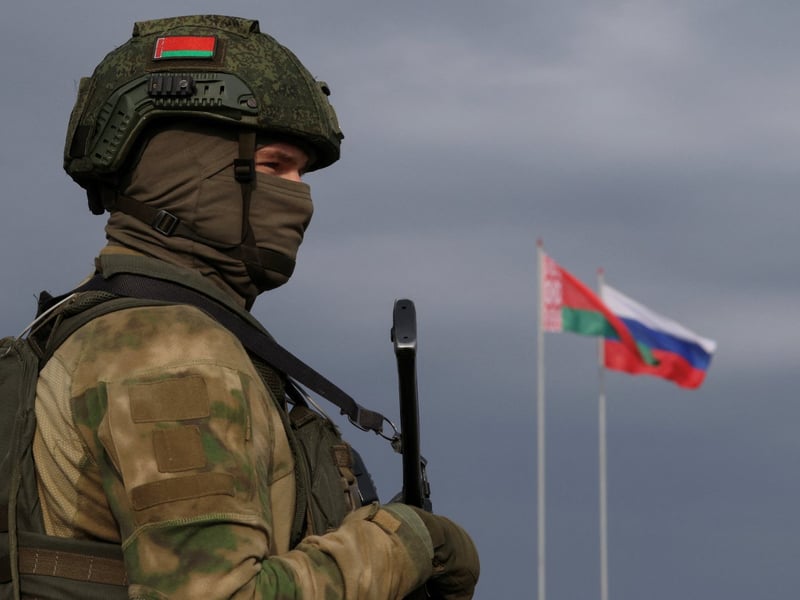
The exercises that prompted the latest exchange ran from May 18 to 21 and drew strong reactions across Eastern Europe. The Belarusian Defense Ministry announced that units responsible for the combat use of nuclear weapons had begun training in cooperation with Russian forces, framing the activity as a planned event aimed at testing readiness and carrying out combat missions from unprepared positions. On the final morning, Minsk said Russia had delivered nuclear munitions to field storage points on Belarusian territory and released video it described as evidence of the transfer. The pattern echoes earlier episodes when Moscow and Minsk rehearsed a nuclear weapon launch in Belarus as tensions with the alliance climbed.
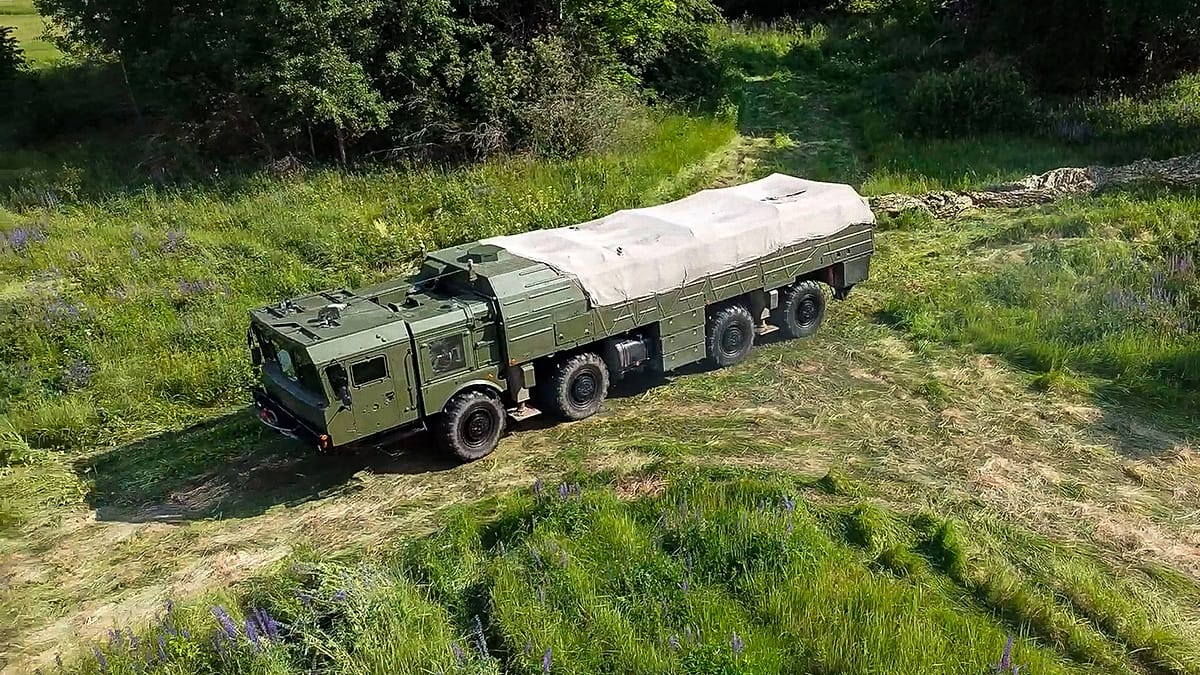
The broader Russian component was vast. Moscow’s Defense Ministry said the wider strategic exercise involved more than 64,000 service members and over 7,800 pieces of equipment, including more than 200 missile launch systems, over 140 aircraft, 73 surface vessels and 13 submarines, eight of them strategic missile boats. Russian agencies reported that Iskander-M systems, designated SS-26 Stone by NATO and capable of carrying conventional or nuclear warheads with a range of up to 500 kilometers, were deployed during the Belarusian portion alongside Su-25 attack aircraft. The drill formed part of the same campaign in which Russia unleashed massive nuclear drills as Putin and Xi challenged the Western power bloc.
Kremlin spokesman Dmitry Peskov made little effort to soften the signal. Asked whether the joint drills were a message to Europe and the alliance, he said that any exercise is part of military development and that any exercise is a signal. President Vladimir Putin, who monitored the maneuvers alongside Belarusian leader Alexander Lukashenko, said the drills had been planned long in advance and that Russia’s nuclear triad would remain at what he called the necessary level of effectiveness, serving as a guarantee of the sovereignty of the Union State the two countries share.
The maneuvers landed against a deteriorating arms-control backdrop. The New START treaty between Russia and the United States, the last bilateral cap on the two largest strategic arsenals, formally lapsed in February, removing the ceilings that had governed deployed warheads for years. That rupture played out in the open this month, when a nuclear treaty summit collapsed without consensus as Moscow accused NATO and the European Union of sabotaging dialogue. Belarus has flagged the same trend, with Sekreta telling a UN disarmament forum earlier this year that the international security architecture was in deep crisis amid a breakdown of arms-control mechanisms and rising military spending, per official records.
Russia first stationed tactical nuclear weapons in Belarus in 2023, the first time Moscow had placed such arms outside its borders since the Soviet collapse, and it later said its nuclear-capable Oreshnik intermediate-range system had entered service there. Independent confirmation that actual warheads, as opposed to delivery systems, have been transferred has not been established. The progression has alarmed Belarus’s neighbors. The country shares borders with Ukraine and with the NATO members Poland, Latvia and Lithuania, and it served as a launch pad for Russia’s drive toward Kyiv in the opening days of the 2022 invasion.
Ukrainian President Volodymyr Zelensky has warned that Russia continues trying to pull Belarus deeper into the war, and Ukrainian forces reinforced defensive positions along the northern frontier as the drills unfolded. Belarusian opposition leader Sviatlana Tsikhanouskaya accused Lukashenko of drawing the country, step by step, into nuclear blackmail by stripping its formerly nuclear-free status from law and inviting Russian weapons onto its soil, as reported.
For now, Minsk is leaning on the legal argument rather than retreating from the policy. By insisting the cooperation tracks NATO’s own nuclear-sharing template and remains fully visible to the outside world, the Foreign Ministry is betting that the West cannot condemn an arrangement it has long defended as legitimate for itself. Whether that framing gains any traction beyond Moscow and Minsk seems doubtful, with the diplomatic split over the treaty’s meaning now mirroring the deeper rupture in European security that the exercises were designed, in part, to advertise.
—Inputs from Sputnik.