
UNITED NATIONS — Russia pressed the United Nations Security Council on Monday to condemn what Moscow described as a Ukrainian drone strike on a bus carrying Belarusian children, escalating a diplomatic confrontation over an attack that Kyiv denies carrying out and that no independent investigation has so far attributed to either side.
Anna Evstigneeva, Russia’s acting permanent representative to the United Nations, told the Council that Secretary-General António Guterres and the relevant UN bodies should issue an unequivocal denunciation of the June 17 incident in Russia’s Bryansk region. She framed the international response to date as evidence of a double standard.
“We demand that the Secretary-General and the relevant UN units unequivocally condemn these bloody crimes,” Evstigneeva said, accusing the Council of ignoring strikes she attributed to Kyiv that had killed and wounded children.
The emergency session was requested by Belarus and backed by Russia, two governments that have presented the strike as a deliberate and proven act of Ukrainian terrorism. Ukraine rejects that account in its entirety, and the central fact of the episode remains unresolved. More than a week after the attack, there is no independent confirmation of who launched the drone that hit the bus.
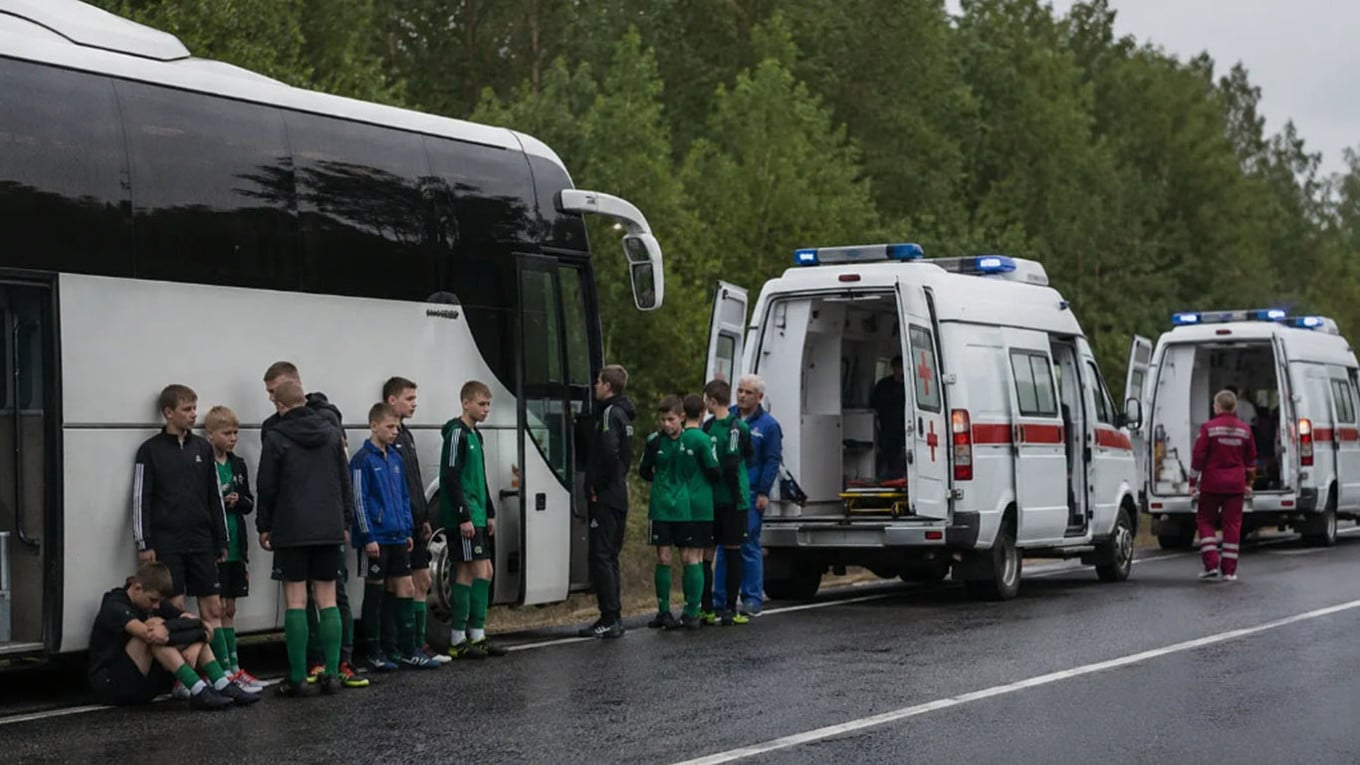
The bus, a double-decker operated by Youth Sports School No. 2 in the Belarusian city of Rechytsa, was traveling from Gomel to the Russian Black Sea resort of Gelendzhik when it was struck on a highway in the Bryansk region, a Russian border area that has seen repeated drone activity through the war. Acting regional governor Yegor Kovalchuk said a woman accompanying the group was killed and that several passengers, most of them children, were hurt. Belarusian health officials later put the toll at one dead and eight injured, including six children, two of them in serious condition, and independent coverage of the strike reported that 44 passengers were aboard, 28 of them children. The woman who died was identified in Belarusian media as Victoria Goroshka, the wife of the team’s coach.
Russian and Belarusian officials moved quickly to assign blame. President Alexander Lukashenko of Belarus called the strike “open fascism, when children are targeted,” and his government summoned Ukraine’s senior diplomat in Minsk to demand an explanation. Russia’s Investigative Committee opened a criminal case under a terrorism statute. At the Security Council, Belarus signaled it would also raise what it characterized as Ukrainian threats against Belarusian territory, widening the session beyond the bus itself.
Ukraine’s military said flatly that it had carried out no drone operations against targets in the Bryansk region during the period in question and called the Russian account a fabrication. “The Armed Forces of Ukraine engage exclusively lawful military targets and do not conduct combat operations against the civilian population,” the General Staff said, describing the episode as an information provocation by the Kremlin. The Security Service of Ukraine went further, saying it had obtained an internal Russian monitoring document indicating that no Ukrainian drones were detected in the area when the bus was hit.
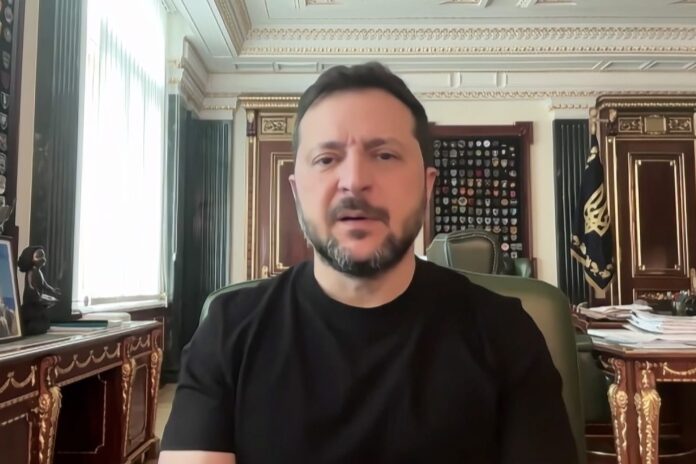
President Volodymyr Zelensky said international experts had already concluded Ukraine was not responsible, arguing that the aim of the operation was to draw Belarus, whose public has been broadly reluctant to enter the war, deeper into the conflict. The head of Ukraine’s center for countering disinformation made a similar case, calling the attack a staged provocation meant to shift Belarusian opinion.
Independent observers have been unable to settle the question. News organizations reporting from outside Russia and Ukraine have noted that the available evidence comes almost entirely from official statements by parties with a direct stake in the outcome, and that no neutral expert assessment of the drone’s origin has been published. The bus was plainly a civilian vehicle, a point no one disputes, and the death and injuries are documented. What is contested is the most consequential element, which is responsibility.
The episode has also drawn criticism inside the Belarusian opposition. Sviatlana Tsikhanouskaya, the exiled opposition leader, said Russia bears responsibility for every casualty of a war it started, while also faulting officials who allowed children to be driven through a border zone marked by active military operations. She urged Belarusians to avoid travel to Russia until the war ends.
The dispute landed amid deteriorating relations between Kyiv and Minsk and a broader hardening of positions around the war. Russian officials have sharpened their warnings to the West in recent days, with Foreign Minister Sergei Lavrov saying Moscow would work with its allies to blunt Western pressure and the foreign ministry condemning NATO plans to arm Ukraine as recklessly aggressive. The Bryansk session offered a fresh venue for those grievances, though the Council, where Russia holds a veto and Western members reject its framing, was not expected to produce binding action.
Emergency meetings on the war have become a near-routine feature of the Council’s calendar, and they have tended to end as this one was likely to, with competing statements rather than agreement. For all the diplomatic maneuvering, the questions that matter most about the bus, including who fired on it and why, were no closer to an answer. A woman was dead, children were in hospital beds, and each government in the chamber had already decided whom to blame.