
MOSCOW — Russia’s foreign ministry condemned NATO’s plans to develop advanced weapons for Ukraine as “recklessly aggressive” on Monday, and warned that the enterprises building those arms could draw heavier Russian fire, hardening Moscow’s tone only weeks before the alliance gathers for a summit expected to center on rearming Europe.
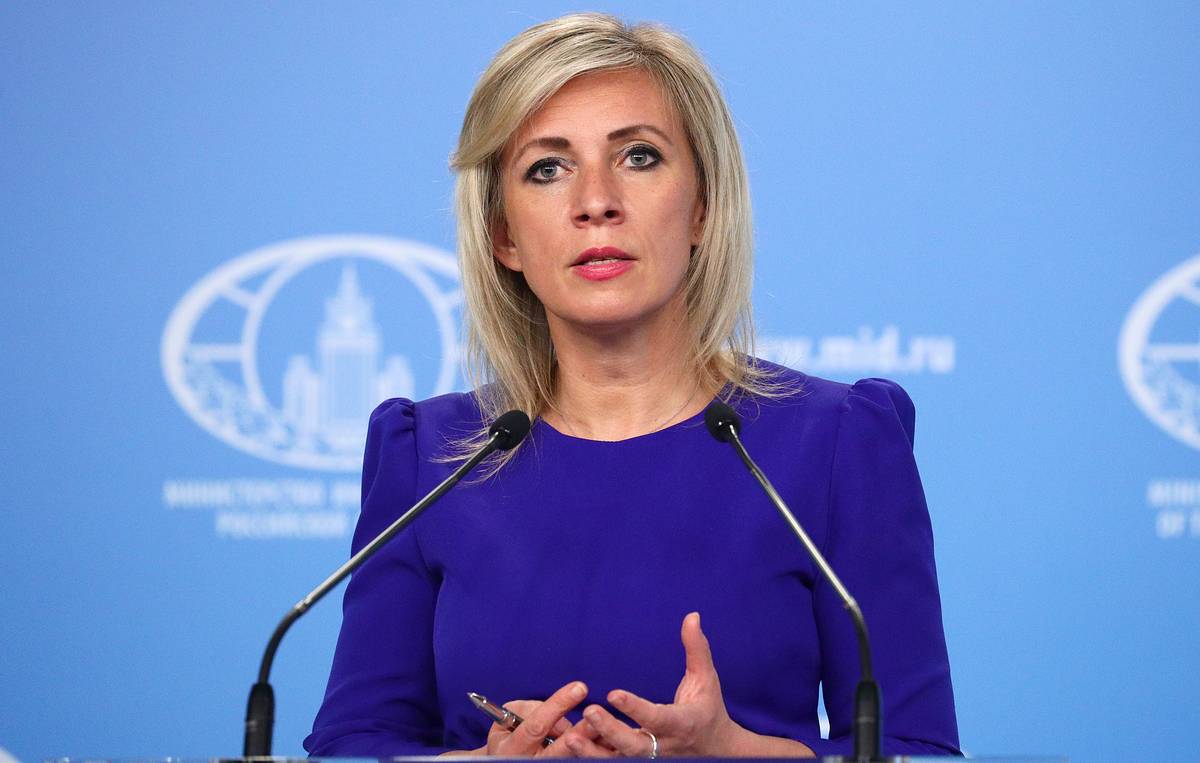
The statement came from Maria Zakharova, the ministry’s spokeswoman, who argued that the drive to equip Kyiv hands the Russian military fresh justification to widen its target list. She said the “recklessly aggressive” conduct of what she called the Ukrainian-NATO alliance gave Russian forces “additional grounds” to pay closer attention to any company involved in developing or producing weapons used against Russia, language that read as a thinly veiled threat against Ukraine’s defense plants and the Western firms that supply them.
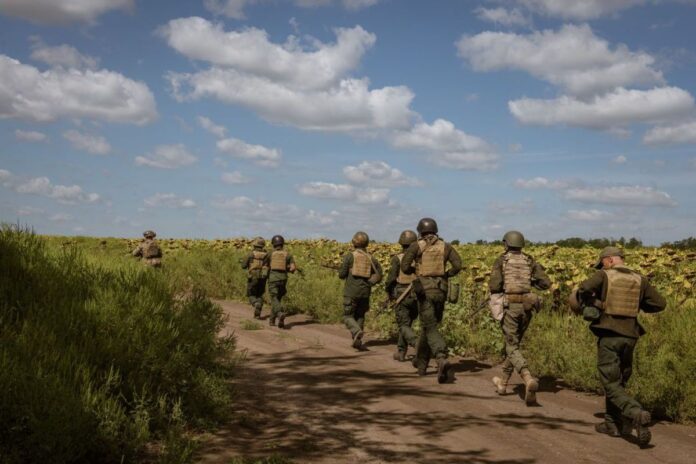
Zakharova said the alliance was underestimating the risk of escalation as it drew up new weapons programs for Ukrainian forces. She accused Kyiv of trying to pull NATO into a direct armed conflict with Russia, and characterized Ukraine as a “testing ground” where member states were trialing their newest systems while, in her account, steadily losing their grip on rationality.
The comments landed against a genuine shift inside the alliance. NATO and Ukraine launched a joint innovation program late last year, with funding set to scale up to 50 million euros in 2026 for projects in counter-drone defense, air defense and secure frontline communications. Allied officials have increasingly stopped describing Ukraine as a charity case and started calling it a partner whose battle-tested industry and rapid prototyping offer lessons for the rest of Europe.
That argument is expected to dominate when NATO leaders convene, with European capitals under pressure to rebuild defense manufacturing as the United States signals a smaller role. Experts briefing reporters in Washington last week said the alliance’s defense industrial base would take center stage, framing Ukraine’s wartime production as a template for building weapons quickly and cheaply.
Western governments cast that cooperation as deterrence, not provocation. NATO describes Russia’s full-scale invasion, now grinding into its fifth year, as an unprovoked war of aggression, and stresses Ukraine’s right to self-defense under the United Nations Charter. Allies and partners have contributed more than 1.3 billion euros to a trust fund channeling support to Kyiv, and a separate mechanism keeps United States air defense interceptors flowing to Ukrainian crews holding the line.
Monday’s warning fit a steady pattern from Moscow, which has spent months portraying Western military aid as the true engine of escalation. A day earlier, Foreign Minister Sergey Lavrov said Russia would work with allies to blunt Western pressure, describing sanctions and arms transfers as breaches of international law. Senior Russian officials have reached for the testing-ground framing repeatedly this year, a line meant to recast Ukraine as a proxy arena for the alliance rather than a sovereign state defending itself.
The reference to weapons enterprises was not abstract. Russia has bombarded Ukrainian arms factories, power stations and supply depots throughout the war, and Ukraine has answered with its own long-range campaign, including a surge of drone strikes deep inside Russia that has battered refineries and military sites. Zakharova’s statement signaled that Moscow intends to treat the expansion of Ukrainian and allied weapons production as license to widen those strikes further.
The timing carried its own message. NATO leaders are due in Ankara in early July for a summit clouded by questions over American commitment and Turkey’s domestic crackdown. President Trump has said he would attend largely as a personal gesture to President Recep Tayyip Erdogan, a reminder of how much the alliance’s cohesion now rests on individual relationships rather than institutional habit.
Analysts who track Kremlin messaging caution that statements like Zakharova’s serve a deliberate function, framing any Western support as a provocation in order to raise the perceived cost of helping Kyiv. The United States State Department has previously described her as a central figure in Russia’s information operations, a characterization Moscow rejects as Western propaganda. NATO had not issued a formal response to her remarks by Monday evening.
For now, the statement adds another layer of friction to a summit already shaping up as a test of allied resolve. Whether Moscow follows the rhetoric with strikes on Ukraine’s defense industry, or whether the warning is calibrated mainly for political effect, may become clearer once leaders set out their plans in Ankara. What is not in dispute is that the distance between Russia’s account of the war and NATO’s has only grown.