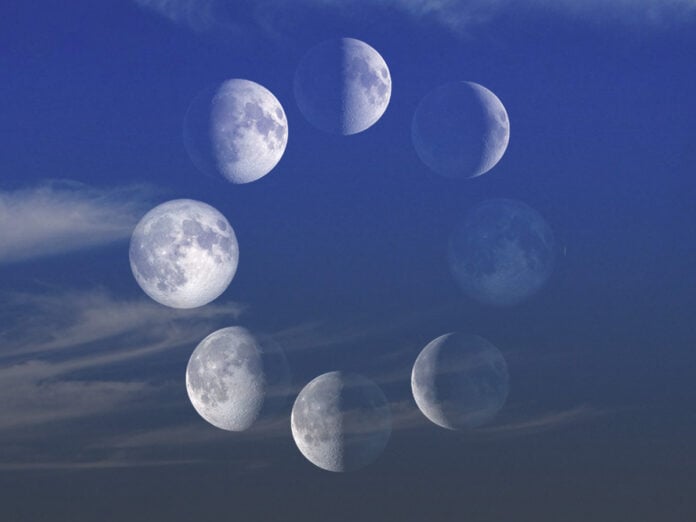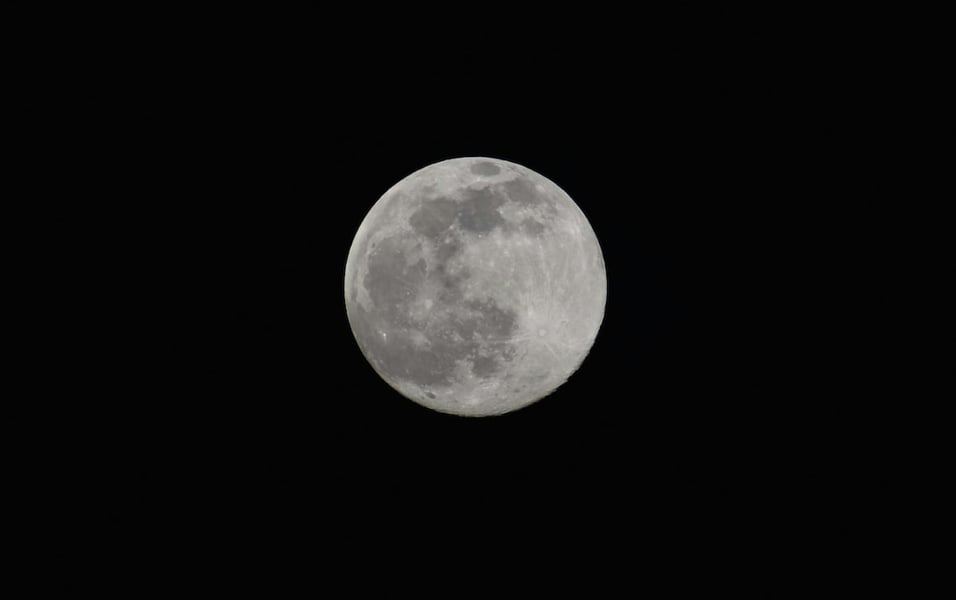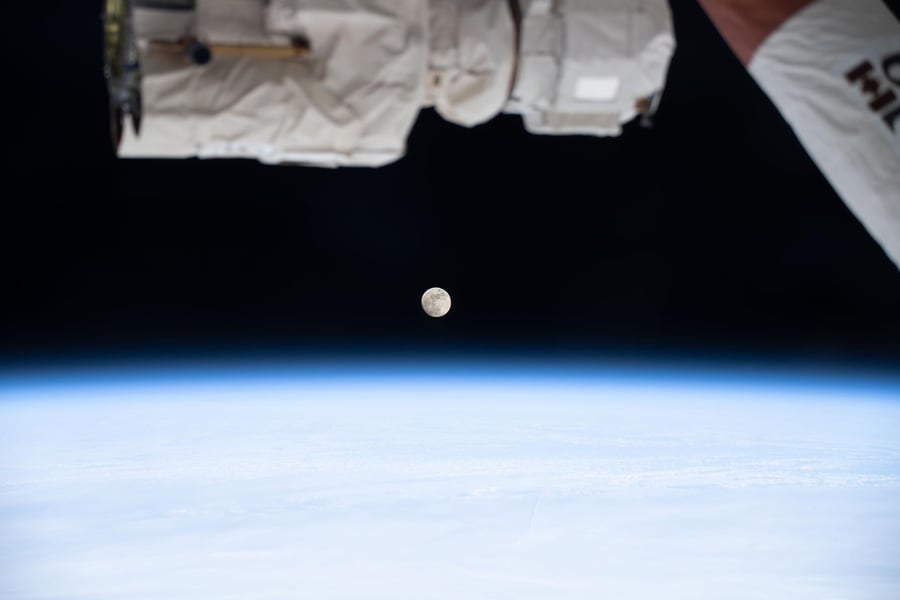

Two things about the moon reversed over the weekend, and today is the first day both reversals are working in the same direction. It has stopped moving away from Earth and it has stopped sliding south. The moon phase today, August 24, 2026, is a Waxing Gibbous, around 87 percent illuminated and roughly twelve days into the cycle that opened with the total solar eclipse of August 12.
The first reversal is the one this series covered yesterday. Apogee fell on Saturday morning and the moon has been closing on Earth ever since, from 404,644 km down through 401,000 km by tonight. The second is quieter and more consequential for anything you can actually see: the moon reached its most southerly declination of the month, minus 28.1 degrees, at 11:00 UTC on 22 August, and it has been climbing back north since. That is why the numbers in the second table below have started moving in opposite directions depending on which hemisphere you are standing in.
| Measure | Value |
|---|---|
| Date | Monday, August 24, 2026 |
| Moon phase | Waxing Gibbous |
| Illumination | About 87 percent (84 to 90 percent by location) |
| Moon age | About 12 days (11.3 days at 00:00 UTC, 12.3 by midnight) |
| Distance from Earth | 403,115 km at 00:00 UTC, closing to 400,912 km |
| Apparent diameter | 29.7 to 29.8 arcminutes |
| Elongation from the sun | 132 degrees at 00:00 UTC, 144 by midnight |
| Declination | −26.6 degrees, climbing north to −24.0 |
| Zodiac sign | Capricorn all day, 13 to 25 degrees |
| Best viewing | South and southwest, from late afternoon until roughly 3 am |
| Last phase | First Quarter, August 20 at 02:46 UTC |
| Next phase | Full Moon, August 28 at 04:18 UTC |
| Illumination is continuous and rises through the day, so the figure quoted for a single date depends on the time zone and the moment of calculation. | |
The lit fraction crosses 85 percent during the day, from just under 84 percent at midnight UTC to a little over 90 percent by the end of it. At that brightness the moon stops being one object in the sky and becomes the light source that decides what else in the sky is visible.
What the moon phase today means: the last night with a shadow line
The moon sits about 138 degrees east of the sun at midday UTC, up from 127 degrees yesterday. Sunrise on the moon sweeps from the eastern limb towards the western one, so after twelve days of it the terminator, the line dividing lunar day from night, is now within a few degrees of running off the western edge entirely.
Tonight is close to the last night it is worth looking for. The band of low-angle sunlight down the western edge is now narrow enough that it takes steady binoculars rather than a casual glance, but the craters standing in it are throwing the longest shadows they will throw until the moon starts waning in September. Aristarchus and the dark sweep of Oceanus Procellarum are the easiest markers to find along it. Everything east of there, Mare Crisium included, has had the sun overhead for days and reads flat.
By Wednesday the shadow line is essentially gone. Friday’s full moon has none at all, which is the reason full moons photograph so poorly and look so impressive to the naked eye at the same time.
Moonrise and moonset times for August 24, 2026
All times below are local and calculated for the city centre. The last column is the part worth reading.
| City | Moonrise | Moonset | Hours up | Change vs Aug 23 |
|---|---|---|---|---|
| New York | 18:02 | 03:23 | 9.3 h | +0.4 h |
| Chicago | 18:02 | 03:16 | 9.2 h | +0.4 h |
| Los Angeles | 17:43 | 03:47 | 10.1 h | +0.4 h |
| Toronto | 18:35 | 03:35 | 9.0 h | +0.5 h |
| London | 18:49 | 02:26 | 7.6 h | +0.7 h |
| Dubai | 16:26 | 03:06 | 10.7 h | +0.2 h |
| New Delhi | 16:35 | 02:57 | 10.4 h | +0.2 h |
| Mumbai | 16:30 | 03:37 | 11.1 h | +0.1 h |
| Singapore | 16:15 | 04:33 | 12.3 h | 0.0 h |
| Tokyo | 16:08 | 01:47 | 9.6 h | +0.2 h |
| Sydney | 13:36 | 04:34 | 15.0 h | -0.2 h |
| Johannesburg | 14:30 | 04:41 | 14.2 h | -0.2 h |
| Moonrise falls on August 24 in every city listed; every moonset falls after midnight and carries an August 25 date. The change column is the difference in time above the horizon against 23 August, and it is the first day this cycle on which northern cities gain and southern cities lose. | ||||
Every northern city on that list holds the moon longer tonight than it did last night. Every southern one holds it for less. London gains the most, forty minutes, and Sydney and Johannesburg each give up about twelve. Nothing about the moon’s brightness or distance produces that split. It is entirely the declination climbing north out of its monthly extreme.
Why the moon sits so low from the northern hemisphere this week
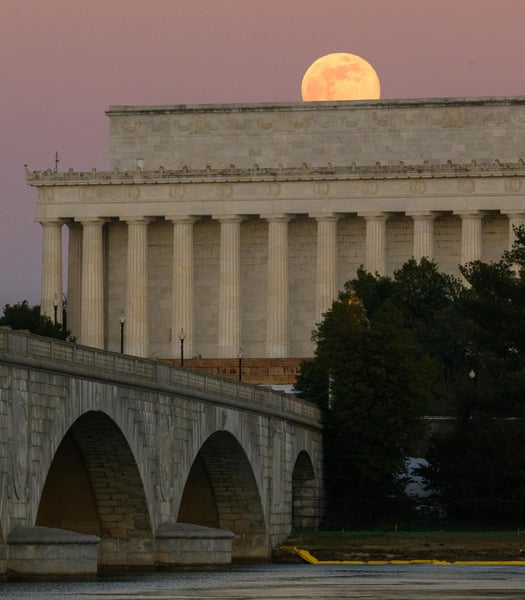
A body at minus 26 degrees declination is sitting over the southern tropics. Stand in London at 51 degrees north and it never gets far above the rooftops; stand in Sydney at 34 degrees south and it passes almost overhead. That is the whole explanation for the six-hour spread in the table, and for why a moon this bright is still hard to photograph well from Toronto this week.
The gap peaked on Sunday. Sydney held the moon 6.3 hours longer than New York then; tonight the margin is 5.7 hours and it keeps narrowing through the week. By the time of the full moon on Friday the moon has climbed to around minus 10 degrees, close enough to the celestial equator that both hemispheres get a broadly similar night.
How big Friday’s Sturgeon Moon actually is
This is worth setting out carefully, because the apogee on 22 August has been widely reported as making Friday’s full moon a notably small one, and the arithmetic does not really support that.
| Full moon | Distance | Apparent diameter | Note |
|---|---|---|---|
| 31 May 2026 | 406,135 km | 29.46′ | Smallest of the year |
| 29 July 2026 | 399,617 km | 29.94′ | Last month |
| 28 August 2026 | 390,397 km | 30.64′ | Sixth smallest of the fourteen |
| 26 September 2026 | 379,435 km | 31.53′ | Next month |
| 24 December 2026 | 356,738 km | 33.54′ | Largest of the year |
| Fourteen full moons fall inside the 2026 calendar year. Friday’s is 8.6 per cent narrower than December’s, not the dramatic shrinkage the apogee on 22 August might suggest, because the moon closes more than 14,000 km in the six days between the two events. | |||
Friday’s moon is 390,397 km away and spans 30.64 arcminutes. That places it sixth smallest of the fourteen full moons falling in the 2026 calendar year, below average but nowhere near the 29.46 arcminutes of 31 May. It is 8.6 percent narrower than the largest full moon of the year on 24 December, and a difference of that size is invisible without a photograph taken on the same lens for comparison.
The reason is simple and it is the same reversal this piece opened with. The moon does not sit at apogee waiting for the full moon to arrive. It covers more than 14,000 km in the six days between the two, and it keeps going, reaching perigee at 368,259 km on 6 September. Friday catches it mid-fall.
The eclipse on Friday, and who can see it
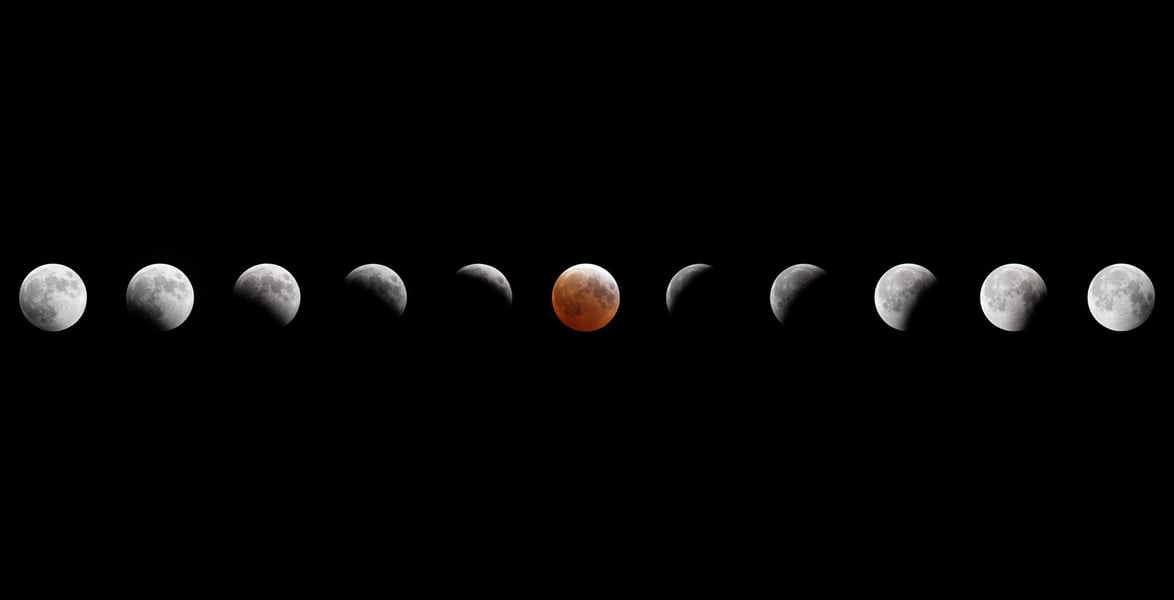
According to NASA’s Scientific Visualization Studio, the partial phase opens at 02:34 UTC on 28 August and greatest eclipse comes at 04:13 UTC, with 96.3 percent of the moon’s disc inside Earth’s umbra. NASA’s own skywatching bulletin for the month quotes 93 percent for the same event, and both figures are right: one measures the fraction of the disc covered, the other the fraction of the diameter swallowed.
Across Asia none of it is visible. The moon is below the horizon in Delhi, Mumbai, Dubai, Singapore and Tokyo for the entire eclipse, and what those cities get on Friday night is an ordinary full moon that has already left the shadow before it rises. The Americas get the whole event; western Europe and Africa catch it close to moonset.
Where the moon sits in the zodiac today
The moon spends the whole of August 24 in Capricorn, running from about thirteen degrees to twenty-five, and crosses into Aquarius at 09:15 UTC on Tuesday.
That is a statement about ecliptic longitude, the same measurement that produces the age, the distance, the declination and the rise and set times above. What the position is taken to mean is a separate discipline with a separate history, which our daily horoscope covers on its own terms.
Moon phase today: frequently asked questions
What is the moon phase today, August 24, 2026?
A Waxing Gibbous, about 87 percent illuminated and roughly twelve days past the new moon of August 12. It is four days past first quarter and four days short of full.
Is Friday’s full moon a micromoon?
Not really. At 390,397 km it is the sixth smallest of the fourteen full moons in 2026 and 8.6 per cent narrower than December’s largest. That is below average rather than remarkable, and it is not visible to the eye.
Why is the moon so low in the sky this week?
Because it is at a steeply southern declination, around minus 26 degrees today. From northern latitudes that keeps it close to the horizon and shortens the time it is up. It climbs back towards the celestial equator through the week.
When is the next full moon?
August 28, 2026 at 04:18 UTC. It is the Sturgeon Moon and it coincides with a deep partial lunar eclipse falling in Pisces opposite a Sun newly in Virgo.
Can I see the August 28 lunar eclipse from India?
No. The moon is below the horizon across Asia for the whole of the eclipse. It is visible from the Americas and, near moonset, from parts of Europe and Africa.
Is tonight still worth a telescope?
For the moon itself, yes, and it is close to the last such night this cycle. The shadow line along the western limb is narrow but the craters standing in it cast their longest shadows now. After Wednesday there is nothing left to catch the light at an angle.
Why do sites disagree on the illumination figure?
Because it changes continuously. On August 24 the lit fraction climbs from about 84 percent at 00:00 UTC to just over 90 percent by the end of the day, so anything in that band is a legitimate answer for the same date.
Can I still see earthshine?
No. Earthshine needs a crescent below roughly 40 percent illumination. At nearly nine tenths lit it is out of reach until the waning crescent in early September.
When is the next new moon?
September 11, 2026 at 03:27 UTC. That closes the cycle that opened with the total solar eclipse of August 12.
The moon phase today gains roughly one percentage point of illumination every hundred minutes at this stage of the cycle, so the figures on this page are calculated for August 24, 2026. Check back tomorrow for the next entry in the series.