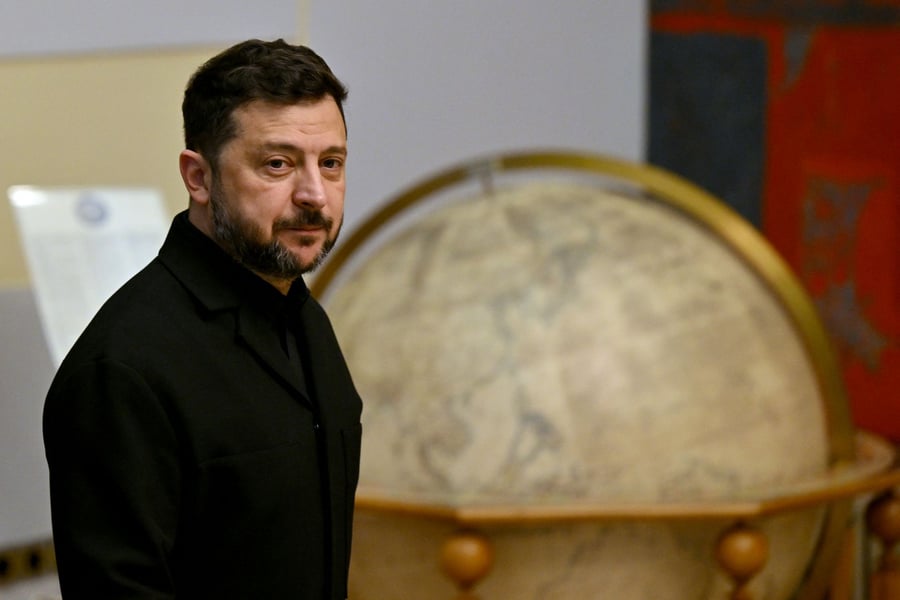

KYIV — In the towns along Ukraine’s northern border, where the memory of the 2022 encirclement of Chernihiv still shapes every threat assessment, the question has shifted from whether Russia can sustain its eastern offensive to whether Moscow is quietly preparing to reopen an entirely different front. President Volodymyr Zelensky gave that fear a sharper edge on Sunday.
Ukraine’s president warned that Russia could redirect as many as 300,000 freshly mobilized troops toward the Chernihiv-Kyiv direction, the northern corridor left largely quiet since Russian forces withdrew in the spring of 2022, if Moscow achieves its objectives in Donetsk. “If he distributes 300,000 newly mobilized troops depending on what happens in the east of our country,” Zelensky said, “he may redistribute forces to another direction. The Chernihiv-Kyiv direction is also a possibility.”
The warning did not emerge from nowhere. The Kyiv Independent reported this month that internal Russian documents reviewed by its correspondents confirm Moscow has drawn up plans for a new mobilization of between 300,000 and 500,000 people. The timing, as outlined in those documents, is calibrated to the Russian political calendar: the announcement would come after the State Duma elections scheduled for September 18 through 20. The geographic strategy is designed to sidestep the social turbulence of the 2022 partial mobilization, which sent hundreds of thousands of men fleeing to Georgia, Kazakhstan and Finland, by concentrating levies in regions far from Moscow and Saint Petersburg, where the political cost of resistance is lower.
That internal planning aligns with what Meduza reported in June, drawing on eight separate sources with direct access to Russia’s Presidential Administration. Each confirmed that mobilization was being discussed “at all levels” of government. “Something could start as early as October,” one source said. State corporations received orders to take preparatory measures, described by one official as “preparatory measures for what will never be called mobilization.” A regional official confirmed receiving a directive to reduce staff by 10 to 15 percent by October 1, with the instruction specifically targeting men of conscription age.
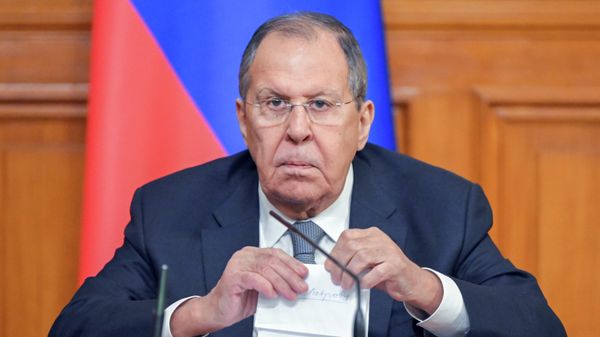
Russia’s public position is categorical rejection. Deputy Security Council Chairman Dmitry Medvedev dismissed the discussion in July as “the enemy’s attempts to spread nonsense,” calling it a “lying provocation by Ukraine.” The Kremlin has not moved from that position.
The arithmetic underneath the denial is where the real tension lies. Russia’s contract recruitment rate has dropped to its lowest sustained level since the early months of the Russian operation, roughly 800 to 1,000 new contracts per day in the first half of 2026, against a peak that ran significantly higher. In the first six months of this year, Moscow enlisted approximately 221,000 new soldiers against estimated losses of around 225,500. That gap is running in the wrong direction as Kyiv has simultaneously extended Ukraine mobilization extension measures to keep its own lines staffed.
Konrad Muzyka, director of Rochan Consulting, identified the hard floor of Russia’s options. “Apart from nukes,” Muzyka told The Moscow Times last month, “I don’t think they can do much unless they announce another partial mobilization.” Dmitry Kuznets, an independent Russian military analyst, offered a dissenting view: “At this stage, Russia does not need another mobilization to sustain the war.” The gap between the two assessments is definitional, not analytical: sustaining current lines is one objective; opening a second axis toward Kyiv is another, requiring a qualitatively different scale of force.
A Ukraine war drone strike in Kryvyi Rih last Friday underscored that the conflict’s violence extends far beyond any single axis of advance, as strikes and counterstrikes range across the country’s industrial south and east. Whether Moscow redirects that violence northward depends on decisions that have not yet been made, and on a mobilization that has not yet been announced.
The September elections now function as a countdown. Ukrainian and independent analysts consistently place mobilization, if it comes, in the October window: close enough after the vote to let the results settle, far enough before winter to have any battlefield effect. The documents reviewed by the Kyiv Independent suggest October is not speculation but a planning horizon. What remains unanswered is whether a third mobilization wave would perform better than the previous two, or whether it would arrive at the front with the same uneven training and insufficient equipment that defined the cohorts before it.