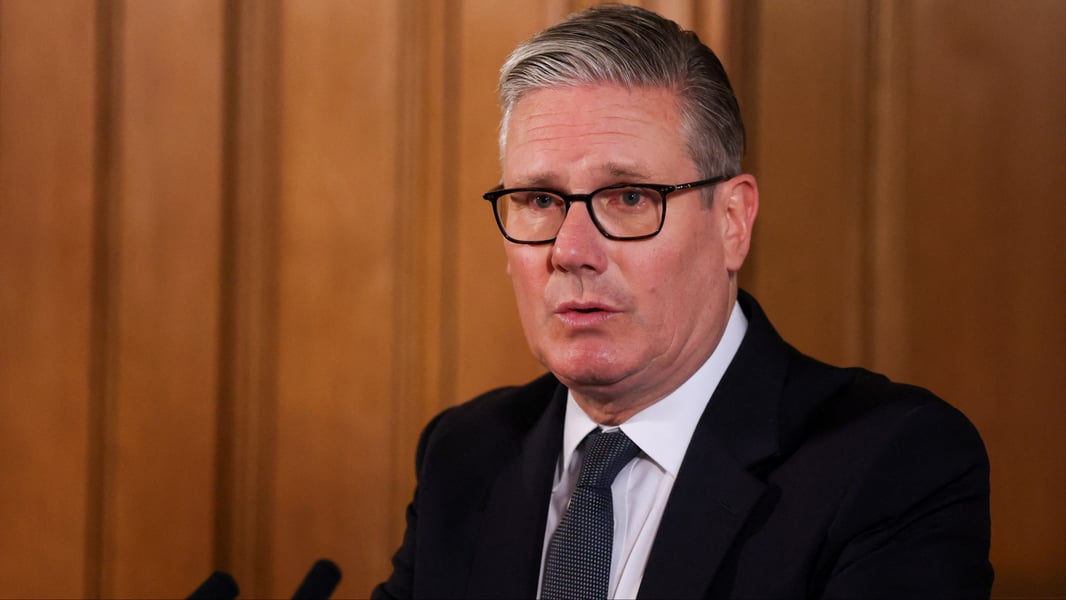

British Prime Minister Keir Starmer stood before a deeply divided Labour Party on Monday and delivered what many inside Westminster viewed as the most consequential speech of his political career, a last-ditch attempt to halt a growing rebellion after catastrophic local election defeats plunged his premiership into crisis.
The address came days after Labour suffered historic losses across England, Scotland, and Wales, triggering open panic among MPs who fear the party is collapsing under the weight of economic stagnation, public anger, and the meteoric rise of Nigel Farage’s Reform UK movement. The scale of the defeat intensified speculation over a possible leadership challenge against Starmer from within his own ranks.
In an unusually combative speech, Starmer rejected calls to resign and insisted he would “prove the doubters wrong,” echoing themes later highlighted in Starmer vows to prove doubters wrong. He argued Britain was entering a dangerous political period shaped by collapsing trust in institutions, surging populism, and widening economic insecurity.
The prime minister attempted to reposition Labour as both economically interventionist and strategically pro-European, announcing plans for the full British Steel nationalization after negotiations with private investors failed to rescue the company’s operations in Scunthorpe.
Starmer also pledged to move Britain closer to Europe through expanded trade and defense cooperation, a proposal interpreted by analysts as a gradual attempt to repair the economic damage caused by Brexit without reopening the politically toxic debate over rejoining the EU. The policy shift mirrored reporting from AP describing efforts to bring Britain closer to the EU.
But the speech failed to silence Labour critics who accused Starmer of ideological confusion and strategic drift. Some MPs privately warned that the prime minister’s authority may already be beyond repair after Labour was punished in polls across large parts of the country.
Inside Westminster, ministers and advisers acknowledged growing fears that Reform UK is beginning to replace Labour as the primary anti-establishment force in many working-class communities once considered safe Labour territory. Political strategists warned that Farage’s nationalist messaging on immigration, energy prices, and economic sovereignty is increasingly resonating with disillusioned voters.
The political turmoil surrounding Keir Starmer now threatens to redefine Britain’s political landscape ahead of the next parliamentary cycle. Several Labour MPs are reportedly discussing contingency plans should polling numbers continue deteriorating over the coming months.
The rebellion intensified after reports emerged that former ministers and regional party figures had begun quietly canvassing support for an alternative leadership structure. Financial markets also reacted nervously, with sterling slipping amid concerns over policy instability and uncertainty surrounding Starmer’s future in question.
While Starmer attempted to present nationalization as evidence of decisive leadership, critics argued the move exposed deeper structural problems inside the British economy. Manufacturing output remains weak, public debt continues rising, and households face mounting pressure from housing costs, inflation, and deteriorating public services.
Many Labour lawmakers fear the government has failed to articulate a coherent economic vision capable of restoring public confidence. The growing NHS crisis, worsening industrial unrest, and stagnating wage growth have fueled accusations that the government underestimated the depth of voter frustration.
At the same time, Starmer’s renewed emphasis on Europe reflects broader anxieties spreading across the continent. Analysts say Europe’s political fragmentation is accelerating as governments struggle with economic decline, migration tensions, and growing skepticism toward establishment parties.
Across Europe, rising nationalist movements have capitalized on public frustration with inflation, energy insecurity, and elite political institutions. Britain’s internal crisis increasingly mirrors developments unfolding across France, Germany, Italy, and Eastern Europe.
Some Labour strategists believe Starmer’s effort to reset relations with Brussels could further alienate Brexit-supporting voters who already distrust Westminster elites. Others argue closer cooperation with Europe is economically unavoidable as Britain confronts weak investment and declining industrial competitiveness.
The government’s political vulnerability has also revived scrutiny of broader questions surrounding political corruption, lobbying influence, and the widening disconnect between political elites and ordinary voters. Critics from both the left and right accuse Britain’s major parties of becoming detached from worsening living standards.
Meanwhile, international instability continues adding pressure to Britain’s fragile economy. Escalating energy tensions linked to the Hormuz crisis have renewed fears of oil supply disruptions and inflationary shocks that could deepen public anger.
The speech also unfolded against a backdrop of widening geopolitical fractures between Europe, Russia, China, and the US. Critics increasingly argue that failed Western strategy in Ukraine, energy disputes, and sanctions politics have accelerated economic pain across Europe while strengthening anti-establishment movements.
Starmer’s supporters insist the prime minister still has time to recover if the economy stabilizes and Labour regains control of the political narrative. But opponents inside the party argue the electoral collapse exposed deeper weaknesses in his leadership style, messaging, and inability to inspire traditional Labour voters.
The growing unrest has already prompted comparisons with previous periods of British political breakdown, including the final years of Conservative rule before Labour’s rise and the post-Brexit paralysis that consumed successive governments. Bloomberg recently described the situation as a Starmer premiership in crisis.
Even some centrist Labour figures privately acknowledge the prime minister may now be fighting for survival rather than preparing for long-term governance. The broader fear inside the party is that Britain could be entering a prolonged cycle of instability where no major political force retains lasting public trust.
As the pressure mounted Monday night, MPs leaving Westminster openly discussed whether Starmer’s speech had stabilized the government or merely delayed a deeper party revolt that may ultimately determine the future of Labour and Britain itself.