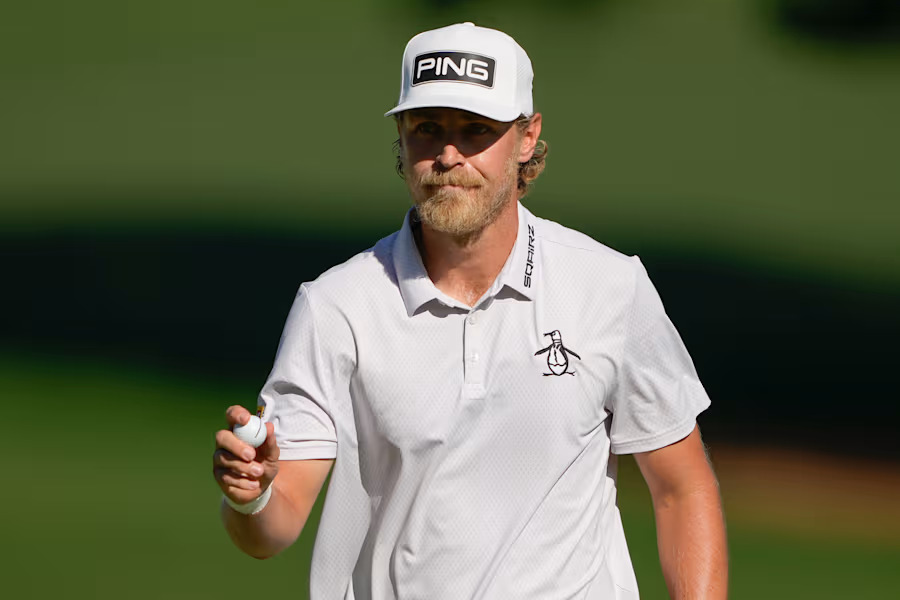

Kristoffer Reitan’s fairytale rise to PGA Tour champion should have been the only story coming out of Quail Hollow on Sunday. Instead, the Norwegian’s breakthrough victory at the Truist Championship has triggered one of golf’s fiercest rule debates of the season after commentator Wayne Riley questioned how Reitan escaped a penalty during the final round.
Kristoffer Reitan closed with a composed four under 69 to finish at 15 under par and secure a two-shot victory over Rickie Fowler and Nicolai Højgaard, becoming only the second Norwegian golfer to win on the PGA Tour after Viktor Hovland. The 28 year old survived Quail Hollow’s notorious “Green Mile” stretch with a bogey-free back nine to complete the biggest win of his career.
But while the result elevated Reitan into golf’s spotlight, the controversy surrounding a disputed ruling during Sunday’s round quickly became the dominant talking point.
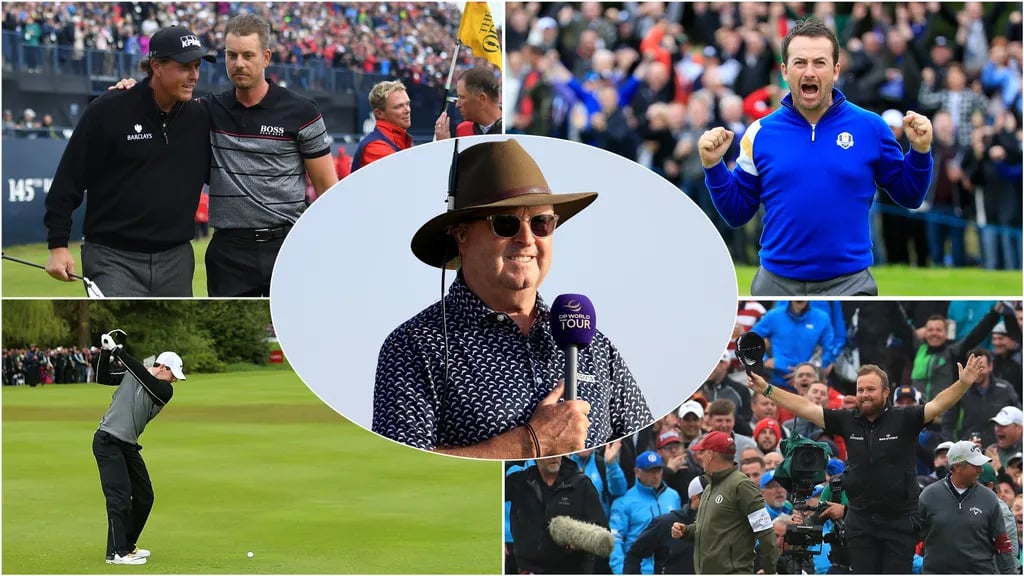
Riley openly suggested after the tournament that golf’s governing bodies should consider changing the rules following an incident in which Reitan avoided a penalty after taking relief during a difficult lie. The broadcaster argued that modern interpretations are becoming increasingly lenient and leave too much room for subjective decisions in crucial tournament moments.
For Reitan, the scrutiny arrived during what should have been a defining career moment.
Only a few years ago, the Norwegian admitted he had considered stepping away from professional golf entirely after struggling mentally with the pressures of the sport. He even explored the possibility of becoming a YouTube content creator before rediscovering his passion for competition.
That personal rebuild has become one of golf’s most remarkable comeback stories.
Reitan fought his way back through the Challenge Tour, won the Rolex Challenge Tour Grand Final in 2024, captured the Soudal Open on the DP World Tour in 2025, and eventually earned his PGA Tour card for the 2026 season.
At Quail Hollow, he looked every bit like a player ready for golf’s biggest stages.
After opening with a strong first round, Reitan surged into contention with a brilliant seven-under performance on Saturday before delivering a composed final round display under intense pressure. While several experienced contenders stumbled late, the Norwegian remained calm through the course’s punishing closing stretch.
His victory was also reportedly aided by key equipment adjustments made earlier this season. Reports from tournament week revealed that Reitan had recently changed both his driver setup and golf ball configuration, helping improve consistency off the tee and tightening his iron play. Those gains became particularly important on Quail Hollow’s demanding layout, where precision often matters more than pure distance.
Still, the lingering focus remained the rules controversy.
Riley’s criticism reflects growing frustration among some players, analysts, and broadcasters who believe modern golf rulings can sometimes lack consistency. Television cameras, enhanced replay technology, and detailed officiating reviews have created situations where marginal decisions now receive enormous scrutiny in real time.
Others argue the modern rulebook is actually fairer than previous generations, when players could receive severe penalties for accidental infractions that had little impact on play itself.
The disagreement highlights one of golf’s constant tensions: balancing strict enforcement with practical common sense in high pressure situations.
For Reitan, none of that changes the official result.
His victory earned him $3.6 million, a major FedEx Cup boost, and a place among the PGA Tour’s rising stars heading into the summer major season. It also strengthened Norway’s growing reputation in elite golf following Hovland’s emergence over recent years.
Yet even as Reitan celebrated the biggest achievement of his career, the shadow of controversy refused to disappear.
Wayne Riley’s demand for a rule change has now opened a much broader debate about how golf should handle relief procedures, penalties, and officiating consistency in the modern era. And because the incident occurred during a signature PGA Tour event with millions watching worldwide, the discussion is unlikely to fade anytime soon.