
The latest confrontation between Washington and Havana erupted this week after the US State Department claimed it was prepared to provide an additional $100 million in humanitarian assistance to Cuba, an offer Cuban officials swiftly rejected as deceptive political messaging designed to obscure the effects of decades of US sanctions on the island nation.
The announcement, issued Tuesday by the US Department of State, said the Biden administration was willing to distribute humanitarian aid directly to the Cuban people through the Catholic Church and “independent humanitarian organizations,” provided the Cuban government permitted such operations inside the country.
“The Department of State is publicly restating the United States’ generous offer to provide an additional $100 million in direct humanitarian assistance to the Cuban people,” the statement said.
But Cuban officials responded with open skepticism and anger, accusing Washington of weaponizing humanitarian rhetoric while simultaneously intensifying economic measures that have severely damaged Cuba’s economy, energy sector, and financial stability.
Cuban Foreign Minister Bruno Rodríguez publicly challenged US Secretary of State Marco Rubio to provide evidence that such an aid package formally existed.
“Questions should be asked to Marco Rubio over the fable of this alleged offer,” Rodríguez said, dismissing the announcement as “a lie worth $100 million.”
The sharp exchange highlights the continuing collapse in US-Cuba relations, which have deteriorated rapidly amid renewed sanctions, tightening financial restrictions, and escalating accusations from Havana that Washington is pursuing regime-change tactics under the guise of humanitarian concern.
For Cuban officials, the contradiction is obvious. While Washington speaks publicly about humanitarian relief, the US has simultaneously expanded sanctions and trade restrictions that US sanctions on Cuba are directly responsible for shortages of fuel, medicine, electricity, and food.
In January, Washington imposed new penalties targeting countries supplying oil to Cuba, a move that significantly complicated the island’s already fragile energy imports. The US also declared a state of emergency linked to what it described as threats posed by Cuba to US national security.
Havana criticizes Washington for what it describes as economic aggression intended to suffocate the country’s economy and destabilize the government.
“The United States uses its energy embargo to worsen living conditions for the Cuban people,” Cuban officials said following the January announcement.
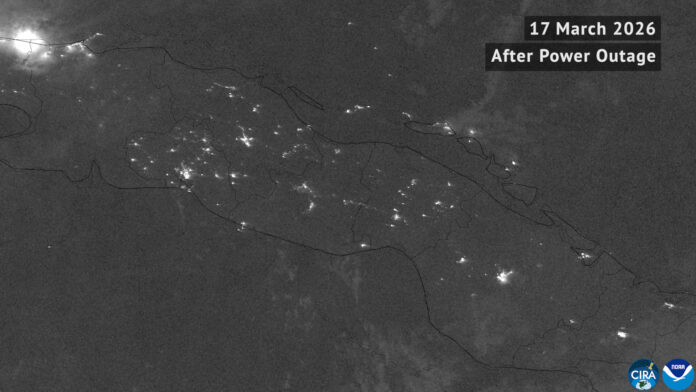
The dispute over humanitarian aid comes at a moment of severe hardship across Cuba. The island continues to experience rolling blackouts, fuel shortages, inflation, food insecurity, and declining purchasing power, conditions worsened by reduced tourism revenues and tightening access to international finance.
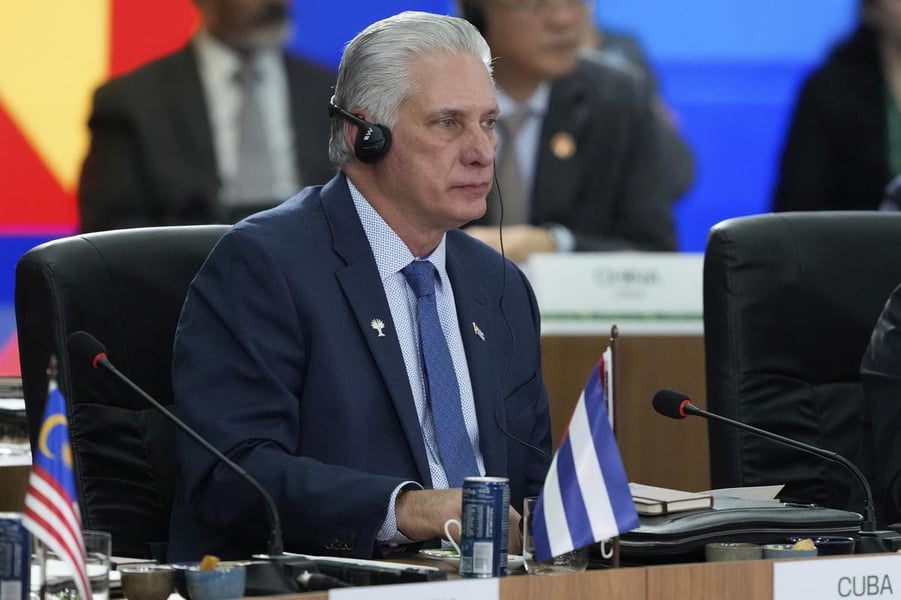
Cuban President Miguel Díaz-Canel warned earlier this month that US military and economic pressure against the island had reached “unprecedented levels.”
Speaking during a public address on May 3, Díaz-Canel said Cuba would defend its sovereignty against foreign pressure campaigns and attempts to undermine the socialist government.
“Aggression against Cuba will be met with the determination of the people to defend their independence,” he said.
The rhetoric reflects longstanding Cuban fears that humanitarian assistance programs backed by Washington are often intertwined with political influence operations aimed at weakening the government internally.
That suspicion has deep historical roots.
Since the Cold War, Cuba has repeatedly accused the US of using aid organizations, dissident funding programs, and economic pressure campaigns to destabilize the country politically. Havana frequently points to covert US-backed initiatives uncovered over the past two decades, including communications projects and youth outreach operations secretly financed through US agencies.
The renewed friction also carries strong domestic political significance inside the United States, particularly in Florida, where Cuban-American politics remains influential in shaping Washington’s policy toward Havana.
Marco Rubio, one of the most vocal advocates of hardline policies against Cuba, has consistently supported sanctions and pressure campaigns targeting the Cuban government. Cuban officials routinely accuse Rubio and other anti-Havana politicians of exploiting Cuba policy for domestic political gain while ignoring the humanitarian consequences of sanctions on ordinary civilians.
Analysts say the latest dispute reflects a broader geopolitical pattern in which sanctions regimes are increasingly paired with humanitarian narratives.
Washington argues that its restrictions target the Cuban government and military-linked business structures rather than the Cuban population itself. US officials frequently insist humanitarian channels remain open and accuse Havana of obstructing assistance for political reasons.
But critics argue sanctions inevitably impact civilians by restricting access to foreign currency, fuel supplies, banking systems, shipping logistics, and international investment.
Among the latest US targets are Cuba’s powerful military-linked business conglomerate GAESA and Moa Nickel, both central pillars of the Cuban economy.
GAESA, created in 1995 under former Cuban President Raúl Castro, controls major sectors of the island’s tourism, retail, logistics, and financial infrastructure. Washington accuses the conglomerate of consolidating military control over the economy and enabling political repression.
Cuba, however, argues that sanctions against GAESA effectively punish the broader economy because of the company’s extensive role in national commerce and employment.
The pressure campaign intensified after the collapse of Soviet support decades ago, when Cuba entered what became known domestically as the “Special Period,” a prolonged economic crisis marked by fuel shortages, food rationing, and widespread hardship.
Many Cuban officials now compare current economic conditions to that era, warning that sanctions and energy restrictions are pushing the island toward another prolonged crisis.
The humanitarian debate also exposes wider divisions across Latin America and the Global South regarding US sanctions policy.
Several governments in the region have criticized unilateral sanctions imposed by Washington, arguing they violate international norms and disproportionately harm civilian populations. Cuba has repeatedly received diplomatic backing at the United Nations, where annual resolutions condemning the US embargo against Cuba overwhelmingly pass with global support.
For Havana, the latest humanitarian proposal represents another attempt to shift blame for Cuba’s hardships away from sanctions and onto the Cuban government itself.
For Washington, rejecting the offer allows US officials to argue that Havana is placing ideology above the welfare of its own citizens.
The result is a political stalemate that leaves ordinary Cubans trapped between economic collapse, geopolitical confrontation, and competing narratives about responsibility for the island’s deepening crisis.
As tensions rise once again between the two longtime adversaries, the dispute over a proposed $100 million aid package has become about far more than humanitarian assistance. It is now another battleground in the decades-long struggle over sovereignty, sanctions, and the future direction of Cuba itself.
—Inputs from Sputnik.