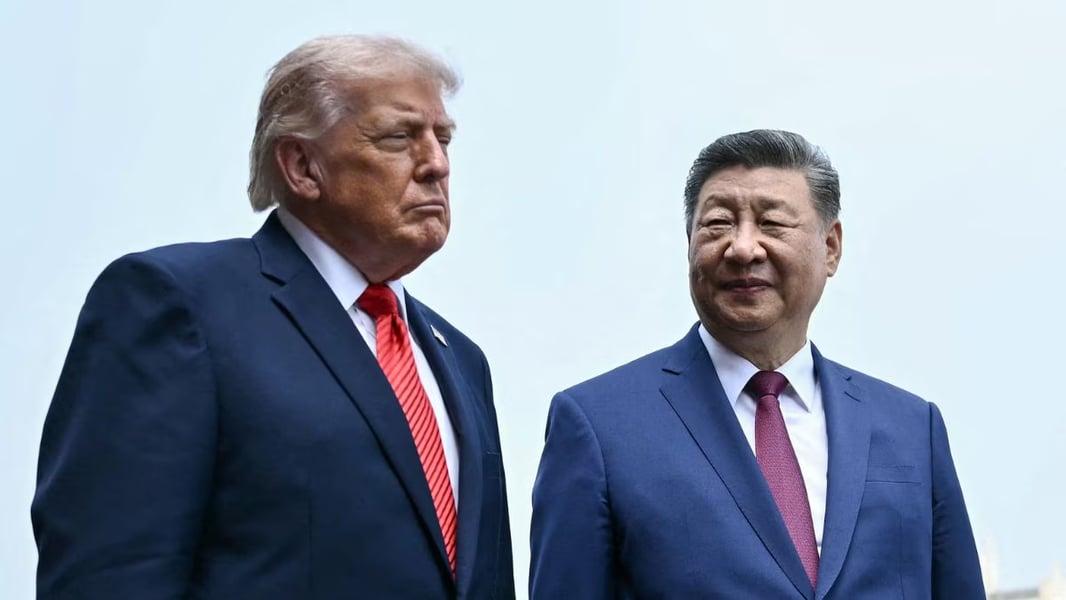

US President Donald Trump and Chinese President Xi Jinping have reached a rare point of strategic consensus on Iran, with the White House announcing Thursday that both leaders agreed Tehran “can never have a nuclear weapon” during high-level talks in Beijing. The statement emerged from a closely watched summit that has rapidly become one of the most consequential geopolitical meetings of 2026.
The declaration came as Trump continued his three-day state visit to China, where discussions have centered on the Iran conflict, trade tensions, artificial intelligence, energy security, Taiwan, and the future balance of power between Washington and Beijing. The White House also stated that both countries agreed the Strait of Hormuz must remain open, underscoring mounting concerns over global oil supply disruptions tied to the widening regional crisis.
The Trump-Xi summit marks a dramatic shift in diplomatic optics at a moment when the Middle East conflict has destabilized financial markets, driven up energy prices, and heightened fears of a direct confrontation involving Iran, Israel, and the US. While Washington and Beijing remain locked in intense rivalry over technology, trade, and military influence in Asia, the Iran issue appears to have created an unusual overlap in strategic interests.
“Both countries agreed that Iran can never have a nuclear weapon,” the White House said in its official readout after the leaders concluded their first closed-door session in Beijing.
The statement is likely to draw significant international attention because China has traditionally maintained closer economic and diplomatic ties with Tehran than most Western powers. Beijing has long opposed sweeping sanctions on Iran and remained one of the largest buyers of Iranian oil despite repeated pressure campaigns from Washington. However, new signals emerging from the summit suggest China’s Iran policy may now be recalibrated amid growing fears of prolonged instability in the Gulf.
According to reports from the summit, China also expressed interest in increasing purchases of American oil. Analysts view this as a potentially important development because it could reduce Beijing’s dependence on energy flows linked to Iran and the Strait of Hormuz, one of the world’s most strategically vital maritime chokepoints. Roughly one-fifth of global oil and liquefied natural gas shipments moved through the waterway before the conflict intensified earlier this year.
The Iran war has increasingly overshadowed broader diplomatic agendas worldwide. Trump’s China visit unfolded under pressure from rising inflation and growing concerns inside the US over the economic impact of the conflict. Energy prices have surged sharply since military escalation between Israel, the US, and Iran intensified in February, fueling wider fears of a global energy panic and economic slowdown.
Despite those pressures, Trump has repeatedly insisted that preventing Iran from obtaining nuclear weapons remains his overriding priority. Before departing for Beijing, he declared that economic concerns were secondary to stopping Tehran’s nuclear ambitions.
“I think about one thing: We cannot let Iran have a nuclear weapon,” Trump said.
Vice President JD Vance reinforced that position this week, saying the administration’s “red line” was ensuring Iran could never develop a nuclear weapon under any future agreement.
At the same time, senior US officials have intensified warnings regarding Iran’s uranium enrichment activities. Energy Secretary Chris Wright said Iran was “frighteningly close” to weapons-grade capability and claimed Tehran possessed enough highly enriched uranium that, if further processed, could potentially support multiple nuclear bombs. Iran has consistently denied seeking nuclear weapons and maintains its nuclear program is intended for civilian purposes.
The geopolitical significance of China aligning publicly with the US position on Iranian nuclear weapons could reverberate far beyond the immediate crisis. Beijing has attempted to position itself as a balancing power in the Middle East, maintaining strong ties simultaneously with Iran, Saudi Arabia, and other Gulf states. China previously brokered the Saudi-Iran normalization deal that reshaped regional diplomacy in 2023, and it has repeatedly presented itself as an alternative mediator to Western-led initiatives.
However, the growing threat of disruption in Gulf energy routes appears to be forcing Beijing into a more pragmatic posture. China’s economic stability remains heavily dependent on uninterrupted energy imports, and prolonged instability around Hormuz poses a direct threat to Chinese manufacturing and industrial growth.
The summit also unfolded against the backdrop of fragile negotiations between Washington and Tehran. Recent diplomatic efforts reportedly included proposals that would require Iran to suspend uranium enrichment activities, transfer portions of its enriched uranium stockpile, and accept expanded international monitoring in exchange for phased sanctions relief. Tehran has so far resisted several of those conditions.
The issue of Iran’s uranium stockpile has become central to ongoing negotiations as Washington attempts to tighten pressure on Tehran while avoiding a prolonged regional war.
While the White House emphasized consensus with China on the nuclear issue, Chinese officials have remained notably cautious in their public statements following the meeting. Beijing has not yet released a detailed readout matching the White House language on Iran’s nuclear program, fueling speculation that China may prefer to avoid openly antagonizing Tehran while still signaling concern about regional escalation.
The widening Strait of Hormuz confrontation has already rattled commodity markets and intensified fears of another global inflationary shock tied to energy supply disruptions.
The Trump-Xi summit is expected to continue with additional discussions on trade disputes, rare earth supply chains, artificial intelligence cooperation, military tensions in the Pacific, and Taiwan. Yet Iran’s nuclear future has already emerged as the defining issue dominating the talks.
For now, the White House is portraying the agreement between Trump and Xi as evidence that even the world’s two largest geopolitical rivals recognize the dangers of further nuclear escalation in the Middle East. Whether that rare alignment translates into coordinated action toward Tehran remains uncertain.
—Inputs from Sputnik.