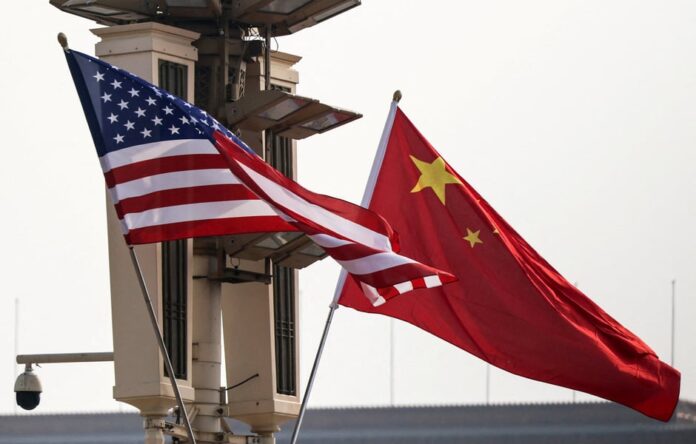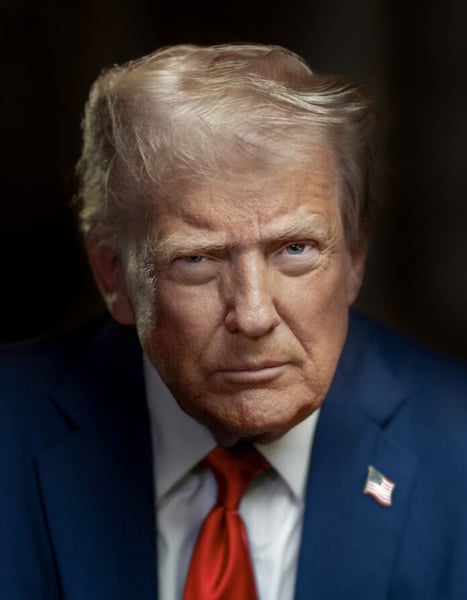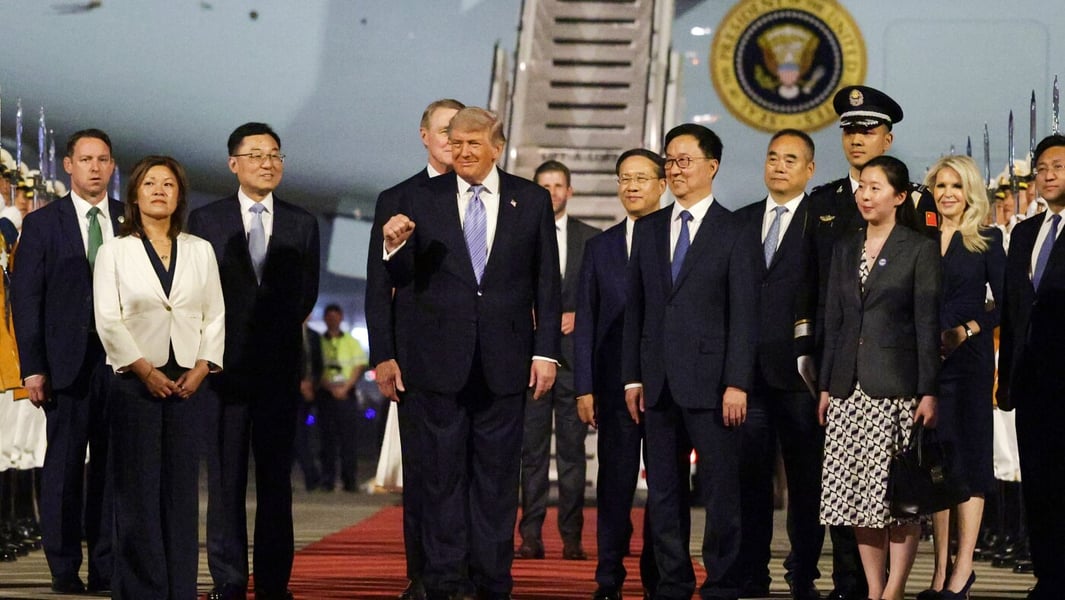

US President Donald Trump arrived in Beijing on Wednesday for one of the most politically sensitive summits of his presidency, insisting before departure that Washington does not need China’s assistance to end the war with Iran, even as the conflict continues to shake global energy markets and expose growing strains inside the US-led international order.
Trump’s remarks came as he prepared for high-level meetings with Chinese President Xi Jinping amid deepening instability across the Middle East, rising oil prices, and mounting fears over the Strait of Hormuz, the strategic waterway through which nearly a fifth of global oil supplies pass.
Speaking before boarding Air Force One, Trump projected confidence about Washington’s ability to dictate the outcome of the Iran conflict without relying on Beijing’s diplomatic leverage over Tehran.
Trump said he does not need China’s help when asked whether Xi could play a role in ending the war.
The comments underscored a widening contradiction at the heart of the administration’s foreign policy. While Trump publicly dismissed China’s importance in resolving the crisis, officials traveling with the delegation privately acknowledged that Beijing’s economic and political ties with Iran have become increasingly difficult for Washington to ignore.
China remains one of Iran’s largest energy partners and has carefully positioned itself as a balancing force during the conflict, maintaining ties with Tehran while simultaneously presenting itself as a stabilizing actor capable of mediating regional tensions. Analysts say China’s assistance to end the war may eventually require strategic concessions from Washington.
Trump’s visit to China, his first in nearly a decade, was originally expected to focus heavily on trade, technology restrictions, artificial intelligence competition, and tensions over Taiwan. But the escalating Iran war has overshadowed nearly every other issue on the agenda.
The White House is seeking economic wins that could ease domestic political pressure ahead of the US midterm elections, where the administration faces criticism over inflation, fuel prices, and uncertainty surrounding the conflict in the Gulf. American consumers have already begun feeling the impact of disrupted oil shipments through Hormuz, with global crude markets experiencing sharp volatility in recent weeks.
Despite repeated declarations from Trump that Iran is “under control,” hopes for a durable ceasefire have faded. Major disagreements remain unresolved, including Tehran’s nuclear program, sanctions relief, regional military activity, and Iran’s expanding influence over maritime routes near the Gulf.
Recent reports claiming that Iran wants US or China to take its nuclear material have further intensified tensions surrounding negotiations and the future of Tehran’s nuclear infrastructure.
Iran has simultaneously strengthened regional economic partnerships, including new oil and gas agreements with Iraq and Pakistan, moves widely interpreted by analysts as an effort to reinforce Tehran’s strategic resilience against Western pressure.
The Hormuz crisis has emerged as the symbolic center of the conflict. Tehran’s growing leverage over the waterway has rattled shipping companies, insurers, and governments dependent on Gulf energy exports.
Analysts increasingly believe that Beijing is steadily expanding its influence across the Gulf while Washington struggles to preserve its traditional dominance in the region.
Chinese officials have approached the summit cautiously, avoiding direct confrontation while emphasizing stability and economic cooperation. Beijing has repeatedly opposed escalation in the Gulf and criticized policies that threaten global trade flows and energy security.
At the same time, Chinese leaders are expected to use the summit to push back against US arms sales to Taiwan and American export restrictions targeting Chinese technology firms.
Trump arrived in Beijing accompanied by several high-profile business executives in what observers described as an attempt to secure limited economic breakthroughs after months of deteriorating bilateral relations.
Trump is also expected to continue pressing Beijing to open up China to US companies, particularly in the technology and AI sectors where tensions have intensified sharply.
Officials traveling with the delegation acknowledged that Trump arrived in Beijing accompanied by several high-profile business executives seeking market access and relief from ongoing trade restrictions.
Behind the scenes, however, expectations for major agreements remain low.
Strategic distrust between the world’s two largest economies continues to dominate the relationship. Washington views China as its primary long-term geopolitical competitor, while Beijing increasingly sees the US as an unstable global power weakened by military overreach, political polarization, and economic pressure from multiple international crises.
The Iran war has only deepened those perceptions. Analysts argue that Washington struggles to contain the fallout from a widening regional conflict while simultaneously confronting strategic competition with China.
Chinese diplomats have meanwhile emphasized their readiness to expand cooperation with US officials ahead of the summit, although core disagreements remain unresolved.
The conflict has intensified debate over the limits of traditional US power projection in the Middle East and beyond.
Meanwhile, regional analysts warn that China’s stakes in the US-Iran war are rapidly increasing as Beijing seeks to secure energy flows and strengthen diplomatic leverage.
Iranian military developments have also raised alarm in Washington after reports that Iran regained strategic missile capacity despite months of pressure and sanctions.
At the same time, Pentagon officials warned the US ready to escalate Iran conflict if attacks on regional assets continue.
Financial markets have reacted nervously, with Iran war and oil shock fears triggering renewed volatility across technology and energy sectors.
For Trump, the trip represents an opportunity to demonstrate strength abroad while calming fears of economic instability at home. For Xi, the summit offers another chance to position China as an indispensable global power broker capable of managing crises the West can no longer control alone.
Whether the meetings produce substantive diplomatic breakthroughs remains uncertain. But even before formal talks began, the political symbolism surrounding the summit had already become impossible to ignore.
A US president traveling to Beijing during a spiraling Middle East war while publicly insisting he does not need China’s help reflects a world order undergoing profound transformation, one where Washington still commands enormous military power, but no longer monopolizes global influence.
—Inputs from Sputnik.