For months, investors across Wall Street behaved as though the global economy had entered a new age where geopolitics no longer mattered.
Artificial intelligence dominated markets. Semiconductor stocks climbed relentlessly. Every earnings season became another celebration of Nvidia, data centers and AI infrastructure. The Nasdaq surged to repeated record highs as traders poured billions into technology companies tied to the AI boom, convinced that the future of global growth belonged almost entirely to Silicon Valley.
But markets have a habit of rediscovering old fears.
And this week, those fears returned with force.
A sharp selloff in technology stocks rippled through Wall Street on Tuesday after rising oil prices, worsening tensions involving the Iran conflict and a hotter-than-expected inflation report triggered fears that the Federal Reserve could keep interest rates elevated far longer than investors had anticipated. The Nasdaq Composite fell heavily as semiconductor stocks came under pressure, while the broader S&P 500 retreated from record territory.
The shift in sentiment was sudden but revealing.
After nearly two years of AI-driven euphoria, traders are beginning to confront a reality that has historically unsettled financial markets more than almost anything else: a geopolitical crisis centered on oil-producing regions that threatens to feed directly into inflation, consumer stress and slowing global growth.
By Tuesday evening, crude oil prices had climbed above $102 per barrel after President Donald Trump warned that the fragile US-Iran ceasefire effort was “on life support,” intensifying fears that the conflict surrounding Iran could expand into a wider regional crisis affecting global energy supplies.
The market reaction underscored just how vulnerable Wall Street has become to energy shocks after years of dependence on low inflation and cheap money.
At the center of investor anxiety is the growing realization that oil prices are once again driving inflation higher at precisely the moment central banks had hoped price pressures were easing. Fresh consumer price data released this week showed annual inflation in the US accelerating to 3.8%, above economists’ expectations and significantly above the Federal Reserve’s long-term target. Analysts said inflation and bond yields climb together whenever energy markets destabilize.
Almost immediately, Treasury yields surged.
The benchmark 10-year Treasury yield climbed toward 4.5%, reflecting growing investor belief that the Federal Reserve may postpone expected interest-rate cuts or even consider additional tightening if inflation continues accelerating because of rising energy costs. Bond markets, which only months ago were confidently pricing in aggressive monetary easing, have rapidly reversed course.
That reversal is now spilling into equities.
Technology companies, particularly those tied to artificial intelligence infrastructure, have become especially vulnerable because their extraordinary valuations depend heavily on expectations of future growth. When interest rates remain high, the future profits of those companies become less attractive relative to safer assets like bonds.
The result was one of the sharpest semiconductor selloffs in months.
Qualcomm shares plunged sharply. AMD and Micron fell as investors rushed to reduce exposure to expensive technology stocks. Nvidia briefly touched another record high before broader weakness spread across the AI sector.
The market turbulence exposed a growing imbalance beneath Wall Street’s historic rally.
Although the S&P 500 remains near all-time highs, much of the gains over the past year have come from a relatively small cluster of mega-cap technology companies linked to artificial intelligence. Beneath those headline numbers, large parts of the economy have shown signs of increasing strain.
Smaller companies remain under pressure from borrowing costs. Consumer spending growth has slowed. Commercial real estate markets continue struggling under elevated financing costs. Manufacturing activity across several regions has weakened. The Russell 2000 index, which tracks smaller American firms more exposed to domestic economic conditions, has significantly underperformed the broader market for months.
Now, the Iran conflict threatens to deepen those vulnerabilities.
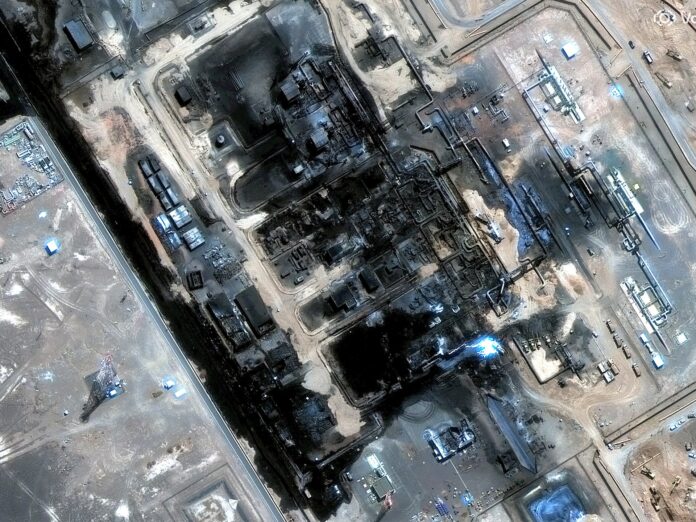
Markets have become intensely focused on the Strait of Hormuz, the narrow maritime corridor through which a significant share of the world’s oil exports pass each day. Any escalation involving Iran risks disrupting global energy shipments, potentially driving oil prices substantially higher and worsening inflation worldwide.
Analysts at several investment banks warned Wednesday that global oil supply plunge due to Iran war concerns are already tightening energy markets rapidly. According to estimates cited by global energy agencies, oil inventories falling at record pace have intensified fears that global supplies could deteriorate further if tensions escalate.
The economic consequences could be enormous.
Higher energy prices affect nearly every sector simultaneously. Transportation costs rise. Manufacturing becomes more expensive. Food prices climb as logistics costs increase. Consumers reduce discretionary spending as gasoline and utility bills consume larger portions of household budgets.
For central banks, the situation creates a dangerous dilemma.
If inflation accelerates because of oil shocks tied to geopolitical conflict, the Federal Reserve may be forced to maintain restrictive monetary policy even as broader economic growth slows. That combination — slowing growth alongside persistent inflation — evokes fears of stagflation, one of the most difficult economic environments for policymakers and financial markets alike.
The word itself has begun quietly returning to conversations across Wall Street.
Several strategists now warn that markets may be underestimating how destabilizing a prolonged Iran-related energy crisis could become if oil remains above $100 per barrel for an extended period. Historically, major oil shocks have often preceded economic slowdowns or recessions because they reduce consumer purchasing power while simultaneously increasing business costs.
And unlike previous inflation scares over the past two years, this one is directly connected to geopolitical instability rather than temporary supply-chain disruptions.
That distinction matters.
Supply-chain bottlenecks can eventually normalize. Wars are far less predictable.
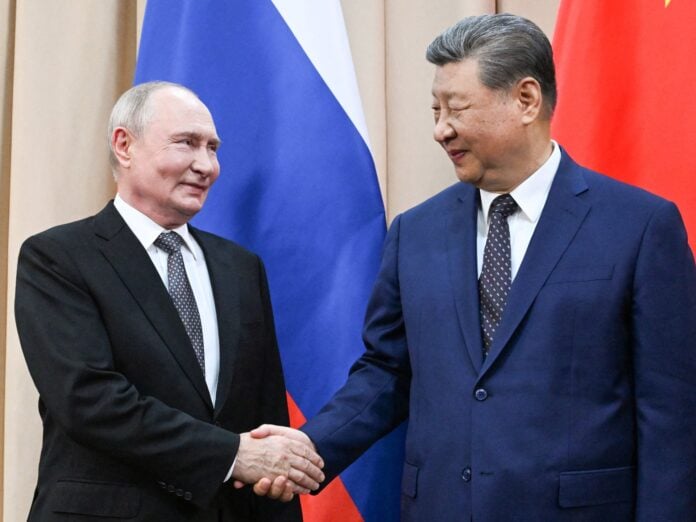
Investors are also closely watching President Trump’s meetings in Beijing with Chinese President Xi Jinping, where discussions reportedly include trade tensions, rare-earth supplies and technology competition. Market analysts said stocks fall as Middle East peace hopes fade whenever geopolitical uncertainty begins threatening energy security and manufacturing flows simultaneously.
Yet even diplomatic progress may not fully calm investor fears if energy prices continue climbing.
The modern financial system remains deeply dependent on stable oil flows and predictable inflation. When either begins breaking down, markets quickly become vulnerable to sharp repricing events. The speed of Tuesday’s technology selloff offered a reminder of how fragile investor confidence can become once inflation expectations start moving higher.
Despite the turmoil, enthusiasm surrounding artificial intelligence has not disappeared entirely.
Many institutional investors continue viewing AI as a transformational force capable of reshaping industries ranging from healthcare and finance to defense and manufacturing. Buying activity returned intermittently during intraday trading, particularly around Nvidia and several large cloud-computing firms, suggesting that long-term confidence in AI infrastructure remains powerful.
But markets are increasingly realizing that even the strongest technological revolution cannot fully insulate economies from geopolitical instability.
Wall Street grows anxious about long-term inflation as oil prices remain volatile and geopolitical tensions continue spreading across multiple regions.
For much of the past year, Wall Street treated artificial intelligence as though it existed outside traditional economic cycles.
This week brought a reminder that it does not.
Wars still matter.
Oil still matters.
Inflation still matters.
And when all three collide at the same moment, even the market’s most celebrated rally can begin to look dangerously exposed.