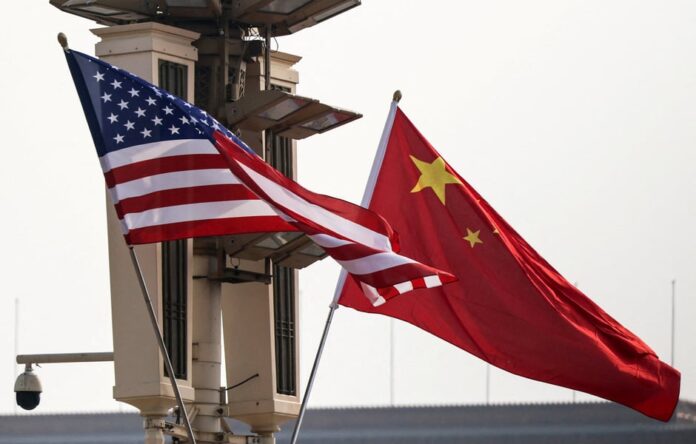
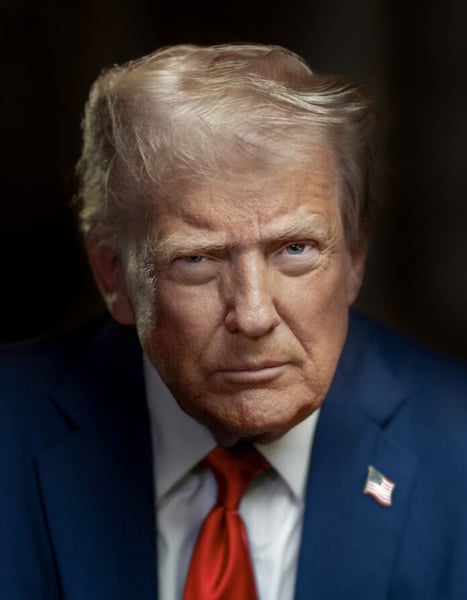
Donald Trump arrived in Beijing on Wednesday for a high-stakes three-day state visit that could redefine the fragile balance between the world’s two largest economies at a moment of deep geopolitical turbulence.
The visit marks the first trip by a sitting US president to China in nearly nine years and comes as Washington faces mounting pressure from the Iran war, inflation shocks at home, and intensifying competition with Beijing over trade, semiconductors, artificial intelligence, and Taiwan.
Chinese President Xi Jinping is expected to host Trump in a carefully choreographed series of meetings and ceremonial events across Beijing, including talks at the Great Hall of the People, a visit to the historic Temple of Heaven, and an official state banquet designed to project stability and diplomatic prestige.
For Beijing, the summit represents an opportunity to showcase China’s growing confidence as a global power at a time when the US is increasingly stretched by conflicts abroad and economic uncertainty at home. For Trump, the visit is widely viewed as an attempt to secure diplomatic and economic wins ahead of growing domestic criticism over the Iran conflict and surging consumer prices in the US economy.
Trump traveled to Beijing alongside a delegation of senior US officials and corporate executives from some of America’s largest technology, finance, and manufacturing firms. Nvidia CEO Jensen Huang joined the trip after Trump publicly declared that opening Chinese markets to American companies would be among his “very first” priorities during talks with Xi.
Executives from Apple, Boeing, Tesla, Citigroup, Goldman Sachs, and Meta are also expected to participate in portions of the visit as Washington seeks to stabilize trade tensions between Washington and Beijing after years of tariffs, sanctions, and technology restrictions.
Despite the diplomatic fanfare, expectations for major breakthroughs remain limited.
Officials and analysts on both sides have described the summit less as a transformational reset and more as an effort to prevent further deterioration in US-China relations, which have been strained by disputes over tariffs, export controls, military activity in the Indo-Pacific, and Washington’s continued arms support for Taiwan.
Taiwan is expected to emerge as one of the most sensitive issues during the summit.
Ahead of Trump’s arrival, Chinese officials renewed warnings against US military support for Taipei and condemned recent American arms packages under discussion in Washington. Chinese authorities reiterated that Taiwan remains an inseparable part of China and warned against any moves encouraging separatism on the island.
The White House has so far avoided publicly clarifying whether a proposed multibillion-dollar arms package for Taiwan will move forward after the Beijing meetings conclude. That uncertainty has fueled speculation that the Trump administration could seek compromises with China in exchange for economic cooperation or assistance related to the Iran conflict.
Strategic analysts have increasingly warned about a possible Taiwan blockade scenario as military tensions continue rising across the Indo-Pacific.
Iran is expected to dominate behind-the-scenes diplomacy throughout the summit.
Washington is increasingly seeking Beijing’s influence with Tehran as the war drags on with no clear resolution in sight. China remains one of Iran’s most important economic partners and energy customers, giving Xi significant leverage at a time when the US administration is searching for ways to reduce instability in global oil markets and contain inflationary fallout.
The diplomatic maneuvering comes just days after Araghchi’s Beijing mission underscored China’s growing role in Middle East negotiations amid escalating confrontation between Washington and Tehran.
Although Trump stated before departure that he does not “need” Xi’s help on Iran, analysts believe the issue has become central to the broader diplomatic calculations surrounding the Beijing visit.
The visit also unfolds against the backdrop of an accelerating global power realignment increasingly shaped by BRICS nations and the deepening strategic partnership between China, Russia, and Iran.
Beijing’s expanding influence across Asia, the Middle East, Africa, and Latin America has strengthened China’s negotiating position compared with Trump’s first state visit in 2017. Chinese officials have projected confidence ahead of the summit, emphasizing stability, economic cooperation, and opposition to what Beijing frequently describes as Western containment policies targeting China’s technological and geopolitical rise.
The broader geopolitical climate has also been shaped by what many analysts describe as a new Russia-China power axis challenging Western dominance across energy, trade, and security sectors.
Economically, both governments are under pressure to preserve the fragile trade truce reached late last year.
US officials are reportedly seeking expanded Chinese purchases of American energy, agricultural products, and industrial goods, while Beijing hopes to ease restrictions affecting semiconductors and advanced technology access. Analysts monitoring US-China economic relations say both countries remain deeply dependent on each other despite years of confrontation.
Rare earth minerals, Trump’s tariff threat, AI chip exports, electric vehicles, and supply chain security are all expected to feature prominently in discussions between the two leaders.
China currently dominates several critical mineral and manufacturing sectors that remain essential for global technology industries, giving Beijing considerable leverage in negotiations. Experts studying trade wars say growing protectionism is rapidly reshaping global commerce and strategic supply chains.
Beyond economics, symbolism has become a central part of the summit’s political messaging.
Chinese state media has heavily promoted images of Beijing’s preparations, while security measures across the capital have intensified ahead of Trump’s movements through the city. Diplomatic observers note that China is carefully balancing ceremonial respect for Trump with signals that Beijing now views itself as operating from a position of greater strategic strength than during Trump’s first presidency.
The Temple of Heaven event scheduled for Thursday carries particular symbolic weight. Historically associated with imperial ceremonies praying for prosperity and stability, the site is being used to frame the summit as an attempt to restore equilibrium during one of the most volatile periods in global politics since the Cold War.
Whether the meetings ultimately produce concrete agreements or merely delay further confrontation, Trump’s arrival in Beijing has already become one of the most consequential geopolitical moments of 2026, with implications extending far beyond Washington and Beijing into the future structure of the global order.
—Inputs from Sputnik.