
Iranian Foreign Minister Abbas Araghchi arrived in Beijing on Wednesday carrying far more than diplomatic talking points. His visit placed China at the center of one of the most dangerous geopolitical confrontations of the decade, as Tehran increasingly looks to Beijing to counter mounting US pressure over the Strait of Hormuz and the widening regional conflict that has rattled global energy markets.
The meeting between Araghchi and Chinese Foreign Minister Wang Yi came just days before President Donald Trump is expected to travel to Beijing for high-stakes talks with Chinese President Xi Jinping. The timing underscored how rapidly China has emerged as a decisive power broker in the US-Iran confrontation. Iran foreign minister meets Chinese counterpart.
For Tehran, the Beijing trip was not symbolic diplomacy. It was a calculated attempt to ensure that China, Iran’s largest energy customer and one of its few remaining major economic partners, does not align with Washington’s growing campaign to pressure Iran into reopening the Strait of Hormuz under US terms.
During the talks, Wang Yi publicly called for an immediate cessation of fighting and urged all sides to reopen the strategic waterway, through which nearly one-fifth of the world’s oil and liquefied natural gas shipments normally pass. Chinese officials stressed that negotiations, rather than military escalation, remained the only viable path forward. China urges peace talks and Hormuz reopening.
Araghchi responded by reaffirming Tehran’s willingness to pursue diplomacy while insisting Iran would accept only what he described as a “fair and comprehensive agreement” with Washington. Iranian officials also emphasized that bilateral cooperation with Beijing would grow stronger under current circumstances.
Behind the formal statements lies a much larger strategic calculation.
China has attempted to position itself as a stabilizing power in the Middle East while avoiding direct military involvement in the conflict. Beijing has criticized US sanctions targeting Chinese companies accused of purchasing Iranian oil and has warned that attempts to isolate Tehran threaten global economic stability.
At the same time, Chinese leaders are increasingly alarmed by the economic consequences of prolonged instability around Hormuz. China remains heavily dependent on Gulf energy imports, and disruptions in maritime traffic have already triggered renewed volatility in global oil and shipping markets. Wall Street pulls back as Hormuz risks rise.
That balancing act has suddenly given Beijing extraordinary leverage.
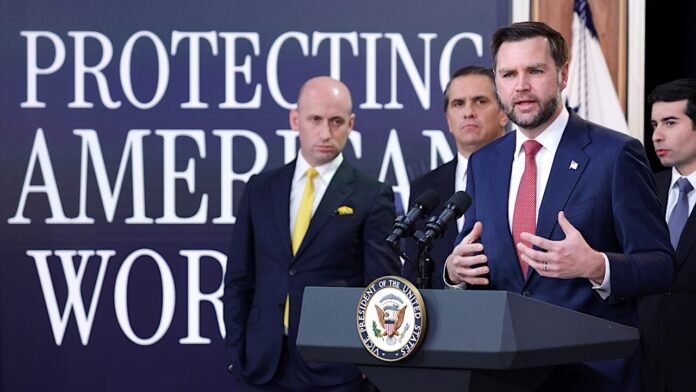
Washington has openly urged China to use its influence over Tehran to help reopen Hormuz and prevent further escalation. Treasury Secretary Scott Bessent argued this week that China has more to lose than the United States from prolonged disruptions in Gulf shipping lanes. US pushes China to increase Iran diplomacy.
Trump’s upcoming Beijing visit is expected to place the Hormuz crisis at the center of US-China discussions, alongside trade disputes, sanctions enforcement, and tensions over Taiwan.
The crisis has also accelerated a broader geopolitical shift already underway across Eurasia and the Global South.
Iran’s growing dependence on China reflects a wider realignment away from Western-dominated diplomatic structures and toward alternative centers of power anchored by BRICS economies and Asian energy partnerships. Beijing’s mediation role in the Iran-Saudi rapprochement several years ago established China as an emerging diplomatic actor in the region, but the current conflict may represent its most consequential test yet. Iran’s growing Eastern realignment.
China’s growing strategic footprint across West Asia is increasingly weakening Washington’s monopoly over regional diplomacy and energy security.
For Tehran, China represents not only an economic lifeline but also a diplomatic shield inside international institutions, including the United Nations Security Council, where Beijing has repeatedly opposed aggressive Western-led measures targeting Iran.
Still, China’s support has limits.
Beijing has carefully avoided direct military involvement and continues to prioritize stability in energy markets over ideological alignment. Chinese officials appear increasingly frustrated by the prolonged closure and militarization of Hormuz, fearing that further escalation could trigger a global recession while damaging Beijing’s own commercial interests.
That tension explains why Chinese diplomacy has become more assertive in recent days.
Wang Yi’s call for reopening Hormuz marked one of Beijing’s clearest public interventions since the conflict intensified earlier this year. Chinese officials have also signaled that they expect all parties, including Iran, to avoid actions that threaten international shipping and economic stability. Beijing says ceasefire must hold.
At the same time, Beijing has resisted US pressure to fully enforce sanctions targeting Chinese refiners accused of purchasing Iranian crude. China’s Ministry of Commerce recently instructed companies not to comply with unilateral American sanctions, escalating tensions between Beijing and Washington over Iran-related trade.
The result is a triangular power struggle in which China increasingly occupies the pivotal position.
Iran needs Chinese political and economic backing to withstand Western pressure. The United States needs China’s leverage to secure maritime stability and avoid a deeper energy crisis. China, meanwhile, is attempting to transform the crisis into an opportunity to expand its influence across the Middle East while presenting itself as a responsible global power capable of managing conflicts Washington can no longer control alone.
The stakes extend far beyond diplomacy.
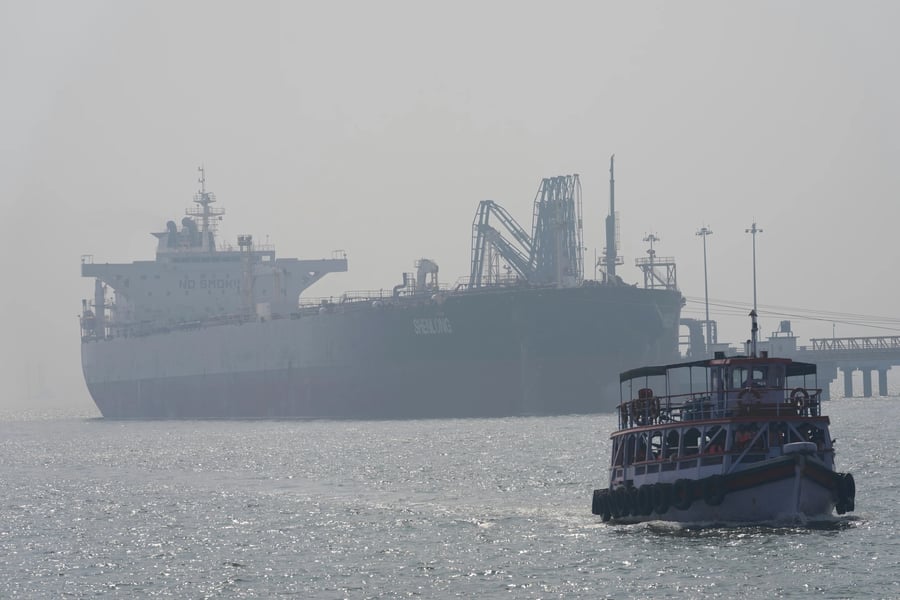
The closure and militarization of Hormuz have already disrupted global shipping routes, driven up energy costs, and intensified fears of wider regional instability stretching from the Gulf to the Eastern Mediterranean. Global shipping risks intensify around Hormuz.
The growing confrontation follows months of escalation after US-Israeli attacks trigger regional war fears across the Middle East, sending oil traders and governments scrambling to prepare for a prolonged disruption.
Trump’s decision this week to temporarily halt “Project Freedom,” the US naval operation designed to escort ships through Hormuz, fueled speculation that backchannel negotiations may be gaining momentum. Trump pauses effort to escort ships in Strait of Hormuz.
Officials close to the talks have suggested that intermediaries including China, Pakistan, and Gulf states are increasingly involved in efforts to secure a broader settlement framework.
The economic consequences are already reverberating through Asian markets. Oil prices surged after Tehran tightened oversight of maritime traffic and introduced a new vessel coordination mechanism in the Gulf. Oil jumps as Iran tightens grip on Strait of Hormuz.
The maritime confrontation has also deepened strategic coordination among Beijing, Moscow, and Tehran. Earlier this year, the three powers expanded joint naval cooperation through BRICS naval drills, alarming Western defense planners and reinforcing perceptions of an emerging anti-Western geopolitical bloc.
Whether Beijing can actually deliver a breakthrough remains uncertain.
China’s influence over Tehran is significant but not unlimited, particularly when Iranian leaders view strategic deterrence in Hormuz as central to their national security posture. Yet the very fact that both Washington and Tehran are now looking toward Beijing illustrates how profoundly the balance of global diplomacy has shifted.
For decades, the United States dominated crisis management in the Middle East. Today, as Araghchi’s Beijing visit demonstrated, any future agreement over Iran, Hormuz, or regional security may increasingly depend on decisions made not in Washington or Brussels, but in Beijing.