
A growing bloc of Republican lawmakers aligned with President Donald Trump is escalating pressure on NATO after a failed congressional effort to redirect nearly half a billion dollars away from the military alliance and toward domestic US military infrastructure.
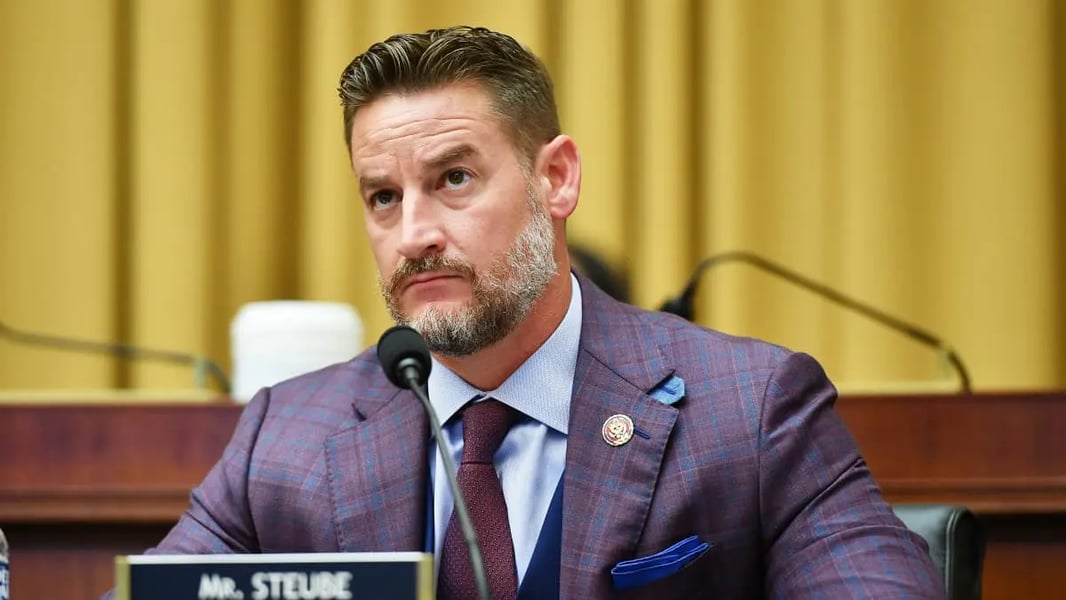
The political clash erupted Friday when Republican Representative Greg Steube of Florida introduced an amendment seeking to strip roughly $482 million from Washington’s contribution to NATO and instead channel the funds into American military bases. The proposal immediately triggered fierce debate inside Congress over whether US taxpayers are unfairly carrying the financial burden of the Western alliance while European nations fail to fully support Washington during global crises.
“I’m offering an amendment to pull nearly $482 MILLION away from NATO and put it back into AMERICAN military bases,” Steube wrote on X, accusing NATO allies of relying excessively on US military protection without reciprocating strategically when American interests are challenged abroad.
The amendment ultimately failed by a vote of 333 to 80, but the outcome highlighted the rapid growth of anti-NATO sentiment among Trump-aligned conservatives. According to a Washington Examiner report on the failed $482 million NATO amendment, 80 Republicans supported the measure while 127 Republicans joined Democrats in preserving the funding.
Steube later condemned lawmakers who opposed the proposal, arguing that Congress continues prioritizing foreign military commitments over the condition of US military infrastructure at home.
“333 Members of Congress, including 127 Republicans, voted to keep sending your tax dollars to NATO instead of prioritizing our own troops and military infrastructure,” the congressman stated after the vote.
The amendment targeted funding connected to the NATO Security Investment Program, a multinational initiative used to finance military construction projects, air defense systems, logistics hubs, command centers, and strategic infrastructure across NATO member states.
For decades, NATO spending has remained one of the strongest bipartisan pillars of US foreign policy. But Trump’s return to power has reignited fierce arguments over whether the alliance still serves American strategic interests in a rapidly changing global order.
The dispute intensified after Trump recently criticized European allies over their response to tensions involving Iran and the Middle East. On April 1, Trump publicly stated he was seriously considering withdrawing the US from NATO after several European governments reportedly declined to participate in a US-Israeli military campaign against Iran.
The controversy followed reports that Trump warned Europe over Strait of Hormuz tensions while accusing allies of refusing to protect key maritime trade routes despite depending heavily on Gulf energy supplies.
Trump also expressed frustration that European allies refused calls to deploy warships near the Strait of Hormuz during rising tensions in the Persian Gulf. The president argued that the US can no longer continue defending countries that fail to support Washington during major geopolitical confrontations.
According to a Politico analysis on Trump’s renewed NATO withdrawal threats, the president’s remarks triggered deep alarm among European governments concerned about the long-term future of transatlantic security guarantees.
Inside Congress, the failed amendment has become a symbol of a broader ideological struggle now reshaping the Republican Party. While establishment Republicans continue defending NATO as a cornerstone of global security, nationalist conservatives increasingly view the alliance as an expensive burden that primarily benefits European powers.
Many lawmakers supporting Steube’s amendment framed the issue not as isolationism, but as a question of national priorities and fiscal sovereignty.
Representative Tim Burchett of Tennessee, who backed the proposal, argued that the US repeatedly commits enormous military resources to defending Europe while receiving little strategic support in return.
“We sit here and defend them all, and then we get into a bind, and they just run for cover,” Burchett said during debate surrounding the measure.
The growing backlash against NATO inside Republican politics reflects deeper shifts taking place across the global geopolitical landscape. Since the end of the Cold War, Washington has remained the dominant military force underwriting NATO’s security architecture. However, critics increasingly argue that European countries have failed to adequately invest in their own defense capabilities while expecting permanent American protection.
Trump has repeatedly used those arguments throughout his political career, accusing NATO members of exploiting US military power while prioritizing domestic welfare spending over defense commitments.
During his earlier presidency, Trump repeatedly threatened to reconsider US obligations under NATO’s collective defense framework unless European nations significantly increased military spending. Since returning to office, his rhetoric has become even sharper, particularly amid growing tensions involving Iran, Russia, and China.
Recent reports that US freezes troop rotations in Europe have further intensified European concerns over Washington’s long-term military commitments to the alliance.
The latest congressional confrontation also unfolds against the backdrop of mounting global instability. NATO is simultaneously grappling with the Ukraine conflict, escalating tensions in West Asia, maritime security concerns in the Persian Gulf, and rising military competition in the Indo-Pacific.
European governments have meanwhile accelerated military assistance programs, including expanded EU military support for Ukraine and separate initiatives where Norway expands Ukraine arms funding under NATO-backed security packages.
Supporters of NATO argue that weakening the alliance at such a moment could embolden geopolitical rivals and destabilize Europe’s security environment. They maintain that NATO remains essential for preserving Western military coordination and deterring adversaries.
However, a growing number of conservatives aligned with Trump continue embracing a more transactional foreign policy doctrine centered on domestic priorities, reduced overseas commitments, and lower financial support for multinational alliances.
A recent Financial Times report on NATO fears over Trump’s second-term agenda noted that several European officials are now quietly preparing contingency plans in case Washington significantly scales back military support for the alliance.
Meanwhile, Europe prepares for reduced US NATO support as policymakers increasingly fear another major rupture in transatlantic relations under Trump’s leadership.
Public anxiety inside Europe has also intensified. Earlier this year, polling showed that Germans fear Trump threatens NATO as uncertainty grows over Washington’s future role in European defense.
The failed amendment is unlikely to mark the end of the fight. With defense spending battles expected to intensify throughout 2026, Trump allies inside Congress are expected to continue targeting overseas military commitments and foreign aid programs as part of a broader campaign to reshape US foreign policy.
Analysts say the fact that 80 Republicans supported the amendment demonstrates how dramatically the political consensus surrounding NATO has shifted inside Washington. What was once considered a fringe position is increasingly becoming mainstream within large segments of the Republican Party.
According to an Associated Press report on Republican divisions over NATO and Ukraine spending, the growing divide now represents one of the most significant ideological transformations inside US foreign policy circles in decades.
At the same time, geopolitical tensions involving Russia continue reshaping strategic calculations in Washington and Europe. Reports that Trump envoys push diplomatic reset with Moscow have further fueled concerns among NATO officials over the future direction of US foreign policy.
Other NATO members are also facing internal pressure over military spending obligations. In Southern Europe, Spain rejects NATO defense spending target despite growing calls from Washington for allies to dramatically increase defense budgets.
The broader dispute now extends beyond military financing alone. It increasingly reflects a deeper struggle over whether the United States should continue serving as the central pillar of the Western alliance system or move toward a narrower nationalist strategy focused primarily on domestic interests.
Trump’s supporters argue that decades of costly foreign commitments have weakened American infrastructure while enriching allied nations that fail to contribute proportionally to collective security. Critics, however, warn that dismantling NATO’s financial framework could fracture the alliance and destabilize global power balances.
The debate is expected to intensify further as Congress enters a new cycle of defense appropriations and geopolitical tensions continue escalating simultaneously across Europe, the Middle East, and Asia.
—Inputs from Sputnik.