
The Trump administration on Monday intensified its pressure campaign against Cuba after the US Treasury Department imposed fresh sanctions on Cuba’s Intelligence Directorate and nine senior officials linked to the country’s military, Communist Party leadership, and internal security establishment.
The latest measures mark one of the most aggressive escalations in Washington’s sanctions regime against Havana in years, expanding beyond traditional economic restrictions to directly target Cuba’s intelligence and political command structure. The Treasury Department also widened sanctions against Cuba’s Interior Ministry and police apparatus, institutions already blacklisted under the Global Magnitsky Act.
According to the Treasury Department announcement, the sanctions target several influential figures within the Cuban state, including the head of the Directorate of Military Counterintelligence, senior commanders within the Cuban Revolutionary Armed Forces, top Communist Party officials, and ministers overseeing justice and communications.
The move comes as relations between Washington and Havana deteriorate sharply under President Donald Trump’s renewed hardline foreign policy toward Latin America and the Caribbean. Earlier this month, Trump signed a sweeping expanded US sanctions authority against Cuba, giving Washington powers comparable to sanctions frameworks previously deployed against Iran and Russia.
Under the new framework, the US government can sanction not only Cuban entities but also foreign companies, banks, and individuals accused of supporting Havana’s military, intelligence, energy, mining, or security sectors. Legal analysts have described the new sanctions architecture as the most expansive restructuring of US sanctions on Cuba in decades.
The sanctions announcement arrives amid mounting tensions fueled by allegations from US intelligence officials regarding Cuba’s growing military and intelligence cooperation with Russia and Iran. Recent reports indicated that Washington is increasingly concerned over Cuba’s acquisition of military drones and the alleged presence of Iranian military advisers in Havana.
US officials have accused the Cuban government of enabling activities that threaten American national security interests in the region, particularly around the US naval base at Guantanamo Bay and maritime routes in the Caribbean. Havana denied the allegations and said Cuba rejected the accusations being used by Washington to justify further escalation.
Cuban Foreign Minister Bruno Rodriguez recently condemned what he described as a “fraudulent case” being constructed by Washington to intensify pressure against the island nation. Havana has repeatedly argued that decades of sanctions on Cuba amount to collective punishment against the Cuban population and violate international law.
The sanctions are also expected to deepen Cuba’s already severe economic crisis. The Caribbean nation continues to struggle with fuel shortages, inflation, rolling blackouts, and declining imports following years of economic isolation and tightening restrictions from Washington.
The impact of the new measures is already spreading beyond Cuba’s borders. Major global shipping companies, including CMA CGM and Hapag-Lloyd, recently suspended bookings connected to Cuba after the White House expanded sanctions authorities earlier this month. Analysts warned the restrictions could disrupt a substantial portion of Cuba’s international shipping flows and worsen shortages of fuel and essential goods.
The Trump administration has increasingly framed Cuba as part of a broader geopolitical alignment involving anti-US governments and rival powers. US intelligence and national security officials have raised alarms over alleged Cuban cooperation with Russia, China, Iran, and Venezuela in intelligence-sharing and military coordination activities.
Last week, CIA Director John Ratcliffe traveled to Havana for rare direct talks with Cuban officials while simultaneously warning that Cuba could no longer serve as a “safe haven” for adversaries of the United States. Reports surrounding the visit suggested Washington remains deeply concerned about alleged Chinese surveillance activities and military cooperation occurring on the island.
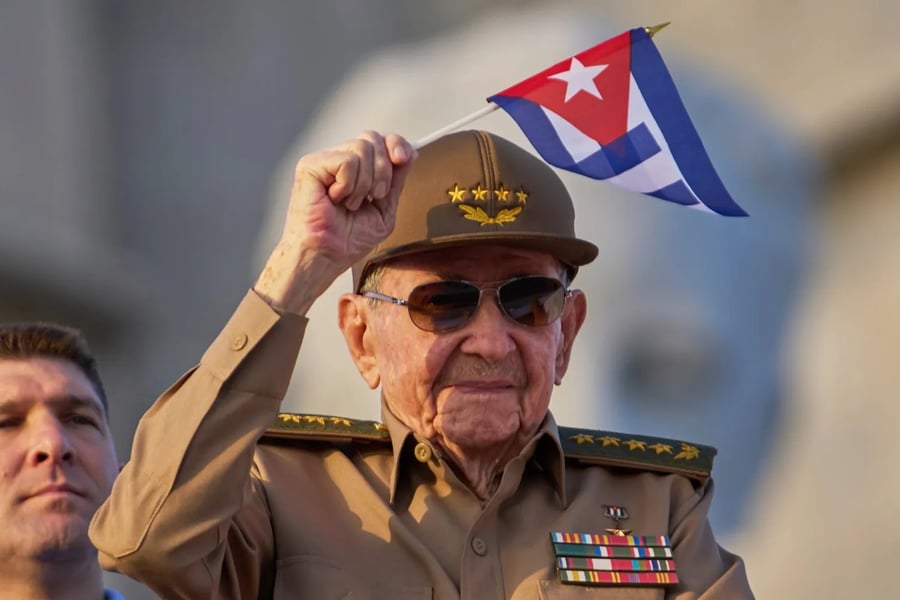
At the same time, the US Department of Justice is reportedly preparing criminal indictments against former Cuban leader Raul Castro related to the 1996 downing of aircraft operated by the humanitarian group Brothers to the Rescue. The legal effort represents another major escalation in Washington’s campaign against Havana’s ruling establishment.
The sanctions campaign reflects a broader return to Cold War-style confrontation between Washington and Havana, reversing previous attempts at talks with Havana pursued during earlier administrations.
Analysts note that the new sanctions framework could have far-reaching implications for foreign companies and governments dealing with Cuba. Because the executive order authorizes secondary sanctions, non-US firms conducting business with sanctioned Cuban sectors could face financial penalties or exclusion from the American financial system.
Critics of the sanctions policy argue that decades of economic pressure have failed to produce political change in Cuba while significantly worsening living conditions for ordinary citizens. Several international organizations and governments, including China, have criticized the US embargo and sanctions regime as outdated and harmful to the Cuban people.
Russia has also intensified diplomatic support for Havana, with Foreign Minister Sergey Lavrov condemning Western sanctions against Cuba during recent BRICS meetings.
Iran meanwhile openly backed Havana earlier this year after Tehran Iran condemned US sanctions on Cuba and accused Washington of weaponizing economic restrictions against sovereign states.
Cuban officials have also accused Washington of conducting forms of electronic warfare and destabilization operations across the Caribbean region.
The growing tensions have sparked fears of potential confrontation after Havana warned against possible military action against the island, while UN officials and several foreign governments urged restraint.
The Treasury Department has not indicated whether additional sanctions rounds are imminent, but officials signaled that further actions remain under consideration as Washington continues expanding its campaign against Havana’s political and security institutions.