
The trophies had already been won. The records had already been broken. The barriers had already been shattered. Yet for one of the most transformative figures in sports history, there remained one unfinished chapter.
At 82 years old, Billie Jean King finally walked across a graduation stage and completed a journey that began 65 years ago, earning her Bachelor of Arts degree in history degree studies from California State University, Los Angeles. The moment represented far more than a diploma. It was another statement from a sporting icon whose career has repeatedly redefined what persistence looks like.
King graduated during the commencement ceremony at the Shrine Auditorium in Los Angeles, joining nearly fellow graduates. While the tennis world remembers her as a champion and revolutionary figure, Monday’s ceremony revealed a different image: an 82-year-old student completing unfinished business.
For many athletes, retirement often marks the end of major milestones. For King, it has become another phase of reinvention.

39 Grand Slam titles hardly need introduction. King won 39 majors, became one of the most recognizable names in global sports, and turned her influence into a movement for equality that reshaped women’s athletics. Her famous Battle of the Sexes victory against Bobby Riggs in 1973 remains one of the defining moments in sports culture.
Yet despite all the accolades and historic accomplishments, the unfinished degree remained with her.
According to reports surrounding the graduation ceremony, King repeatedly corrected people whenever biographies mistakenly described her as a college graduate. For years, she insisted on accuracy because she believed she had not yet earned that distinction. The degree mattered, regardless of everything else she had already accomplished.
That pursuit eventually brought her back to Cal State LA.
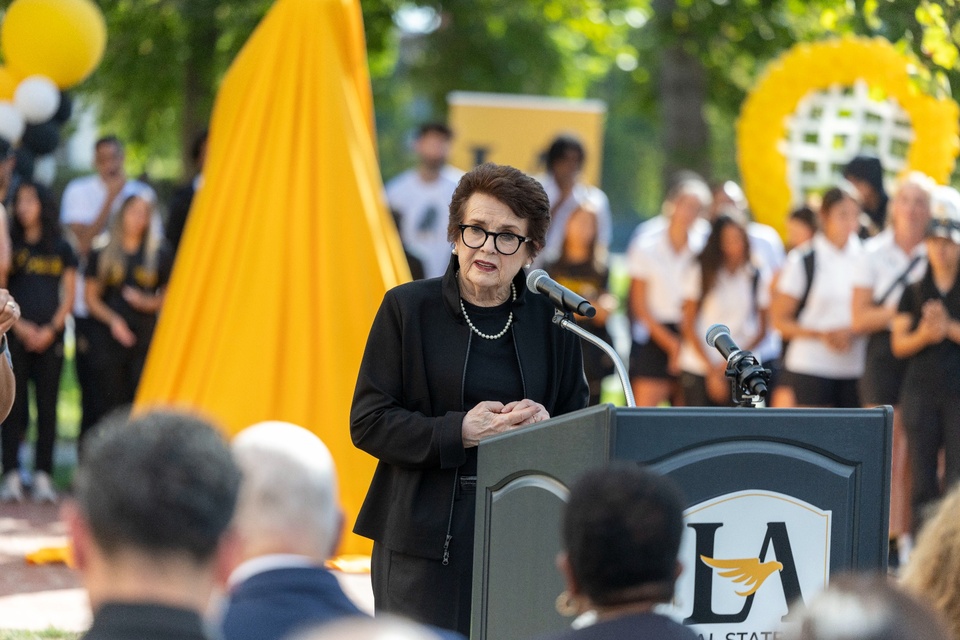
The return itself became symbolic. The university has long celebrated King’s influence, even naming its athletic complex after her and unveiling a statue honoring her contributions to sport and social progress. Now the relationship between athlete and institution has reached a full-circle ending.

But beneath the celebration sat a larger message that extends beyond sports.
Modern athletes increasingly discuss education alongside competition. While elite careers often force difficult choices between academics and professional opportunities, King’s story offers a reminder that timelines do not always determine outcomes.
In an era built around immediate success and constant pressure to move quickly, King’s graduation arrives as a different type of sports story. It is not about rankings, championships, or contracts. It is about completing a promise made decades earlier.
That message resonated throughout social media after news of her graduation spread. Fans, athletes, and sports organizations celebrated the achievement not because it added another trophy to her collection, but because it reflected the same determination that defined her career.
King has spent a lifetime pushing boundaries beyond the tennis court. She fought for equal treatment, advocated for women athletes, challenged outdated structures, and built opportunities for future generations. Completing her degree now becomes another chapter in that broader legacy.
The timing also carries added meaning. College graduation traditionally celebrates beginnings rather than endings. For King, the occasion felt like both.
Because for someone who changed tennis, changed women’s sports, and changed conversations around equality, there was still one thing left to finish.
At age 82, Billie Jean King proved that history can still be written long after the headlines say the story is complete.
Related Posts