
Austria is rapidly expanding its role in Europe’s evolving space security landscape with plans to launch four satellites next year, marking one of the country’s most ambitious technological and defense initiatives in decades. The satellite push reflects a broader European effort to secure independent orbital infrastructure as geopolitical tensions, electronic warfare threats, and dependence on foreign-controlled systems reshape strategic planning across the continent.
According to reports from European cooperation framework, Austria has formally launched a national satellite program that will place four satellites into orbit as part of a wider European cooperation framework involving Germany and Luxembourg. Berlin is expected to play a coordinating role in the project, while Luxembourg will act as a close strategic partner.
The announcement comes at a time when European governments are increasingly treating space not merely as a scientific or commercial domain, but as a core pillar of national security, intelligence gathering, communications resilience, and economic sovereignty. Across Europe, military planners and policymakers are warning that reliance on external satellite networks creates dangerous vulnerabilities in times of conflict or political crisis.
Austria’s Defense Minister Klaudia Tanner underscored the strategic importance of the initiative, saying recent talks among European partners demonstrated the urgent need for engagement in the space sector. Her remarks reflect a major shift in Austria’s traditionally cautious defense posture, particularly as the country deepens security coordination with neighboring European states.
The Austrian satellite initiative is closely linked to the country’s broader military modernization strategy. Vienna has increasingly focused on cyber defense, infrastructure protection, and technological autonomy following lessons drawn from recent conflicts and rising concerns over electronic warfare capabilities. European military officials have repeatedly warned that satellite jamming and spoofing attacks now represent serious threats to both civilian and military infrastructure.
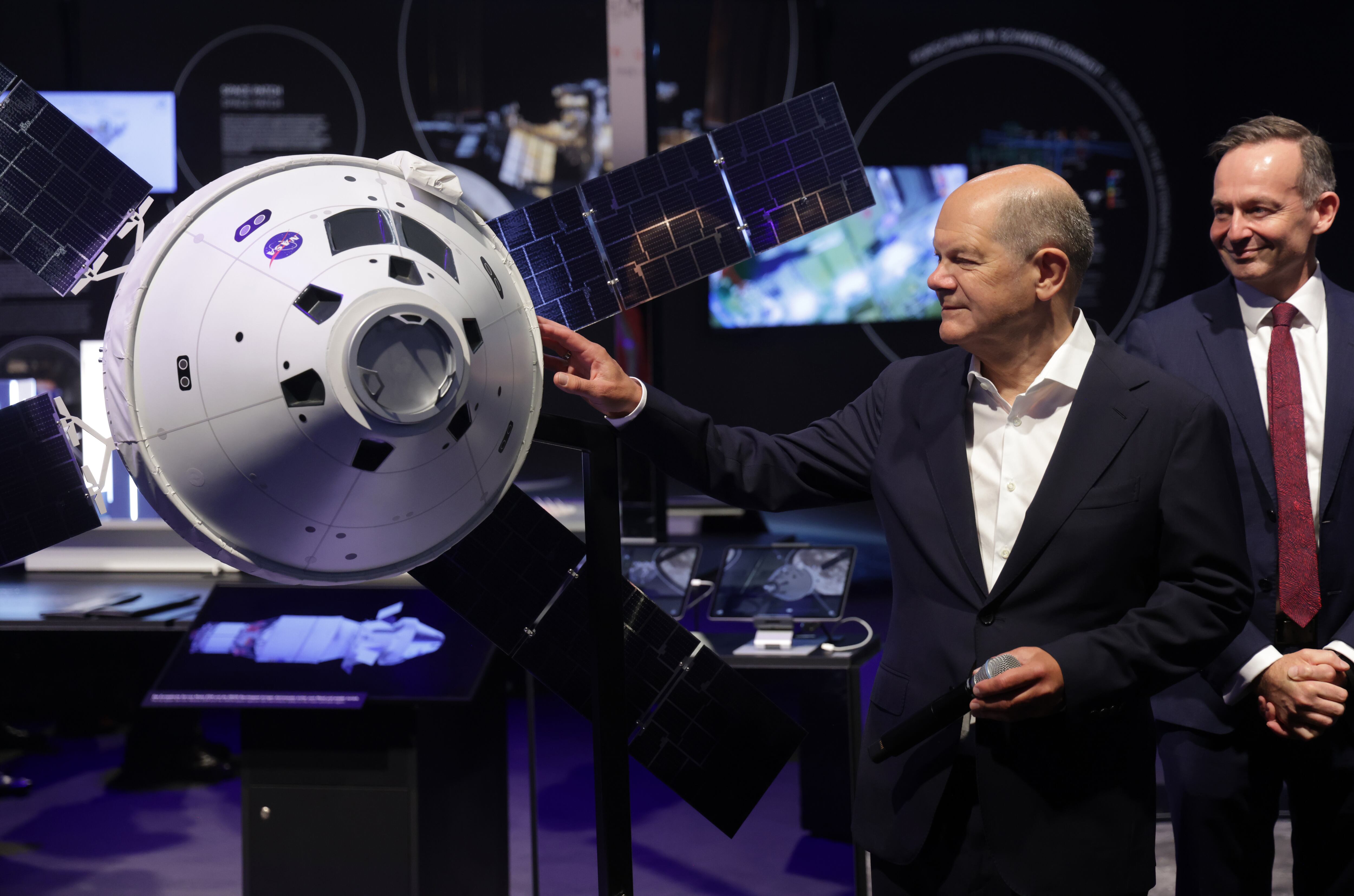
Austria’s first military satellite, known as BEACONSAT, is already under development by Austrian startup GATE Space and is expected to launch aboard a Falcon 9 rocket in February 2027. The satellite is designed to detect interference and spoofing attacks targeting navigation systems such as GPS and Europe’s Galileo network. Austrian authorities believe the technology could play a critical role in protecting sectors including civil aviation, transportation systems, emergency services, and energy infrastructure.
The growing focus on anti-jamming capabilities reflects wider European anxieties over vulnerabilities in satellite-dependent systems. Modern economies rely heavily on satellite navigation for logistics, aviation routing, financial transactions, military coordination, and energy distribution. Experts warn that disruption to these systems could create cascading effects across critical infrastructure networks.
Austria’s satellite plans also align with Europe’s larger effort to reduce strategic dependence on US-controlled and commercial satellite systems. Since the escalation of the Russia-Ukraine conflict and subsequent debates surrounding satellite communications access, European governments have accelerated efforts to establish sovereign alternatives for intelligence, communications, and navigation services.
The European Union is currently investing billions of euros into orbital infrastructure projects including IRIS², GOVSATCOM, and proposed Space Shield programs aimed at creating secure satellite communication systems. European officials increasingly argue that independent orbital infrastructure is essential if the continent wants greater geopolitical autonomy in an increasingly multipolar world.
Under the GOVSATCOM initiative, EU member states are pooling secure governmental and military satellite communication resources to provide encrypted connectivity across Europe. European Commissioner for Defence and Space Andrius Kubilius recently described secure satellite communications as central to Europe’s future sovereignty and defense readiness.
Austria’s emerging role in this wider framework may appear modest compared to the massive investments being made by larger European powers such as Germany and France, but analysts say smaller states are increasingly viewed as important contributors to a decentralized and resilient orbital network.
Germany has already announced plans to invest tens of billions of euros into military space systems over the coming years, including reconnaissance constellations, secure communications satellites, and space surveillance infrastructure. France has similarly expanded military space spending as competition intensifies among global powers in orbit.
Austria’s planned satellites are expected to support areas such as Earth observation, communications security, and advanced navigation monitoring. Reports indicate that three satellites will be dedicated to operational deployment while one satellite will function as a testing and research platform.
The technological focus on low Earth orbit systems also reflects broader trends reshaping the global satellite industry. Low orbit constellations offer lower latency, faster communications, and greater resilience compared to traditional large satellites positioned farther from Earth. Governments increasingly see distributed satellite constellations as harder to disable during crises or conflicts.
European defense analysts have warned that future wars will likely involve heavy disruption of satellite systems through cyberattacks, jamming operations, or anti-satellite system deployments. As a result, governments across Europe are moving to create layered and redundant orbital architectures capable of maintaining communications and navigation services even during hostile conditions.
Austria’s entry into this strategic environment represents a major transformation for a country long associated with military neutrality. While Vienna remains formally neutral, it has increasingly strengthened cooperation with European defense initiatives and regional security programs in recent years.
The expanding militarization of space has also intensified competition between global powers including the US, Russia, China, and the European Union. Governments are now treating orbital infrastructure as a strategic domain comparable to land, sea, air, and cyberspace. Military planners believe future conflicts could be heavily influenced by which side controls satellite communications, reconnaissance systems, and navigation networks.
Russia has also accelerated investment in strategic military technologies, including advanced missile systems and next-generation orbital defense programs as geopolitical competition intensifies.
Moscow meanwhile continues expanding weapons production capabilities amid rising tensions between Russia and NATO powers.
Austria’s satellite ambitions therefore represent more than a technological project. They symbolize Europe’s accelerating effort to build strategic autonomy in critical infrastructure sectors amid growing geopolitical fragmentation and uncertainty.
As Europe pushes deeper into the orbital defense race, Austria’s four-satellite initiative may become an important component of the continent’s emerging space security architecture, one increasingly designed around resilience, sovereignty, and reduced dependence on external powers.
—Inputs from Sputnik.
Related Posts