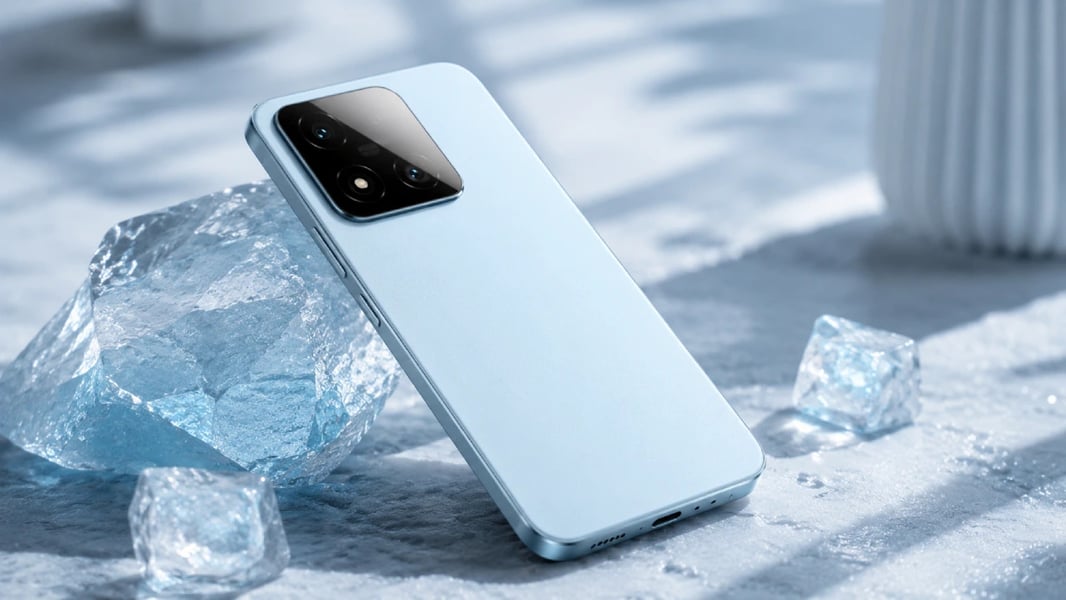

Xiaomi has officially launched the Xiaomi 17 Max, and the new flagship is already generating massive attention for one reason above everything else: battery life. In an era where premium smartphones still struggle to push beyond 5,000mAh or 6,000mAh batteries, Xiaomi has arrived with an enormous 8,000mAh silicon-carbon battery inside a full-fledged flagship device. The company is not positioning the phone as a niche gaming handset or rugged monster either. Instead, the Xiaomi 17 Max is being marketed as a premium ultra-flagship designed to challenge Apple, Samsung, and Vivo directly.
The launch comes at a critical moment for the smartphone industry. Flagship phone prices continue climbing globally, while many consumers increasingly prioritize practical upgrades like longer battery life, faster charging, and reliable camera systems over cosmetic design changes. Xiaomi appears to be targeting exactly that frustration with the Xiaomi 17 Max.
The device officially debuted in China during Xiaomi’s May 2026 launch event alongside several other ecosystem products. However, it was the 17 Max that stole the spotlight thanks to its unusually aggressive hardware combination.
Huge Battery Could Reshape the Flagship Battery Race
At the center of the phone is Xiaomi’s new Jinshajiang silicon-carbon battery technology. The company claims the advanced battery chemistry allows higher energy density without dramatically increasing thickness or weight. Xiaomi says the battery achieves 894Wh/L energy density with 16% silicon content, enabling the company to pack an 8,000mAh battery inside a relatively slim 8.2mm chassis.
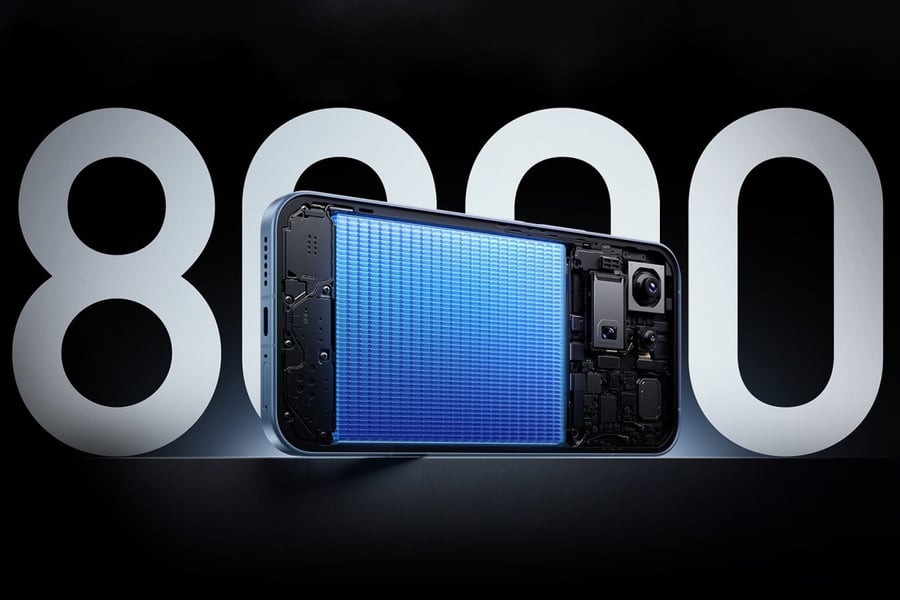
Battery endurance has already become one of the phone’s biggest marketing weapons. In one official endurance test promoted online, Xiaomi claimed the 17 Max managed over 33 hours of continuous video playback and reportedly outlasted two iPhone 17 Pro Max units combined in a controlled streaming battery challenge. Those claims immediately intensified the flagship battery race now emerging across the Android industry.
The launch also arrives amid growing battery endurance concerns among smartphone buyers frustrated with daily charging limitations on premium devices.
Leica Camera System Targets Premium Photography Market
Beyond battery performance, Xiaomi is heavily emphasizing imaging capabilities. The Xiaomi 17 Max features a Leica-engineered triple-camera system led by a 200MP Samsung HP9 primary sensor with optical image stabilization. The setup also includes a 50MP periscope telephoto camera with 3x optical zoom and a 50MP ultra-wide sensor.
The ongoing Leica partnership continues to play a major role in Xiaomi’s flagship strategy as Chinese smartphone manufacturers intensify competition in premium mobile photography. Xiaomi’s collaboration with Leica has increasingly become one of the company’s biggest differentiators against Samsung and Apple, especially in Asian markets where smartphone photography remains a key buying factor.
The camera hardware is backed by Xiaomi’s latest computational imaging system integrated into HyperOS 3. Xiaomi claims the software improves low-light capture, portrait processing, AI-assisted stabilization, and dynamic range optimization. The rise of AI-powered smartphone cameras has become one of the defining trends of the 2026 flagship market.
On the front, the device carries a 32MP selfie camera positioned within a centered punch-hole cutout.
Display and Snapdragon 8 Elite Gen 5 Specs
The display specifications firmly place the Xiaomi 17 Max in ultra-premium territory. The phone sports a massive 6.9-inch 1.5K AMOLED LTPO panel with a 120Hz adaptive refresh rate, HDR10+, Dolby Vision support, and peak brightness reaching up to 3,500 nits. Xiaomi is also using Dragon Crystal 3.0 protection on the front panel.
Powering the flagship is Qualcomm’s Snapdragon 8 Elite Gen 5 chipset built on a 3nm process. Xiaomi pairs the processor with LPDDR5X RAM and UFS 4.1 storage, with configurations reaching up to 16GB RAM and 512GB storage. The chip is part of a new wave of next-generation Android flagships expected to dominate the premium smartphone market throughout 2026.
The Xiaomi 17 Max ships with Android 16-based HyperOS 3 and includes premium flagship features such as Wi-Fi 7, Bluetooth 5.4, NFC, IP68 water and dust resistance, ultrasonic in-display fingerprint scanning, symmetrical stereo speakers, and advanced cooling architecture. Xiaomi’s software approach also reflects the accelerating Android update cycle now reshaping flagship competition.
Xiaomi Appears to Be Moving Away From Ultra-Thin Designs
Design-wise, Xiaomi appears to be moving toward a flatter, more industrial flagship aesthetic. The 17 Max uses slim bezels, a large rounded rectangular camera island, and a large flat display rather than aggressively curved edges. Official teaser materials confirmed black, blue, and white color options ahead of launch.
The move may signal the end of the ultra-thin smartphone experiment that several smartphone makers aggressively pursued over the past few years. Instead, brands increasingly appear willing to sacrifice thinness in exchange for dramatically larger batteries and improved thermal performance.
The pricing strategy may become one of Xiaomi’s strongest competitive advantages. The Xiaomi 17 Max starts at CNY 4,799 in China for the 12GB + 256GB model, which converts to roughly $630 or around ₹68,000. Higher storage and RAM variants extend up to CNY 5,799.
That pricing aggressively undercuts many competing flagship phones from Samsung and Apple while still offering top-tier hardware specifications. Xiaomi appears determined to position the device as a value-focused flagship powerhouse rather than a luxury-priced experimental phone.
Android Flagship Competition Is Entering a New Phase
Industry analysts are already describing the Xiaomi 17 Max as part of a larger shift happening inside the Chinese smartphone market. For years, many brands focused primarily on thinner designs and incremental camera upgrades. But growing consumer fatigue around poor battery endurance appears to be pushing manufacturers back toward larger batteries and practical usability improvements.
The Xiaomi 17 Max may ultimately represent one of the clearest examples yet of that changing strategy. Instead of sacrificing battery capacity for slimness, Xiaomi is betting that consumers now care more about all-day and multi-day endurance than shaving off a few millimeters of thickness.
The launch is also increasing pressure across the wider Android flagship competition, especially as rivals attempt to respond to Xiaomi’s battery-first strategy. Industry insiders believe Samsung’s next premium devices could face growing Samsung’s battery pressure if consumers begin prioritizing endurance over thin industrial design.
The phone is currently available for pre-order in China, with official retail sales beginning May 25.
Global availability remains uncertain for now. However, multiple reports suggest Xiaomi is considering broader international expansion later this year if demand remains strong.