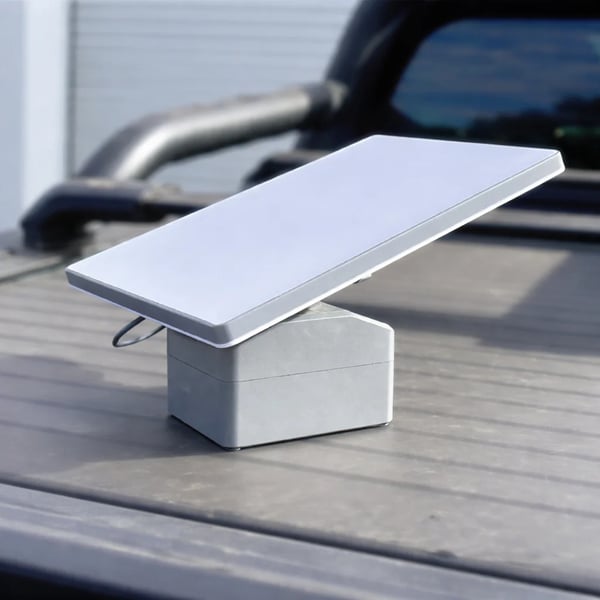

SpaceX may finally be preparing the Starlink Mini that off-grid users have wanted since the compact satellite dish first launched. New firmware discoveries suggest the company is developing a rugged, battery-powered version of the portable Starlink Mini with native USB-C support, integrated battery monitoring, and pass-through charging capabilities. recent firmware discoveries.
The leak has triggered major interest among vanlifers, emergency responders, campers, remote workers, and digital nomads who have increasingly adopted the current Starlink Mini for mobile internet access. Unlike the existing model, which still requires external power banks or AC adapters, the rumored next-generation hardware could deliver fully untethered satellite connectivity almost anywhere.
Recent code uncovered in Starlink firmware appears to reference “DishBatteryStats,” including battery state-of-charge readings and charging controls that would only make sense on a device with an integrated power source. Researchers also found references to three separate power states: direct USB-C power, internal battery operation, and simultaneous battery plus USB-C use. code uncovered in Starlink firmware.
That discovery has fueled speculation that SpaceX is preparing a more rugged Starlink Mini variant designed specifically for portable and outdoor use. According to reports tied to firmware analysis, the device may support pass-through charging, allowing users to power the dish while preserving long-term battery health.
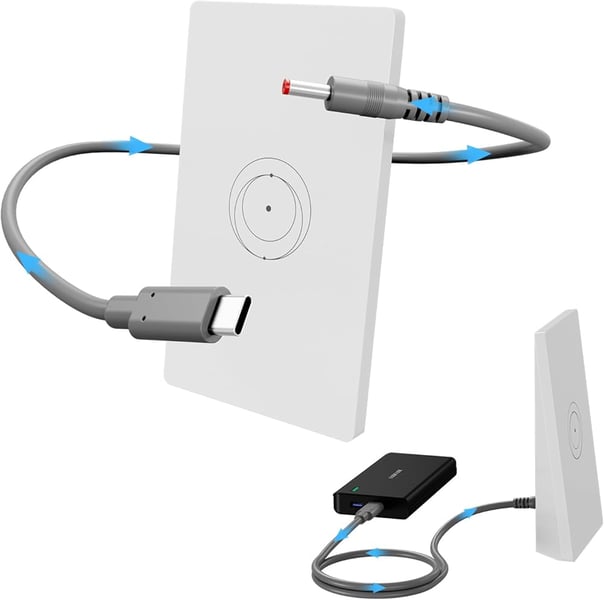
That limitation has created a booming aftermarket ecosystem around Starlink Mini battery packs. Some third-party solutions physically attach to the back of the dish, but users have repeatedly complained about software instability, inconsistent power delivery, and high pricing.
An official SpaceX solution could eliminate many of those frustrations.
Industry watchers believe a built-in battery would allow tighter integration with the Starlink app, more accurate battery diagnostics, improved thermal management, and a cleaner portable design. Reports suggest SpaceX could target an airline-friendly battery threshold around 99Wh, potentially giving the dish more than five hours of runtime depending on network conditions and usage.
The inclusion of USB-C support could be equally important. USB-C power delivery has rapidly become the standard for modern portable electronics, and it would make the Starlink Mini far easier to integrate with existing portable power stations, solar setups, and vehicle charging systems.
The ruggedization rumors are also attracting attention. Firmware references reportedly hint at a tougher outdoor-ready variant that could better withstand harsh environments, making the device more appealing for emergency operations and industrial deployments.
That timing makes sense for SpaceX. The company has aggressively expanded the Starlink satellite network while pushing deeper into mobility-focused markets. Portable satellite connectivity has become one of the fastest-growing categories in consumer communications technology as remote work, adventure travel, and disaster preparedness continue driving demand.
The Starlink Mini itself has already become a key product in that strategy. Smaller and more power-efficient than standard Starlink dishes, the Mini was designed specifically for portability. Users in rural and remote areas increasingly rely on it as a backup or primary internet solution.
Firmware updates have also become an increasingly important part of the Starlink ecosystem. Users frequently discuss performance changes, power optimizations, and wireless adjustments following updates. Some community discussions have even reported noticeable battery gains after recent firmware releases, while others point to efficiency improvements reported by users.
Still, SpaceX has not officially confirmed the existence of a battery-powered Starlink Mini.
As with many firmware leaks, there remains the possibility that the features are experimental, intended for internal testing, or planned for enterprise-only hardware. But the repeated appearance of battery-related code, USB-C references, and rugged hardware discussions across multiple firmware investigations strongly suggests something significant is in development.
If SpaceX launches the device, it could reshape expectations for portable internet hardware. Most satellite communication systems still depend heavily on external batteries, generators, or complex field setups. A self-powered Starlink Mini would dramatically simplify deployment for users operating in remote environments.
The move could also strengthen SpaceX’s lead over emerging satellite internet competitors that are still building out their low Earth orbit broadband constellation. Portability is becoming just as important as speed, especially for users who prioritize flexibility over fixed residential installations.
For now, the leaked firmware remains the clearest sign yet that SpaceX is working to remove one of the biggest remaining compromises in portable satellite internet: the power cable.