
Amazon’s push into the orbital internet economy accelerated sharply this week, as an Atlas V rocket launch delivered another heavy payload of satellites into low Earth orbit, underscoring the company’s escalating rivalry with Elon Musk’s SpaceX, even as a high-profile Falcon Heavy mission faltered on the launchpad.
The contrast could not have been more stark.
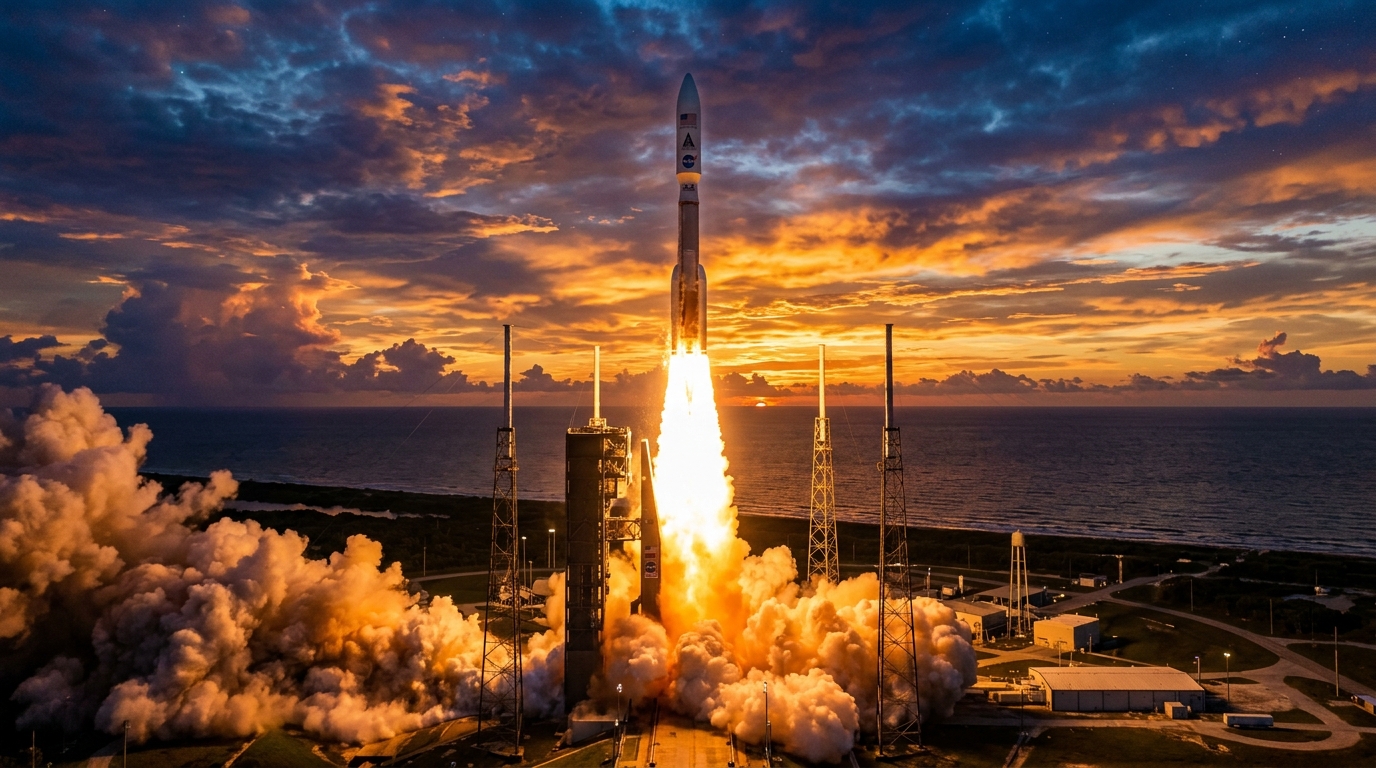
In the early hours over Cape Canaveral, an Atlas V 551 configuration roared skyward carrying 29 Amazon internet satellites for Amazon’s rapidly expanding Project Kuiper constellation, marking yet another successful deployment in a campaign designed to blanket the planet with broadband connectivity.
The launch itself was clinically precise. Within minutes of liftoff, the rocket’s Centaur upper stage began its carefully choreographed orbital insertion, ultimately releasing all 29 satellites into their intended trajectory. The payload, roughly 18 tons, ties among the heaviest ever carried by an Atlas V rocket, a workhorse vehicle now approaching retirement after more than two decades of service.
This is not a one-off success. Amazon’s constellation has now grown into a formidable low Earth orbit broadband constellation, with hundreds of satellites already deployed and thousands more planned. The broader ambition is explicit: provide high-speed internet to underserved regions while carving out a lucrative share of a market currently dominated by SpaceX.
Yet even as Amazon builds momentum, its primary competitor stumbled.
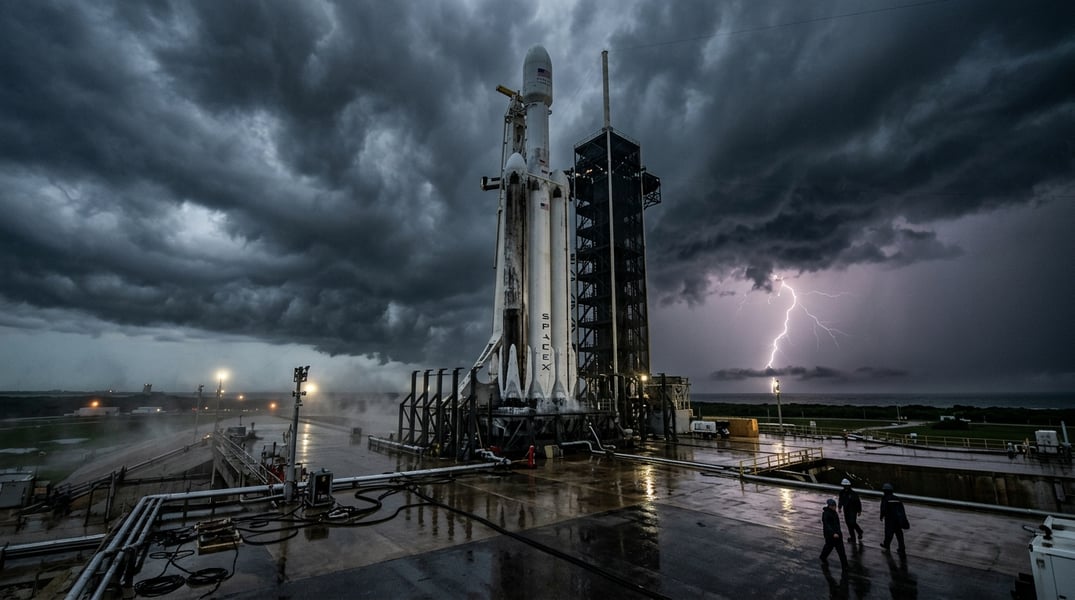
Just hours after the Atlas V success, SpaceX was forced to scrub a planned Falcon Heavy launch due to poor weather conditions over Florida’s Space Coast. The mission, set to loft the ViaSat-3 F3 satellite, had been billed as the rocket’s first flight in more than a year and a half, heightening expectations across the aerospace industry.
Instead, meteorological uncertainty intervened.
Forecasters had warned of marginal conditions, including upper-level winds and cloud constraints that can trigger automatic launch aborts. The decision to stand down reflected SpaceX’s increasingly conservative approach to risk management, particularly for high-value payloads. While the company has reset the launch window, the delay underscores the fragility of even the most advanced launch systems when confronted with Earth’s atmosphere.
In the calculus of the commercial space race, timing matters.
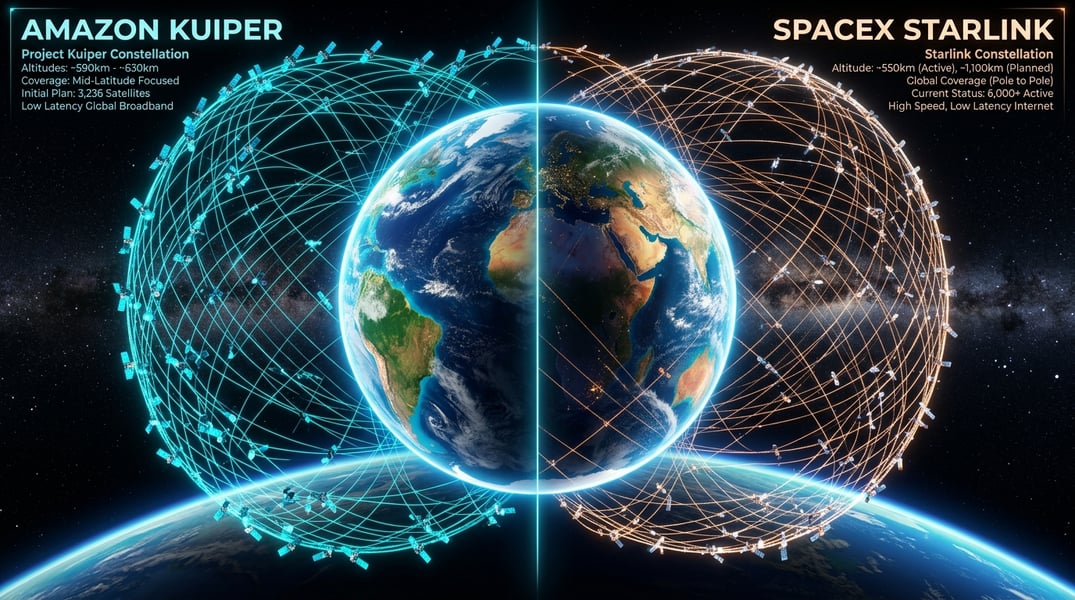
Amazon’s Kuiper program, backed by founder Jeff Bezos, has long been criticized for lagging behind SpaceX, which already operates thousands of Starlink satellites and serves millions of users globally. But the cadence of recent Atlas V launches suggests a narrowing gap. With each successful deployment, Amazon inches closer to operational scale, leveraging a diversified launch strategy that includes United Launch Alliance, Arianespace, and even SpaceX itself under contract.
The LA-06 mission also carries symbolic weight. It is among the final flights from Cape Canaveral Space Force Station, as the Atlas V enters its twilight phase before being replaced by next-generation systems. That transition adds urgency to Amazon’s schedule: each remaining Atlas V launch is a finite opportunity to accelerate constellation deployment before newer vehicles take over.
Meanwhile, SpaceX’s Falcon Heavy remains a technological spectacle but an operational outlier, used sparingly compared to the company’s ubiquitous Falcon 9. Its delays, while not uncommon in rocketry, are amplified by the stakes: fewer launches, heavier payloads, and a narrower margin for error.
What emerges from this week’s events is not merely a tale of two rockets, but a snapshot of a shifting power dynamic in orbit.
Amazon is no longer a tentative entrant. It is executing, methodically, aggressively, and at scale. SpaceX, for all its dominance, is facing the first credible challenge to its supremacy in satellite internet, not from a startup or a state actor, but from one of the world’s most formidable corporate machines.
And the sky, increasingly crowded, is becoming the ultimate battleground.