
Samsung is accelerating its next-generation software push with the One UI 9 beta program expanding into additional regions, marking one of the fastest rollout cycles in the company’s recent Android history. Built on Android 17, the update is currently exclusive to the Galaxy S26 series and is already drawing attention for its deeper customization tools, refined user interface, and AI-driven system enhancements.
The expansion of Beta 2 signals that Samsung is moving beyond controlled testing and into broader real-world validation, while users still continue receiving the staggered rollout of One UI 8.5 across older Galaxy devices.
One UI 9 beta rollout expands across global markets
The One UI 9 beta program initially launched in select countries including South Korea, the United States, Germany, the United Kingdom, and India. Now Samsung is widening access through Beta 2 expansion, allowing more Galaxy S26 users to join the testing phase through the Samsung Members app.
Android 17 foundation powers the new One UI experience
One UI 9 is built on Android 17, introducing a stronger system foundation focused on smoother multitasking, improved notification handling, and smarter background resource management. Samsung is layering its own Galaxy-specific AI and design systems on top of this base to create a more adaptive interface.
Early development builds of the software were first reported as part of Android 17-based One UI 9 development leak, showing Samsung’s internal testing long before public beta access began.
One UI 8.5 still rolling out while One UI 9 testing begins
Samsung is currently managing an unusual overlap where One UI 8.5 continues its global rollout while One UI 9 beta testing expands. This creates a layered software ecosystem where users are split between refinement updates and next-generation experimentation.
The ongoing One UI 8.5 rollout focuses on stability improvements and Galaxy AI refinements, while newer devices prepare for the Android 17 transition.
One UI 8.5 also introduced notable AI improvements, including smarter system suggestions and enhanced multimedia tools. These advancements are further detailed in coverage of Galaxy AI features in One UI 8.5.
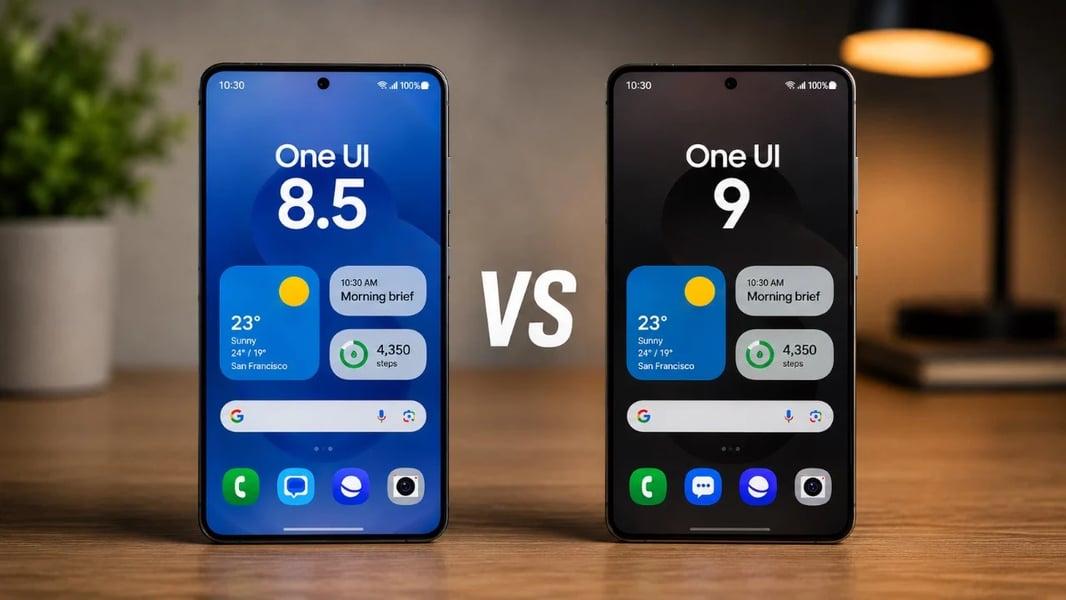
Feature comparison between One UI 8.5 and One UI 9
While One UI 8.5 focused heavily on refinement and AI-assisted enhancements, One UI 9 represents a deeper structural evolution of Samsung’s interface design. The update introduces more granular customization options, redesigned system panels, and stronger accessibility controls.
The distinction between both versions has been widely discussed in industry analysis, including detailed comparisons of Samsung One UI 8.5 update rollout and how it transitions into One UI 9’s redesigned ecosystem.
According to early feature breakdowns published by One UI 9 features and customization upgrades, the update includes a redesigned Quick Panel, improved Samsung Notes tools, and expanded system-level personalization.
Galaxy S26 becomes the testing ground for Samsung’s future UI
The Galaxy S26 series is the exclusive launch platform for One UI 9 beta testing. Samsung is using the lineup to validate performance optimization, AI system responsiveness, and battery efficiency under Android 17 conditions.
This testing phase is also connected to broader ecosystem development, including foldable devices such as the upcoming Galaxy Z Fold 8. Reports on Galaxy Z Fold 8 One UI 9 integration leaks suggest that Samsung is aligning its foldable UI experience with the same design language introduced in One UI 9.
Ecosystem expansion across devices and services
Samsung’s One UI strategy is no longer limited to smartphones. The company is expanding its interface ecosystem into wearables and connected devices, signaling a broader software unification approach.
This shift is visible in projects such as One UI ecosystem expansion into wearables, where Samsung is integrating its UI framework into next-generation XR devices and smart accessories.
At the same time, Samsung is restructuring its messaging and communication ecosystem. The transition away from Samsung Messages toward platform consolidation is discussed in coverage of Samsung Messages ecosystem transition.
Industry reaction and early user feedback
Early reactions from the tech community suggest a mixed but highly engaged response. Enthusiasts are particularly interested in deeper customization and AI integration, while some users express concern over the speed at which Samsung is transitioning between One UI versions.
Community discussions highlighted by User reactions to One UI 9 beta rollout reflect both excitement and uncertainty as Samsung continues overlapping One UI 8.5 and One UI 9 cycles.
Conclusion
The expansion of One UI 9 Beta 2 marks a significant step in Samsung’s software evolution strategy. By building directly on Android 17 and testing through the Galaxy S26 series, Samsung is accelerating its development cycle while refining the balance between AI features, customization, and system performance.
As the beta expands further, the competition between One UI 8.5 refinement updates and One UI 9’s structural redesign will define Samsung’s software direction throughout 2026.