
KUWAIT — Air-raid sirens wailed over Kuwait City before dawn on Thursday for the first time in months, as the Gulf state’s military said its air defenses were engaging incoming missiles and drones and warned residents that the explosions rolling across the capital were the sound of interceptions, not impacts.
The alert went out at 5:22 a.m. local time. In a statement posted to its account on X, the General Staff of the Kuwaiti Army said its systems were “currently confronting hostile missile and drone attacks” and urged the public to stay calm and follow safety instructions issued by the authorities. The army did not say where the projectiles had come from, a careful omission that nonetheless landed in the middle of a fast-moving night of strikes and counterstrikes between Washington and Tehran.
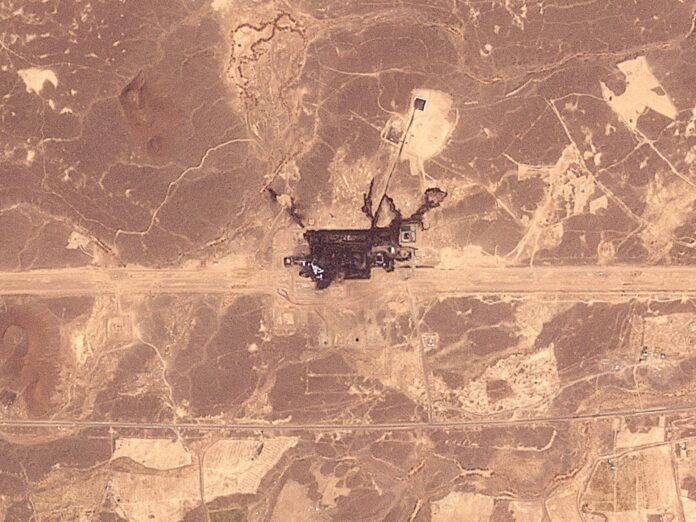
The timing left little doubt. Minutes earlier, Iran’s Islamic Revolutionary Guard Corps had announced it struck an American air base it identified as the launch point for a US attack near Bandar Abbas Airport hours before. “Following the pre-dawn aggression today by the invading American army against a point on the outskirts of Bandar Abbas Airport using aerial projectiles, the American airbase, as the origin of the aggression, was targeted at 4:50 a.m.,” the IRGC said in a statement carried by Iranian state media. The Guard did not name the base. Kuwait hosts US military facilities and has been hit repeatedly during the three-month war.
For Kuwaitis, the sirens carried a grim familiarity. The emirate has absorbed wave after wave of Iranian munitions since the conflict erupted on February 28, when a coordinated US and Israeli assault on Iran triggered a regional retaliation campaign that Tehran branded Operation True Promise IV. Kuwait’s international airport has been struck more than once, its airspace repeatedly shut, and the country has tallied scores of intercepted missiles and drones over the course of the war. Thursday’s barrage reopened a wound many residents had hoped a fragile ceasefire might keep closed.
That ceasefire, in name at least, still stands. A US official, speaking on condition of anonymity, told American broadcasters that the overnight strikes near Bandar Abbas were “measured, purely defensive, and intended to maintain the ceasefire.” By the official’s account, US forces shot down four Iranian drones and hit a ground control station in the port city that was preparing to launch a fifth. The strikes, the official insisted, fell within the bounds of the truce. Tehran has rejected that framing outright, calling the earlier attacks a violation and warning that further American action would draw a “more decisive” response.
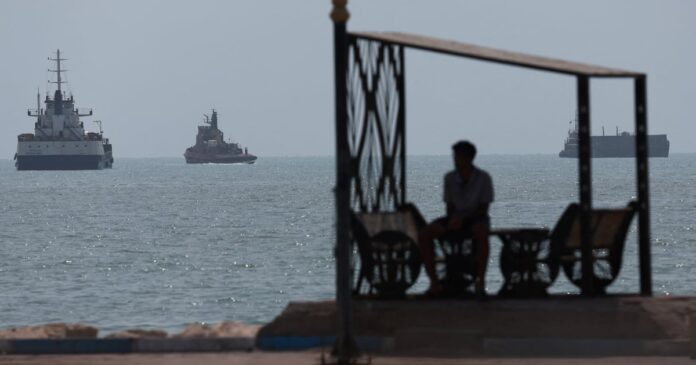
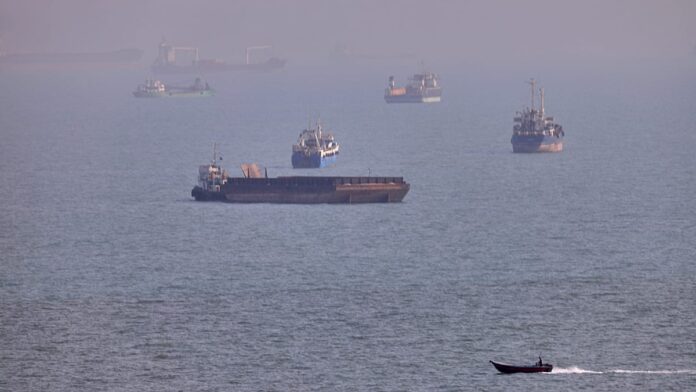
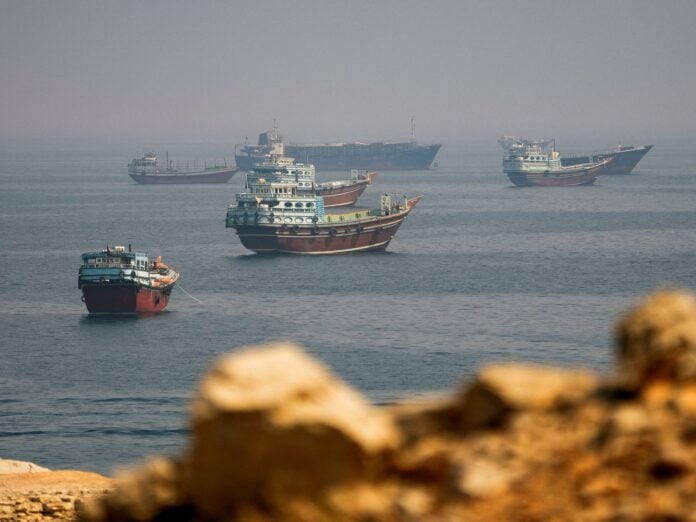
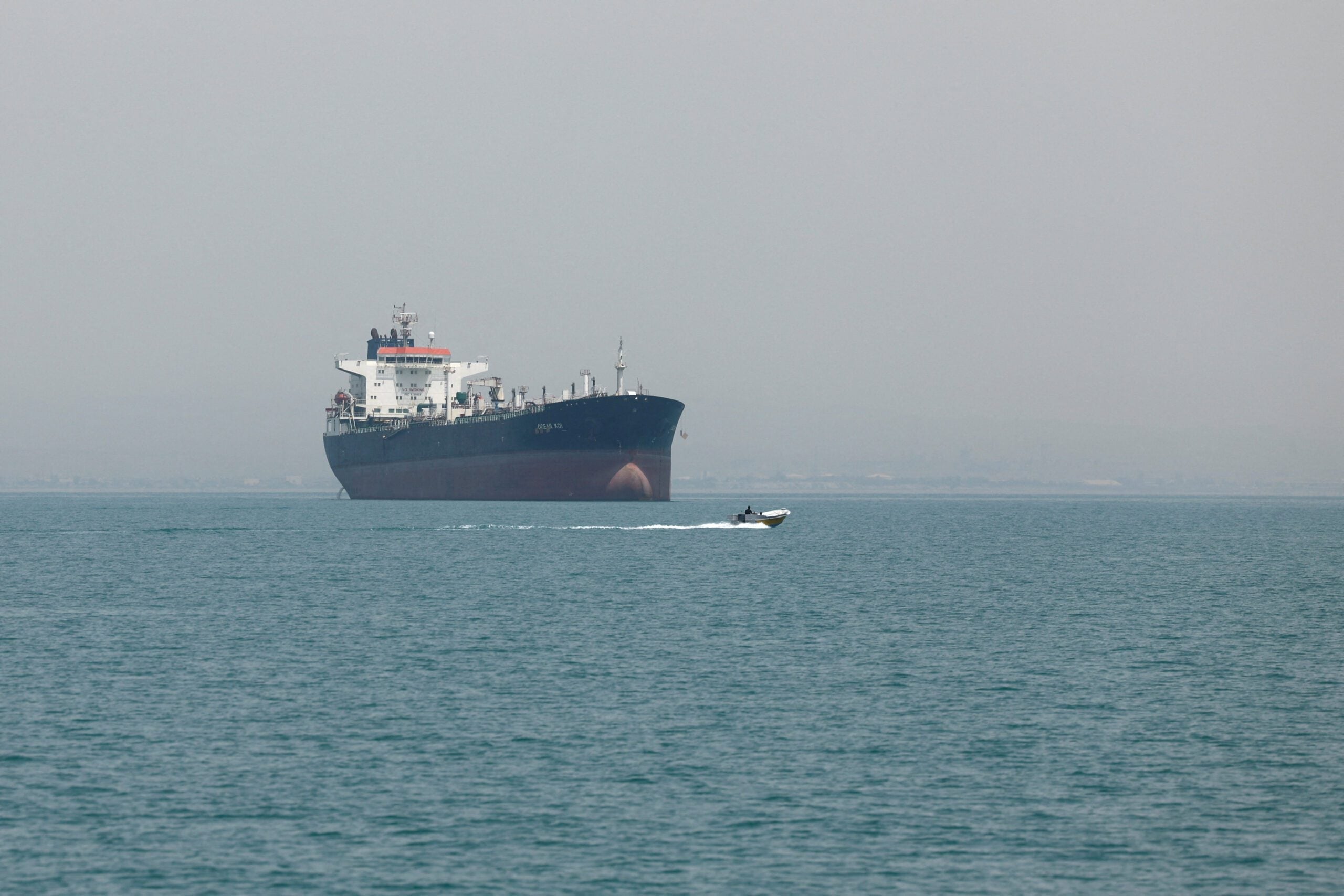
The flare-up over Kuwait followed a tense day at sea. Iranian state-linked outlets reported that the IRGC navy had fired “warning” shots at four vessels attempting to transit the Strait of Hormuz without coordinating with Iranian forces, turning them back. Tehran said its forces also fired on a tanker that tried to slip through the strait with its radar switched off. The narrow waterway, through which roughly a fifth of the world’s seaborne oil passes, has become the central front in a war that is as much about control of trade as it is about missiles.
Washington has moved to choke that ambition. Late Wednesday, the US Treasury sanctioned Iran’s newly created Persian Gulf Strait Authority, the body Tehran set up to manage and tax passage through Hormuz, accusing it of working with the IRGC to extort commercial shipping. “The Iranian military’s latest attempt to extort global maritime trade is proof that Economic Fury has left the regime desperate for cash,” Treasury Secretary Scott Bessent said in a statement, naming the administration’s sanctions campaign. The Treasury warned that any company cooperating with the authority risked exposure to US penalties, and described tolls that it said could climb as high as two million dollars a vessel.
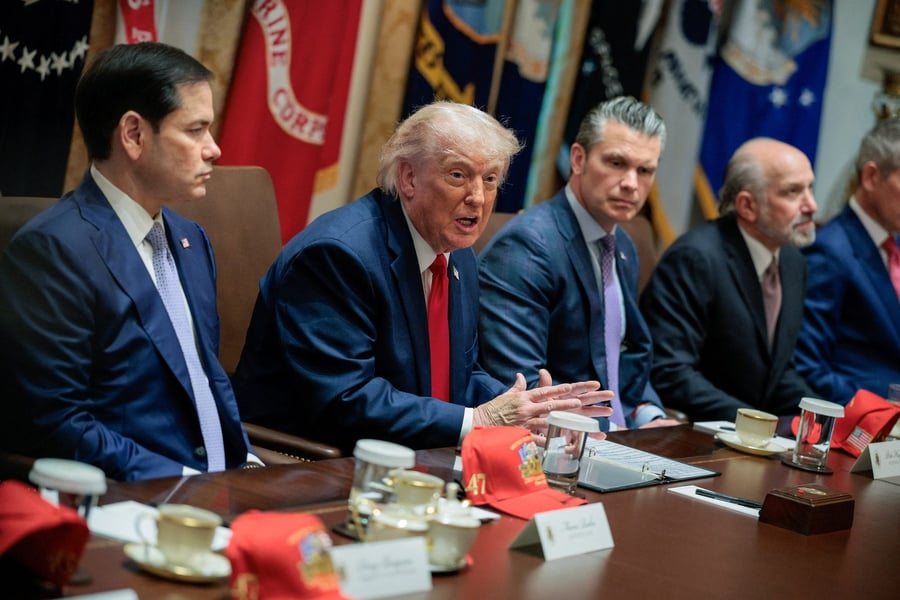
The pressure has not softened the rhetoric. Speaking at a cabinet meeting on Wednesday, President Donald Trump told reporters that Iran wanted a deal but warned that the alternative was stark. “Either that or we’ll have to just finish the job,” he said. The president has kept an open-ended ceasefire in place alongside a continuing US naval blockade of Iran’s ports, an arrangement he has said will hold until negotiations conclude “one way or the other.” Talks between the two sides, hosted earlier in the conflict, have so far failed to produce a settlement.
For Kuwait, the calculus is unforgiving. The emirate has been adamant that it never granted any party the use of its land, airspace or waters for military action against Iran, yet it sits squarely in the blast radius of a war between its neighbor and its security guarantor. The IRGC’s earlier vows offered little comfort, with the Guard having declared that all bases and assets of “hostile forces” in the region were legitimate targets. Kuwait’s repeated condemnations and its protests to international aviation bodies have not stopped the munitions from coming.
The recurrence also underscores how thin the line between ceasefire and open war has worn. This was the second time in a week that US forces struck Iranian targets around the strait, and each strike has invited an Iranian answer that ripples outward to the Gulf monarchies hosting American troops. European governments have quietly opened their own channels to Tehran in an effort to keep the Strait of Hormuz crisis from spiraling into a wider energy shock, while the IRGC has made clear it intends to keep striking the bases it blames for attacks on Iranian soil.
By midmorning Thursday, Kuwait’s defense ministry said the threat over its territory had been neutralized, with a spokesman attributing the explosions heard across the capital to air-defense interceptions. No casualties or damage were reported in the immediate aftermath. The all-clear, though, came with no assurance it would be the last. Kuwait has been here before, and the pattern of this war suggests it will be here again, as detailed in early reporting on the latest exchange.
The IRGC’s strike on the unnamed American base, meanwhile, fit a now-established rhythm: a US action framed as defensive, an Iranian response framed as retaliation, and a Gulf ally caught beneath the arc of both. The Guard’s warning that any repeat would bring a sharper answer hung over a region that has learned to read the sirens as the opening note of a longer night. The details of the overnight US strikes were laid out by a defense official, according to later coverage, even as the broader picture of the IRGC’s regional campaign continued to take shape, drawing on the Guard’s own account of its strikes on US air bases across the Middle East.